If there’s anything you should know about the Spanish, it’s that they love street parties, so perhaps that’s why the second-most visited country in the world is famous for its friendly inhabitants and limitless nightlife. While sunshine, sangria and seaside holidays might be most travellers’ goals for visiting Spain, its full festive calendar is also a major draw, with lively celebrations occurring throughout the year and country. Many take place outside of summer holidays, so let’s go over your month-by-month guide to the best festivals in Spain.
San Fermín in Pamplona, Navarra
From colourful citywide carnivals and intricate medieval re-enactments to some of Europe's biggest music festivals, there's almost always something worth celebrating no matter when and where you are within the Mediterranean country. Whether you’ve been dreaming of running with bulls in Pamplona, watching knights jousting in Teruel, or joining the world’s largest food fight in Buñol, you have plenty of reasons to explore Spain regardless of the time of year. ¡Vamos de fiesta!
JANUARY
El Día de los Reyes Magos — Nationwide
When: January 5–6
Where: Nationwide, especially Alcoy, Santillana del Mar and Sangüesa
Christmas doesn't quite end on December 25 in Spain. Instead, the celebrations continue until January 6, when the biblical Three Kings arrive bearing gifts. On the evening of January 5, cities and towns across the country host spectacular Cabalgatas de Reyes, with Melchor, Gaspar and Baltasar parading through the streets on floats and throwing sweets to excited crowds. Alcoy hosts Spain's oldest Three Kings parade, while Santillana del Mar and Sangüesa combine the festivities with traditional religious performances. On January 6, families gather for presents and roscón de Reyes, a ring-shaped cake hiding a tiny surprise. For travellers, it's one of the best ways to experience Spanish Christmas traditions after the tourist crowds have disappeared, especially when travelling with young children.
La Vijanera — Silió
When: First Sunday of January
Where: Silió, Cantabria
If you thought Carnival only happens in February, think again. On the first Sunday of January, the tiny Cantabrian village of Silió erupts into colour, costumes and controlled chaos for La Vijanera. This ancient masquerade blends pagan winter traditions with theatrical battles between good and evil, as elaborately costumed characters parade through the village making noise and performing rituals accompanied by live music. The festival is particularly fascinating because many of its characters represent animals, spirits and figures from rural Cantabrian folklore. Declared a Festival of National Tourist Interest, La Vijanera offers something very different from Spain's better-known fiestas and is a wonderful excuse to explore untouched Cantabrian countryside in the middle of winter.
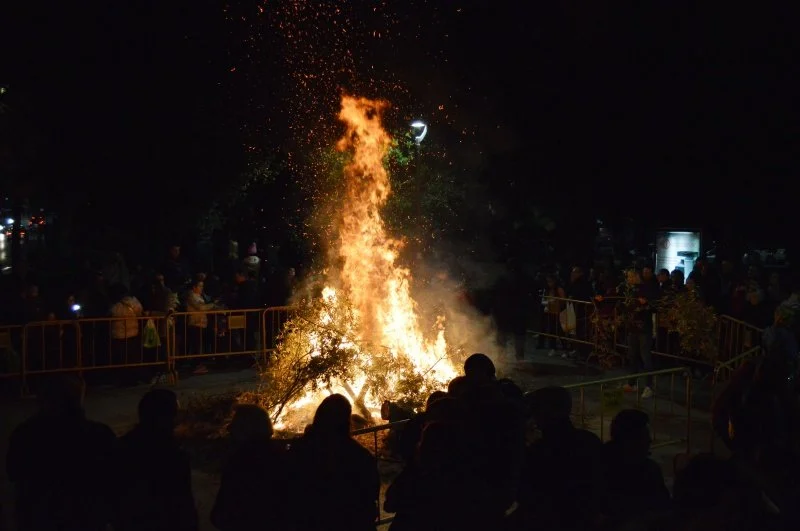
Photo courtesy of Horajaen.com
Las Lumbres de San Antón — Jaén
When: Mid-January
Where: Jaén, Andalucía
Jaén literally lights up for San Antón as bonfires spring up throughout the city. Typically associated with agriculture and olive harvesting, locals gather around the flames accompanied by folk songs, traditional food and festivities during Las Lumbres. The celebration also includes Noche de San Antón, an international 10-kilometre race in which runners make their way through the illuminated streets carrying torches. The event dates back decades and has become one of Jaén's most distinctive winter traditions. Visit during the festival and you'll get a glimpse of a side of Andalucía far removed from summer beaches and whitewashed villages, where the city is filled with fire, folklore and the unmistakable scent of olive country.
Tamborrada — San Sebastián
When: January 19-20
Where: San Sebastián, Basque Country
For twenty-four hours every winter, San Sebastián becomes one enormous drumline whose rhythm takes over one of the Basque Country’s largest cities in recognition of its patron saint,San Sebastián. Tamborrada begins at midnight on January 20, when the city's streets burst with marching bands and thousands of participants dressed in 19th-century military uniforms or traditional costumes. Different gastronomic societies and neighbourhood groups parade through the city starting at Plaza de la Consititución, playing drums and barrels while crowds follow the celebrations into the early hours. The festivities culminate with the raising of the city's flag and continue throughout the day with more music and processions. Food is naturally part of the experience, making this an excellent time to combine one of Spain's most atmospheric festivals with San Sebastián's legendary culinary scene. Just don't expect to sleep much!
FEBRUARY
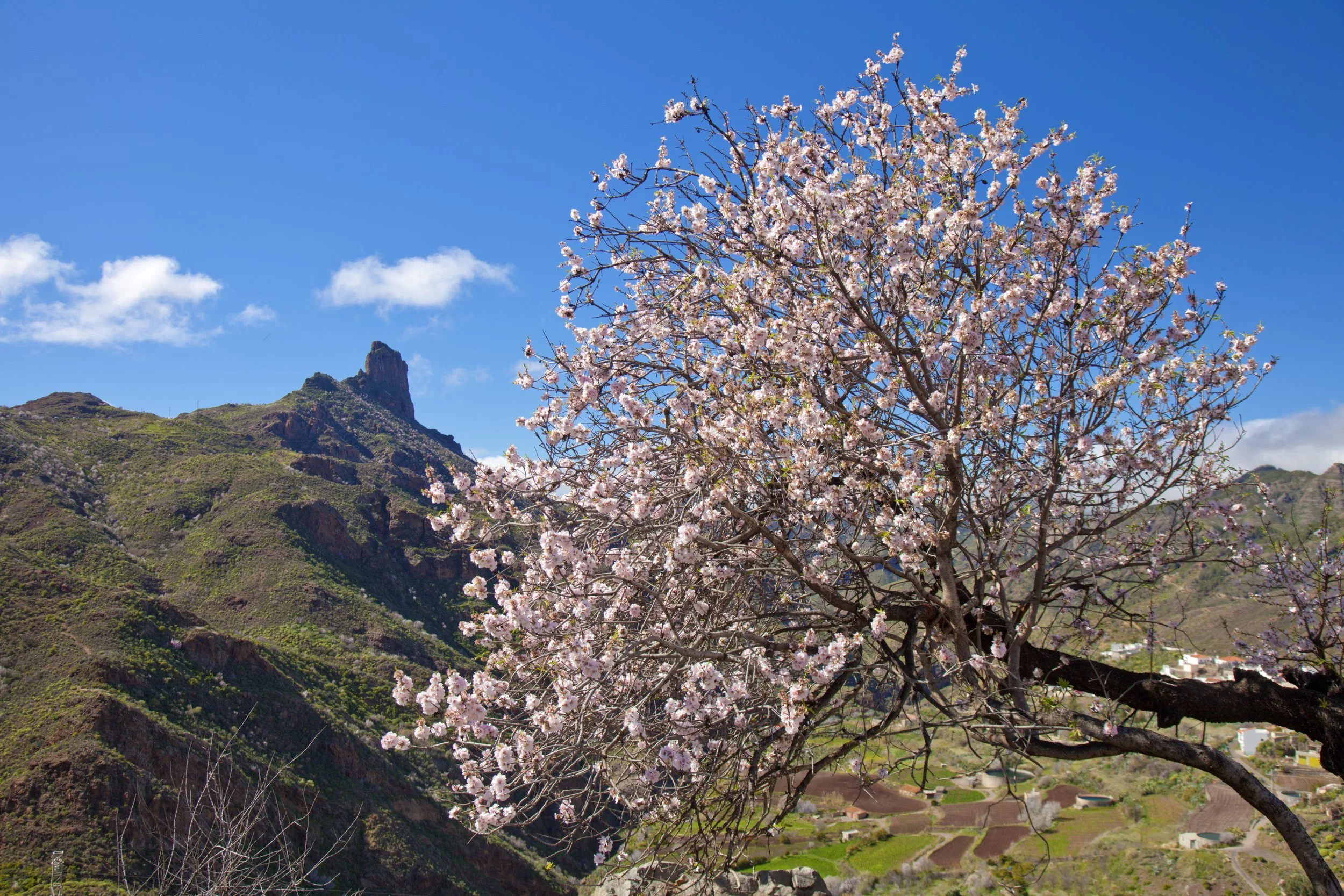
Photo courtesy of Kalitravel.net
Almond Blossom Festival — Tejeda
When: Early February
Where: Tejeda, Gran Canaria
Forget winter blues: February brings a floral explosion to the mountains of Gran Canaria so for travellers hoping spring will come early, migrate south to Tejeda. During the Almond Blossom Festival, the surroundings burst into white and pink flowers as the town celebrates with traditional music, dancing, handicrafts and local food. Visitors can explore stalls selling almond-based products and Canarian specialities while watching folkloric performances and demonstrations of rural customs. The mountainous landscape makes the setting particularly spectacular, and hiking through the blossom-covered countryside is one of the best ways to experience it. If you want to see a different side of the Canary Islands beyond beaches and resort towns, this is the perfect excuse to head inland.
Las Bodas de Isabel de Segura — Teruel
When: Mid-February
Where: Teruel, Aragón
One of Spain's most romantic — and tragic — festivals brings medieval Teruel back to life every February. Las Bodas de Isabel de Segura recreates the legendary story of the Lovers of Teruel, Diego and Isabel, whose doomed romance supposedly unfolded in the 13th century. For several days, the historic centre becomes a medieval stage, complete with costumed characters, market stalls, craft demonstrations, sword fighting, live concerts and theatrical performances. Visitors can wander through the recreated medieval streets while the story unfolds around them in real-time. The event is part history lesson, part theatre performance and part street party, making it one of Spain's most unusual cultural festivals.
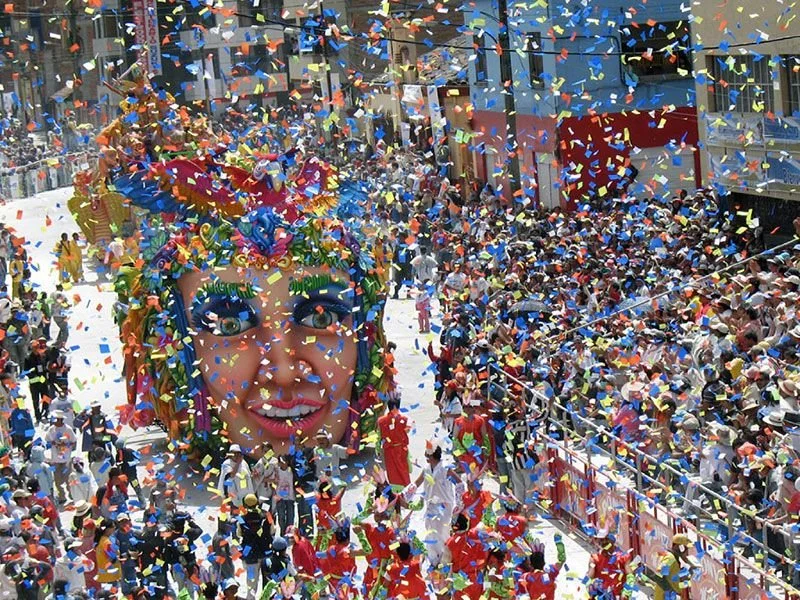
Photo courtesy of Yumping.com
Carnaval — Andalucía & Canary Islands
When: Late February or early March (depending on Easter)
Where: Cádiz, Andalucía & Santa Cruz de Tenerife, Canary Islands
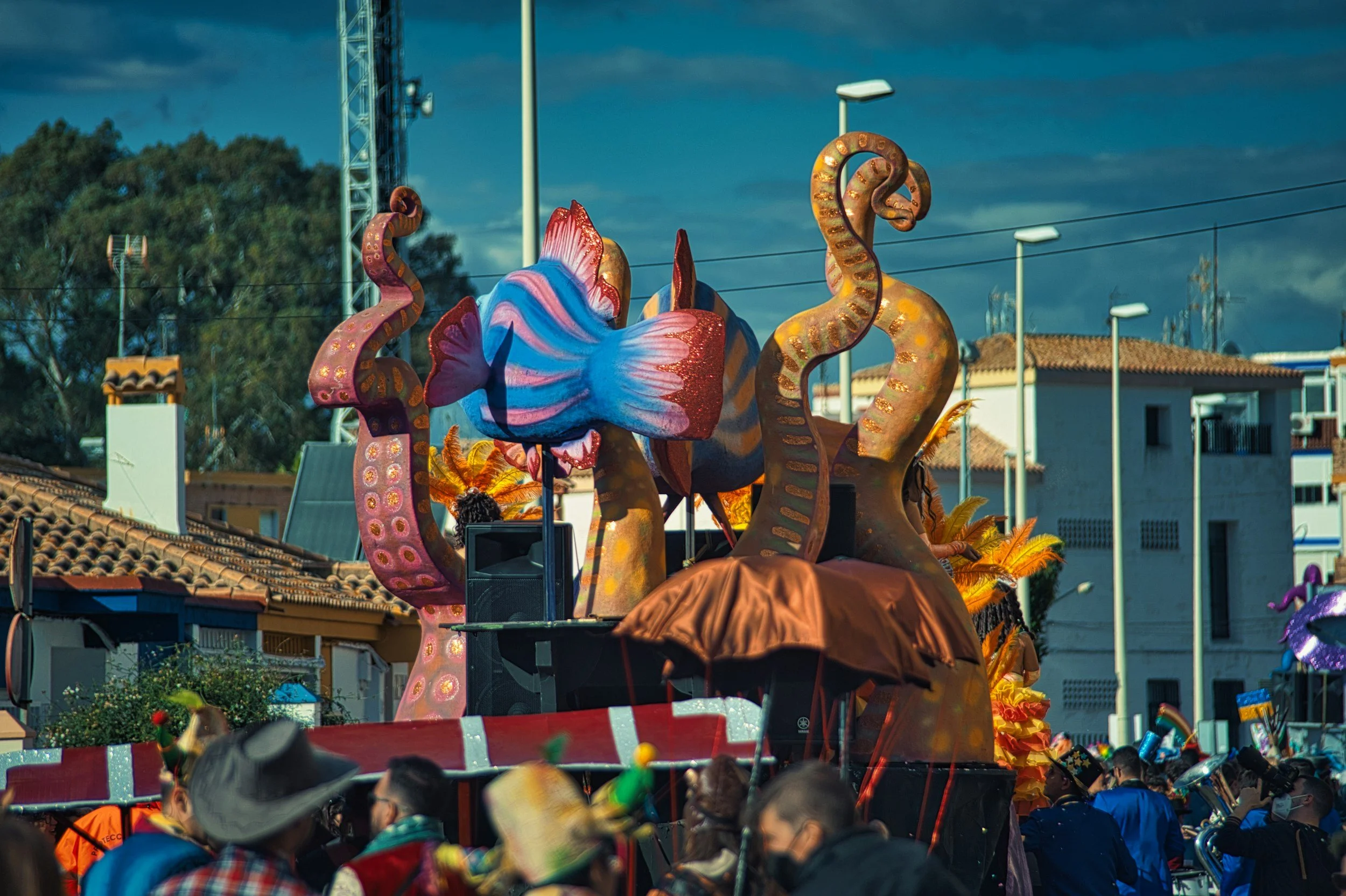
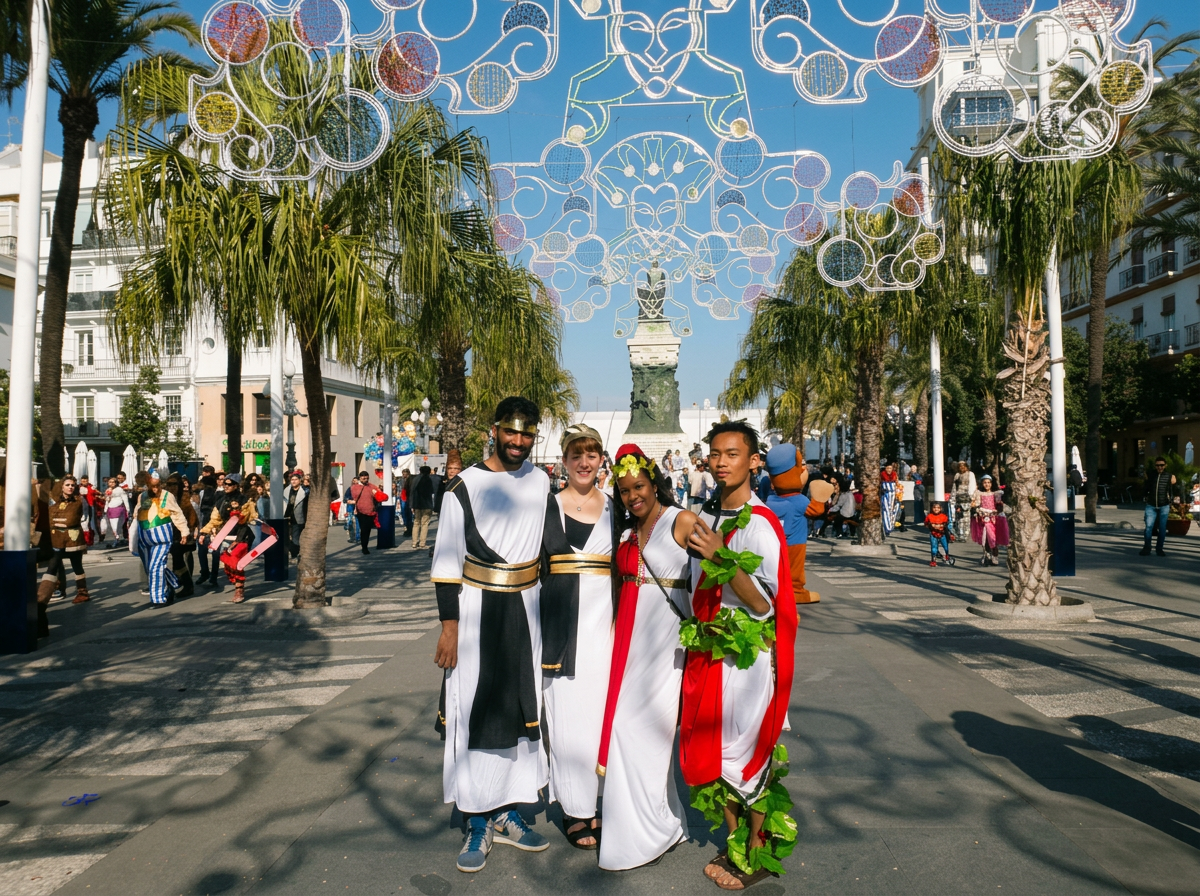
Spain doesn't do Carnaval quietly since it might be the only place to rival Brazil. To the county’s southwest, Cádiz is famous for its satirical chirigotas, musical groups that use comedy and song to poke fun at politicians, celebrities and current events, as well as its costume parties and late-night venues. Much further south on the Canarian Island of Tenerife, Santa Cruz de Tenerife goes all-out with elaborate costumes, vibrant parades, and enormous street parties that you’d expect in Rio de Janeiro. Both celebrations feature copious concerts, competitions, processions and lots of opportunities to dress up, although their vibes are somewhat varied. Whereas Cádiz is witty, theatrical and unmistakably Andalusian, Tenerife is colourful, glamorous and exuberant. Look no further for an excuse to visit Spain during the quieter winter months since Carnaval more than delivers on sunshine, spectacle and questionable costume decisions.
MARCH
Las Fallas — Valencia
When: Early to mid-March
Where: Valencia
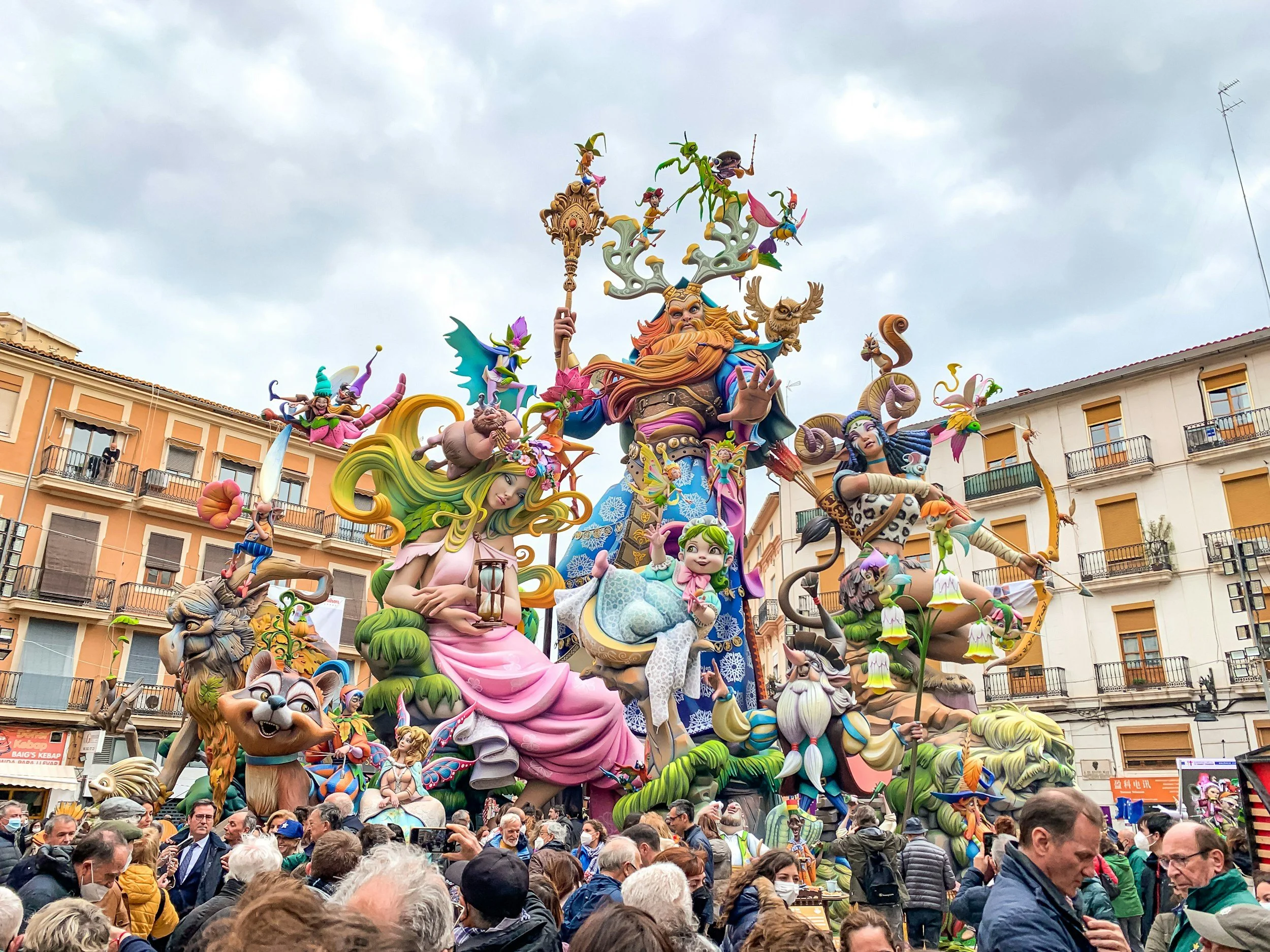
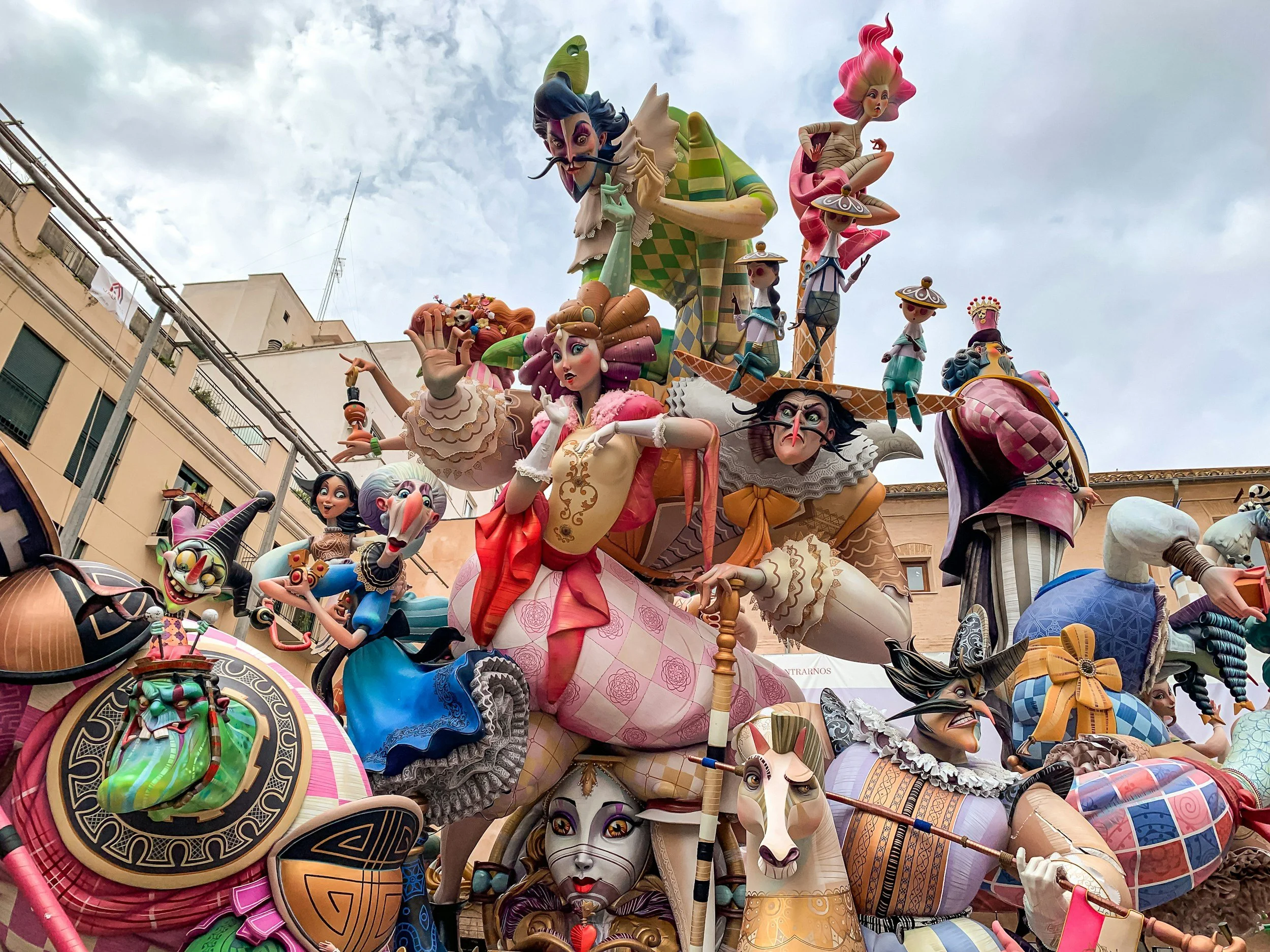
Valencia quite literally sets itself on fire every March, burning away the old to make way for the new. During Las Fallas, satirical handcrafted sculptures known as fallas are erected throughout the city, with many often towering several metres above the streets and buildings. Over the next few days, visitors can enjoy live music, fireworks, parades, marching bands, flower offerings and the nightly mascletàs, spectacular daytime explosions that shake the entire city centre. Even though fallas can take months of pain-staking work to build, the sculptures are ceremonially burned during La Cremà on the last Sunday of the festivities, resulting in one of Europe's most spectacular festivals that manages to combine art, traditional craftsmanship, and pyrotechnics into a single week. Just bring earplugs if you're sensitive to noise since this is sure to be an explosive occasion.
Festa da Arribada — Baiona
When: Usually the first weekend of March
Where: Baiona, Pontevedra (Galicia)
In March 1493, Christopher Columbus's caravel La Pinta arrived in Baiona carrying news of his first voyage across the Atlantic back to the Iberian Peninsula. More than five centuries later, the town commemorates the event with the spectacular Festa da Arribada. Baiona’s Old Town becomes a medieval market filled with period costumes, food stalls, craft demonstrations, music and street performances, whilst the harbour celebrates with the arrival of a replica of La Pinta. It's a particularly atmospheric way to experience Baiona, as the town's historic streets and tranquil waterfront become a giant open-air theatre. Combine the festival with Galicia's succulent seafood and coastal scenery for a weekend that feels considerably more adventurous than your average city break.
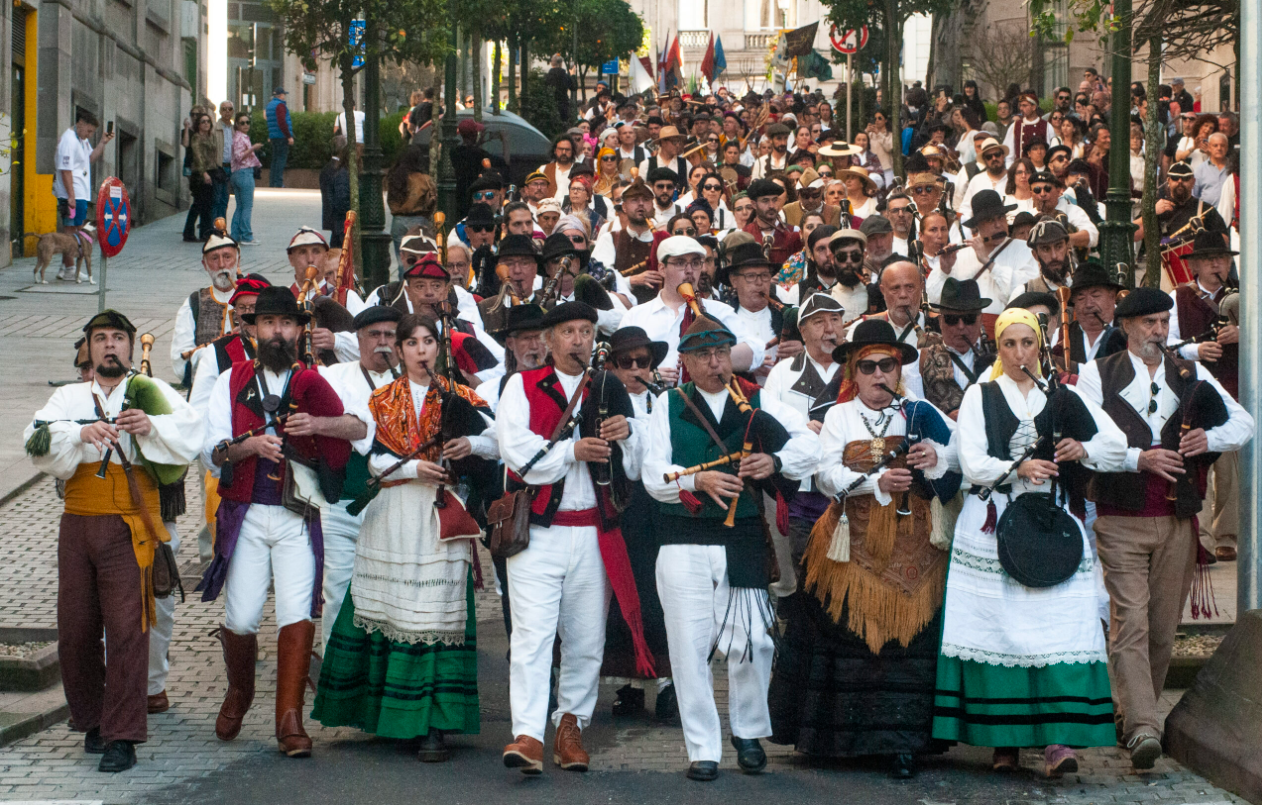
Photo courtesy of Vigoe.es
Reconquista de Vigo — Vigo
When: Usually the last weekend of March
Where: Vigo, Galicia
Every early spring, Vigo's Old Town travels back to 1809 for one of Galicia's liveliest historical re-enactments. The Reconquista de Vigo commemorates the local uprising against Napoleon's occupying forces, when Vigo became one of the first towns in Europe to expel French troops during the Peninsular War. Thousands of people dress in period-inspired costumes as the streets fill with craft markets, live music, food stalls and theatrical battles. The highlight is the re-enactment of the French surrender at Porta do Sol. The event is an excellent time to discover Vigo's historic centre, especially if you enjoy your history with a generous helping of Galician food and wine.
Fiesta del Cerezo en Flor — Jerte Valley
When: Late March to early April
Where: Valle del Jerte, Cáceres (Extremadura)
When you think of cherry blossoms, seas of floral petals spreading across the Japanese countryside might be the first image to come to mind but what if you could experience the same splendor in Spain? For a few short weeks every spring, the Jerte Valley is blanketed in snow-white as millions of cherry trees burst into bloom. The annual Cherry Blossom Festival celebrates the arrival of spring by offering visitors guided walks, local markets, cultural performances and exhibitions as well as gastronomic activities throughout the valley's villages such as Valdastillas and Casas del Castañar. Drive through the mountains to take in the terrace-lined countryside since the festival is a perfect reason to explore one of Extremadura's most beautiful regions. However, the flowers rarely blossom at the same time, with colder and higher-altitude areas typically blooming last in time for the harvest season. As the exact flowering period depends on weather conditions, dates can shift from year to year, but you should visit the valley before the summer heat arrives, burning away the last buds. Plus their famous Jerte cherries make for a tasty souvenir!
Semana Santa — Nationwide
When: Late March to early April (depending on Easter)
Where: Nationwide, especially Andalucía & Castilla y León
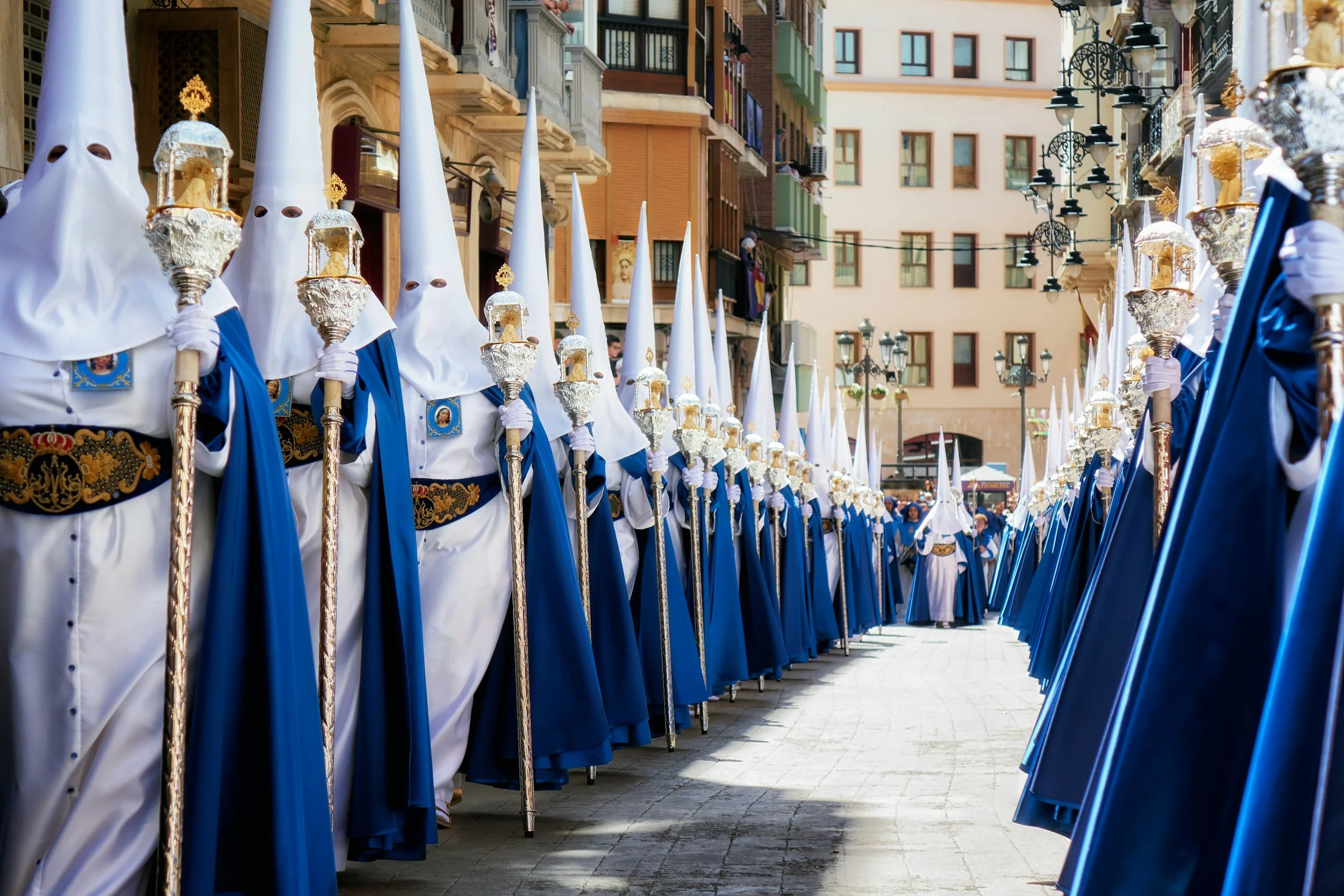
Few Spanish traditions are as visually powerful as Semana Santa as endless processions, countless revelers and priceless statues of saints are paraded through the streets from coast to coast – hardly surprising since the majority of Spaniards identify as Catholic. Thus, during Holy Week (the week leading up to Easter), religious brotherhoods carry hefty pasos (platforms decorated with sacred figures) through streets to bless the cities, accompanied by marching bands, torches, burning incense, and thousands of spectators. Seville is perhaps the most famous destination, but places such as Valladolid, León, Zamora, Salamanca and Málaga offer equally atmospheric experiences, practicing centuries-old traditions of their own. The processions range from solemn and silent to dramatic and deeply emotional, making this one of the best times to experience Spain's religious heritage and local identity. Wherever you go, book accommodation way in advance since Easter crowds are serious business.
APRIL
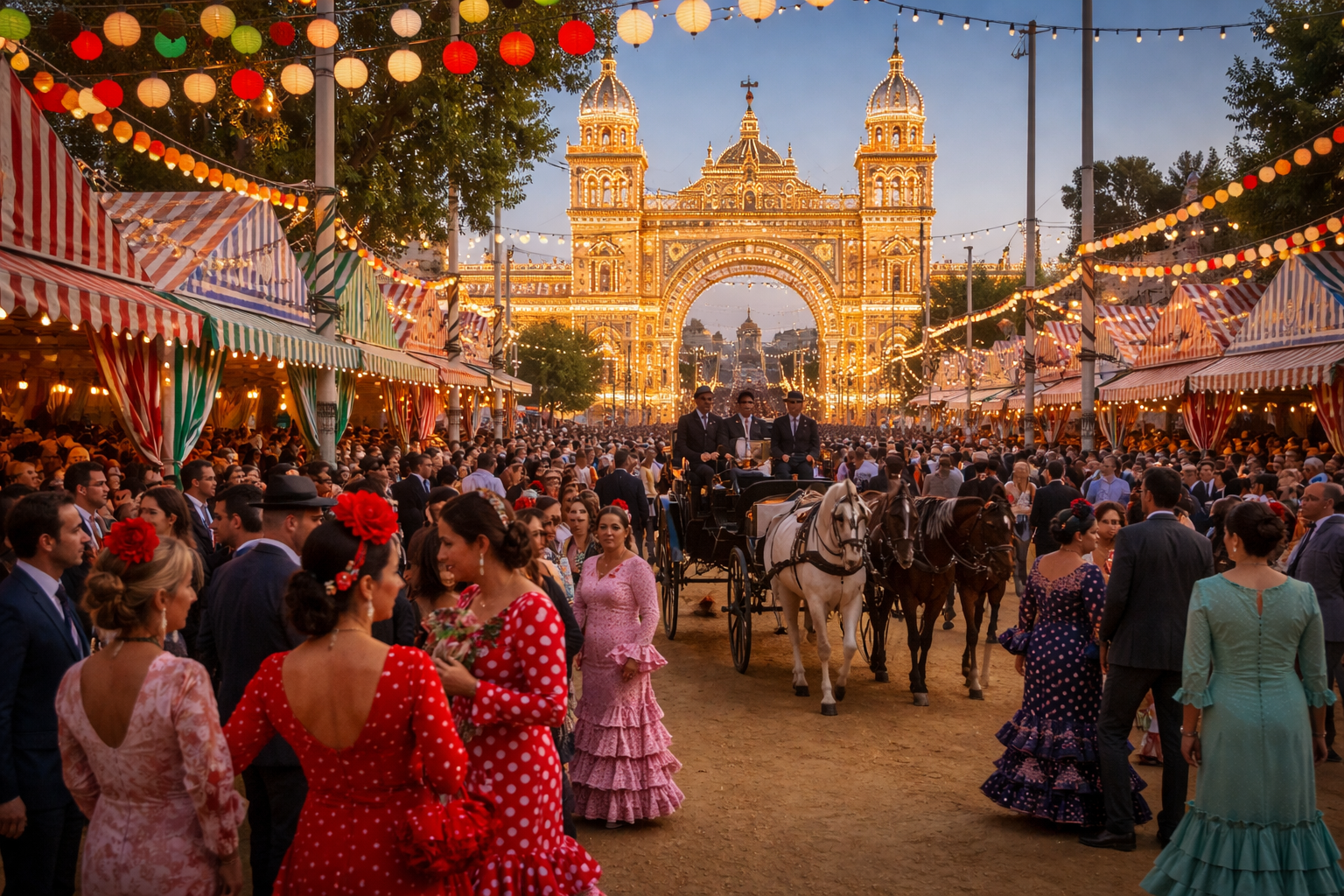
Photo courtesy of Hiddenhotels.com
Feria de Abril — Seville
When: Early to mid-April
Where: Seville, Andalucía
If Semana Santa shows Seville's solemn side, Feria de Abril is the city's unapologetically joyful counterpart. For about a week, the Real de la Feria in Sevilla fills with colourful casetas (private party cabins), traditional polka-dotted or plaid-patterned costumes, topsy-turvy attraction rides, music pouring out of every doorway, and enough food and alcohol to keep the festivities going until at least dawn. Drink in the sights and sounds, from sevillanas music and flamenco shows to rebujito (Andalucía’s specialty drink), along with the daily paseo de caballos, when elaborately dressed horse-riders and horse-drawn carriages parade around the fairground. Although many casetas are private, public ones are available so you won’t feel left out. Only rivaled for its eccentricity by Carnaval in Cádiz, this festival is arguably the best opportunity to experience Andalusian culture at full volume, preferably while wearing something that won’t show wine stains. ¡Salud!
Sant Jordi — Barcelona, Catalonia
When: April 23
Where: Barcelona
Are you over the over-commercialisation of Valentine’s Day? Barcelona's answer to that is considerably more literary and a lot more wholesome. On World Book Day, the city celebrates Sant Jordi, when the centre fills with books and roses in honour of Catalonia's patron saint. The custom dates back to the Middle Ages when the so-called knight slayed a dragon whose blood turned into roses, one of which was then gifted to the kingdom’s princess. Since then, couples and loved ones have traditionally exchanged a rose, with the addition of a book becoming popularised in the 1920s. Join the festivities by strolling through Passeig de Gràcia, La Rambla and the Gothic Quarter – now converted into outdoor bookshops brimming with rosebuds – while book signings and cultural events are held throughout the city. The holiday showcases love, literature and Catalan identity in a wonderfully unique way. If you're visiting Barcelona in April, skip the packed shopping centres and wander through the city's streets so you can stop and smell the roses before stumbling upon some perfect reading material.
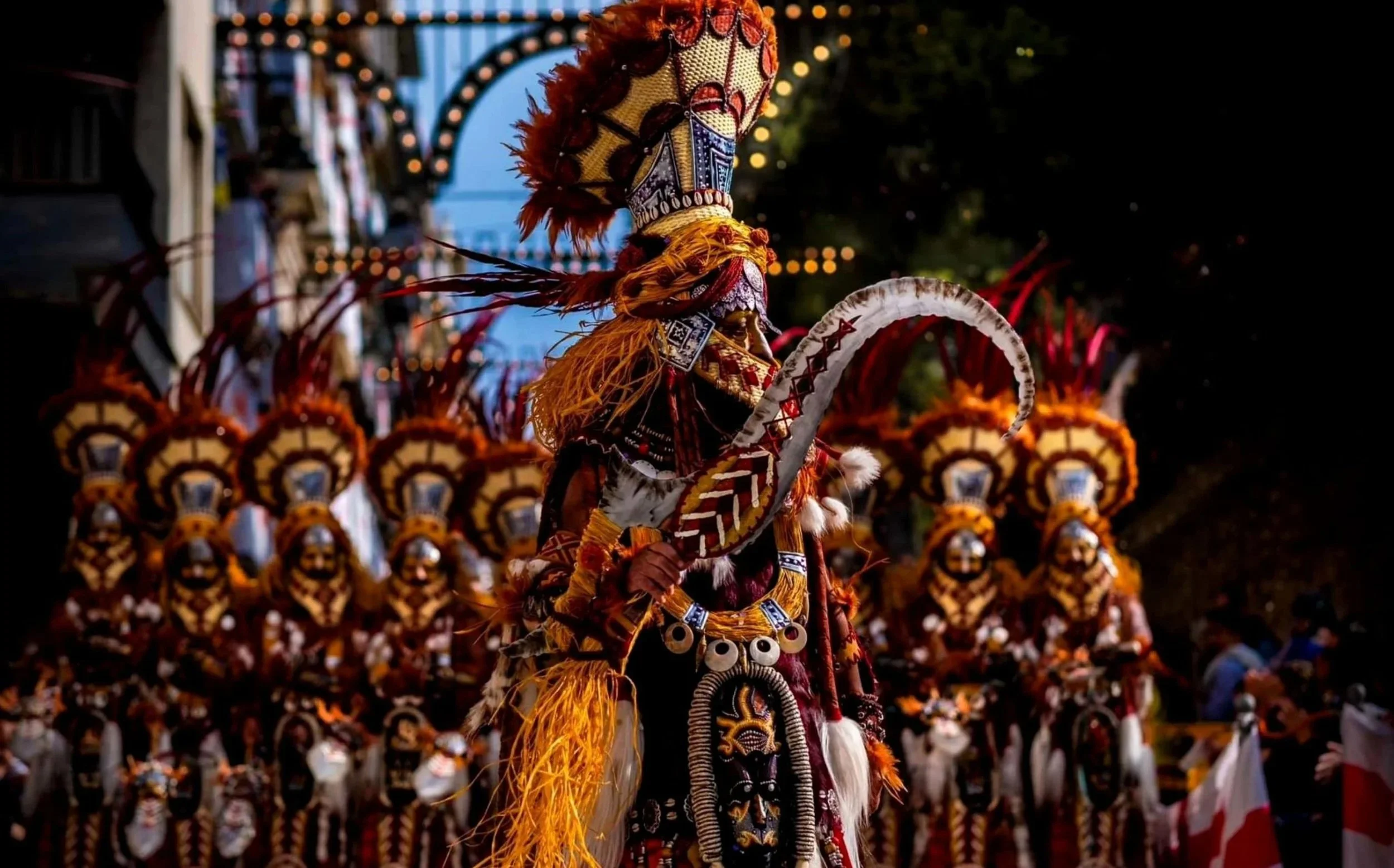
Photo courtesy of Turismoalcoy.es
Moros y Cristianos — Alcoy
When: Late April
Where: Alcoy, Alicante (Valencia)
The festival of Moros y Cristianos in Alcoy turns the city's streets into a bombastic theatrical battlefield every spring. Dating back centuries, the celebration commemorates a legendary 13th-century battle between Muslim and Christian forces and features sweeping parades representing both sides. You’ll be amazed by the elaborateness of the costumes, marching bands, armoured horses, gunpowdered explosives and decorated floats, transforming the city into a medieval battleground nearly overnight. The Entradas, the grand Moorish and Christian processions presenting each army, is among the highlights, especially if you enjoy history, costumes and live street theatre. Far more than a mere re-enactment, the historic festival is a major expression of Alcoy's local identity and one Spanish festival worth planning a trip around.
Viña Rock — Villarrobledo
When: Late April to early May
Where: Villarrobledo, Albacete (Castilla-La Mancha)
Want to dance your heart out while surrounded by the Spanish wilderness? Viña Rock is one of Spain's biggest festivals for fans of rock, punk, hip-hop and alternative music. Held throughout the city centre, the three-day event attracts huge crowds with a packed line-up of Spanish and international performers spread across multiple stages. Beyond the concerts, the festival offers sports competitions, food stalls, campgrounds and its own wine fair – not surprising since Castilla-La Mancha is famed for having the most vineyards per capita worldwide. If your ideal Spanish holiday involves rocking out to live music rather than lining up in museum queues, this is one for the diary.
MAY
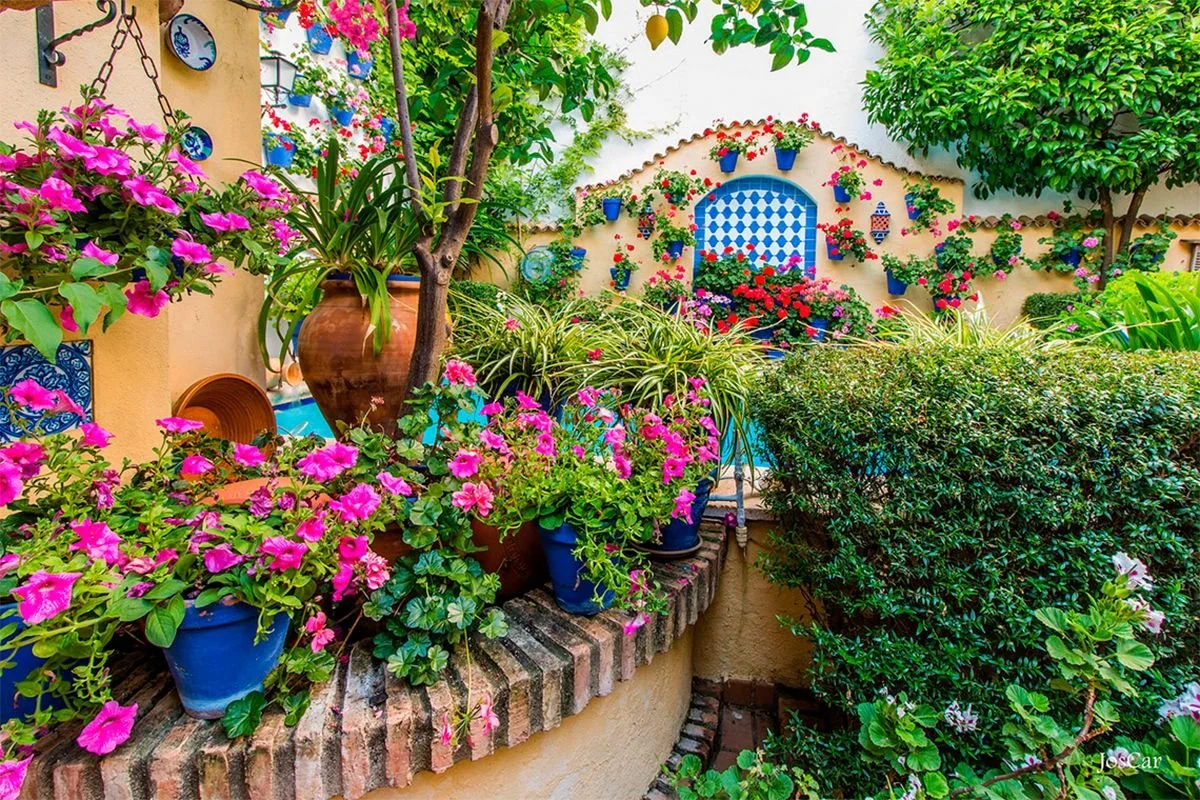
Photo courtesy of Hotelcaireles.com
Fiesta de los Patios — Córdoba
When: Early May
Where: Córdoba, Andalucía
Like clockwork each spring, Córdoba's graceful courtyards become miniature botanical gardens for about two weeks when local residents open the doors of their homes to be toured and judged by visitors. Neighbours compete for prizes (and bragging rights), converting their whitewashed patios into masterpieces blooming with geraniums, carnations, and jasmine, amongst some florals. Wander between patios to get a wonderfully intimate peak into Córdoba's historic neighbourhoods, with flamenco performances, food stalls and Montilla-Moriles wine adding to the atmosphere. Though the festival only dates back to the early 20th century, it has since become one of the city's signature events, along with Rejas and Balcones, a similar festival taking place in Córdoba and Granada around the same time but dedicated to window railings and balconies. Go early in the day or later in the evening to avoid the worst crowds, so you can choose your favourite contender.
Cruces de Mayo — Córdoba & Granada
When: Early May
Where: Córdoba and Granada, Andalucía
May is flower season throughout Andalucía, and the Cruces de Mayo (May Crosses) as a celebration provide another colourful reason to visit. Vibrantly decorated crosses appear across Andalucian squares, streets and neighbourhoods, surrounded by flowers, handmade ceramics and festival-gatherers. In Córdoba, the event forms part of a packed spring calendar alongside the famous patios and balcony competitions (see previous entry), while Granada blends the celebrations with music, food and local festivities. Visitors can mosey between different neighbourhoods, admire the decorations and stop for tapas all along the way. This is a wonderfully low-key alternative to Spain's mega-festivals and a great way to experience Andalusian neighbourhood life.
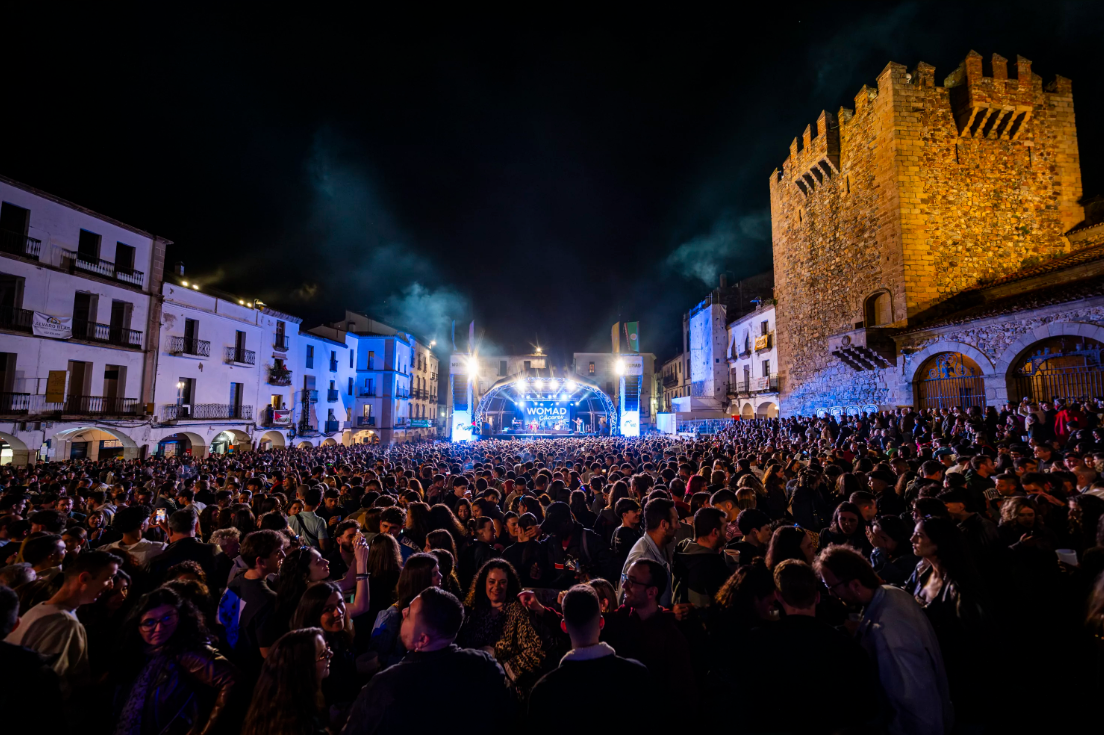
Photo courtesy of Sonde3.com
WOMAD — Cáceres
When: Early to mid-May
Where: Cáceres, Extremadura
Although music festivals are hardly a rarity in Spain come springtime, WOMAD (the World of Music, Arts and Dance festival) is – pardon the pun – worlds apart as dance vibes and international culture engulf the medieval streets of Cáceres. Established in 1992, this free city-wide event brings performers from around the globe, with concerts complemented by dance workshops, craft markets, street performances and family-friendly activities. The setting alone makes this festival special as you listen to world music surrounded by Roman, Islamic and medieval architecture within a historic centre that has endured since the 1st century BCE. For a cultural festival with a genuinely dance-heavy feel without paying a fortune for admission, WOMAD is hard to beat, even if you struggle to stay on beat.
Romería de El Rocío — Huelva
When: Mid-May
Where: El Rocío, Huelva (Andalucía)
More than a million people converge on the tiny village of El Rocío each year for one of Spain's most extraordinary pilgrimages. In a moving act of solidarity, brotherhoods travel towards the shrine of the Virgen del Rocío, reaching the religious site on horseback, in horse-drawn carts or on foot while singing, dancing and camping along the way. Once in the village, the atmosphere becomes a mixture of religious devotion and large-scale outdoor celebration, with flamenco music, local food, and late-night gatherings around campfires. The climax arrives when the statue of the Virgin is carried from the shrine to bless the area. Whether you're religious or not, witnessing the scale and energy of El Rocío offers a fascinating insight into Andalusian culture.
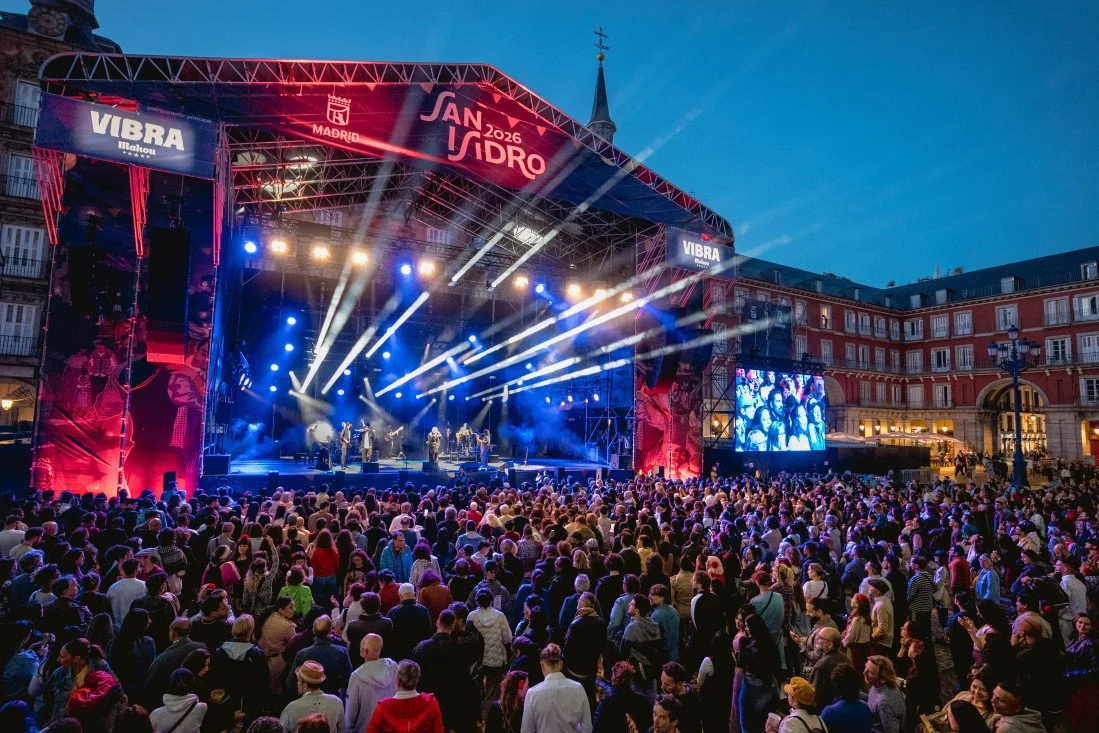
Photo courtesy of Madriddestino.es
San Isidro — Madrid
When: May 15
Where: Madrid
If you’re planning to visit the Spanish capital, there’s no better time than mid-May when Madrid celebrates its patron saint with a week-long fiesta that feels quintessentially madrileño. Locals dress as polka-dotted chulapos and chulapas and gather across the city centre for music, dancing, food and attraction rides. The most dynamic place to be is the Pradera de San Isidro, a park to the south of the city reachable by public transport. The rest of the festivities spill into more centralised locations, such as Las Vistillas and Plaza Mayor, where verbenas (outdoor street festivals), concerts, and fireworks keep the city busy late into the night. Try traditional treats like rosquillas (donut-shaped biscuits), entresijos and gallinejas make appearances alongside more contemporary food and drink (tinto de verano, anyone?). Experience Madrid beyond its museums and grand boulevards by taking part in everything San Isidro has to offer while the city celebrates its own identity.
Temps de Flors — Girona
When: Mid-May
Where: Girona, Catalonia
Appropriately named “flower season,” Girona becomes a giant open-air flower museum for several days each May. The festival transforms courtyards, churches, monuments, and stairways into vivid floral installations throughout Barri Vell (Old Town). The contrast between contemporary floral design and Girona's medieval architecture makes the city particularly photogenic, and most notably, many otherwise private or inaccessible spaces are open to visitors during the event. Unlike a conventional flower show, you need not stay at one venue since the entire historic centre becomes the exhibition. If you enjoy art, photography and scenic destinations that reward wandering without a rigid itinerary, it's an excellent reason to visit Girona in spring.
Madrid Book Fair — Madrid
When: Late May to mid-June
Where: Madrid
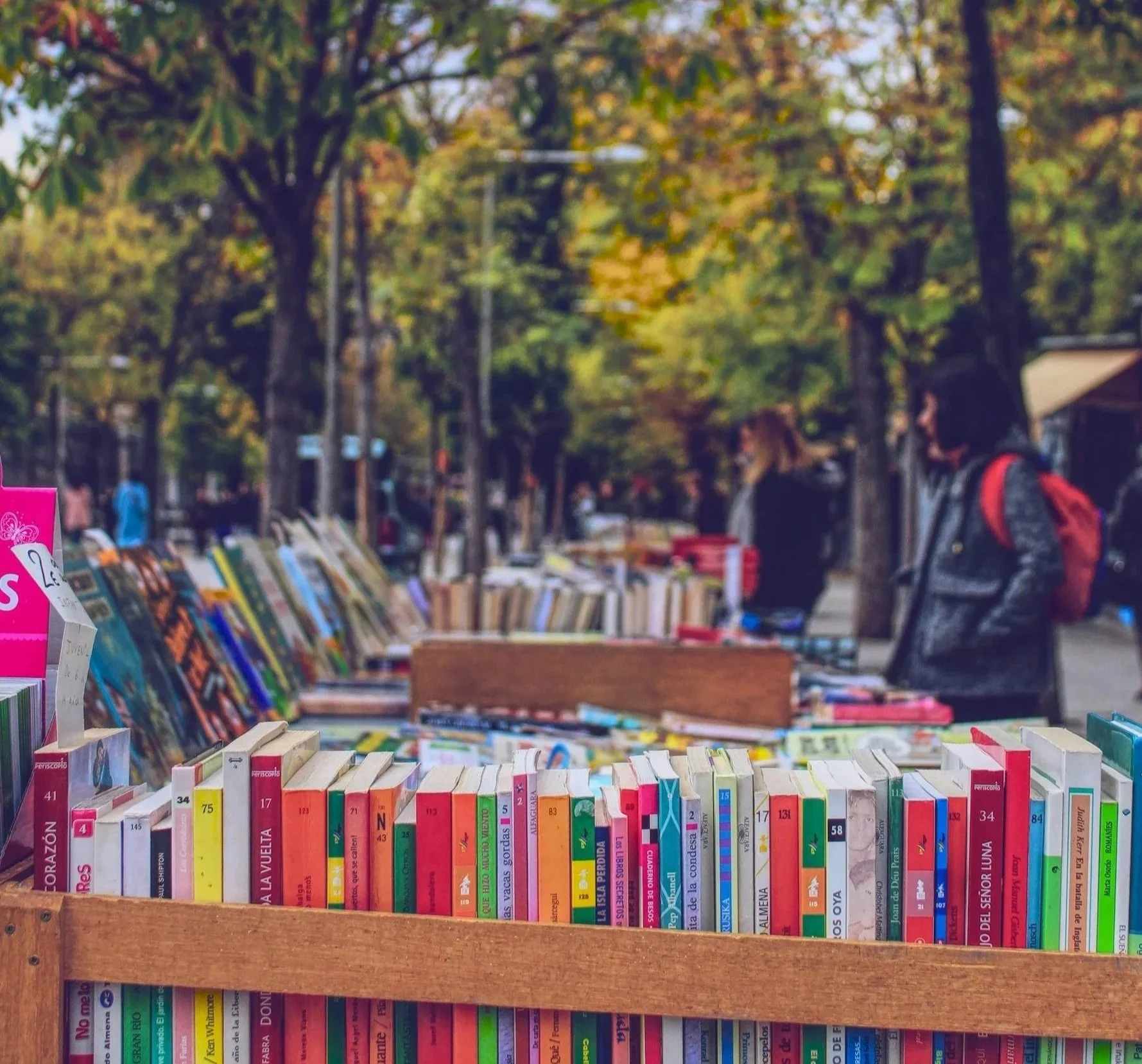
Bookworms, rejoice: Madrid's annual Feria del Libro turns the Paseo de Coches (Carriage Way) in the iconic Retiro Park into one of Spain's largest outdoor literary events. Hundreds of publishers and booksellers set up stalls, where authors appear for signings, in-depth talks and public events. Starting in 1933, the fair attracts both Spanish and international visitors interested in emerging new voices. Even if your Spanish isn't fluent enough to tackle a 500-page novel, it's worth ambling through the stalls for the atmosphere alone and possibly the chance to discover books about Spain, travel and local culture. And yes, buying another book for your already-overloaded suitcase is entirely justified.
JUNE
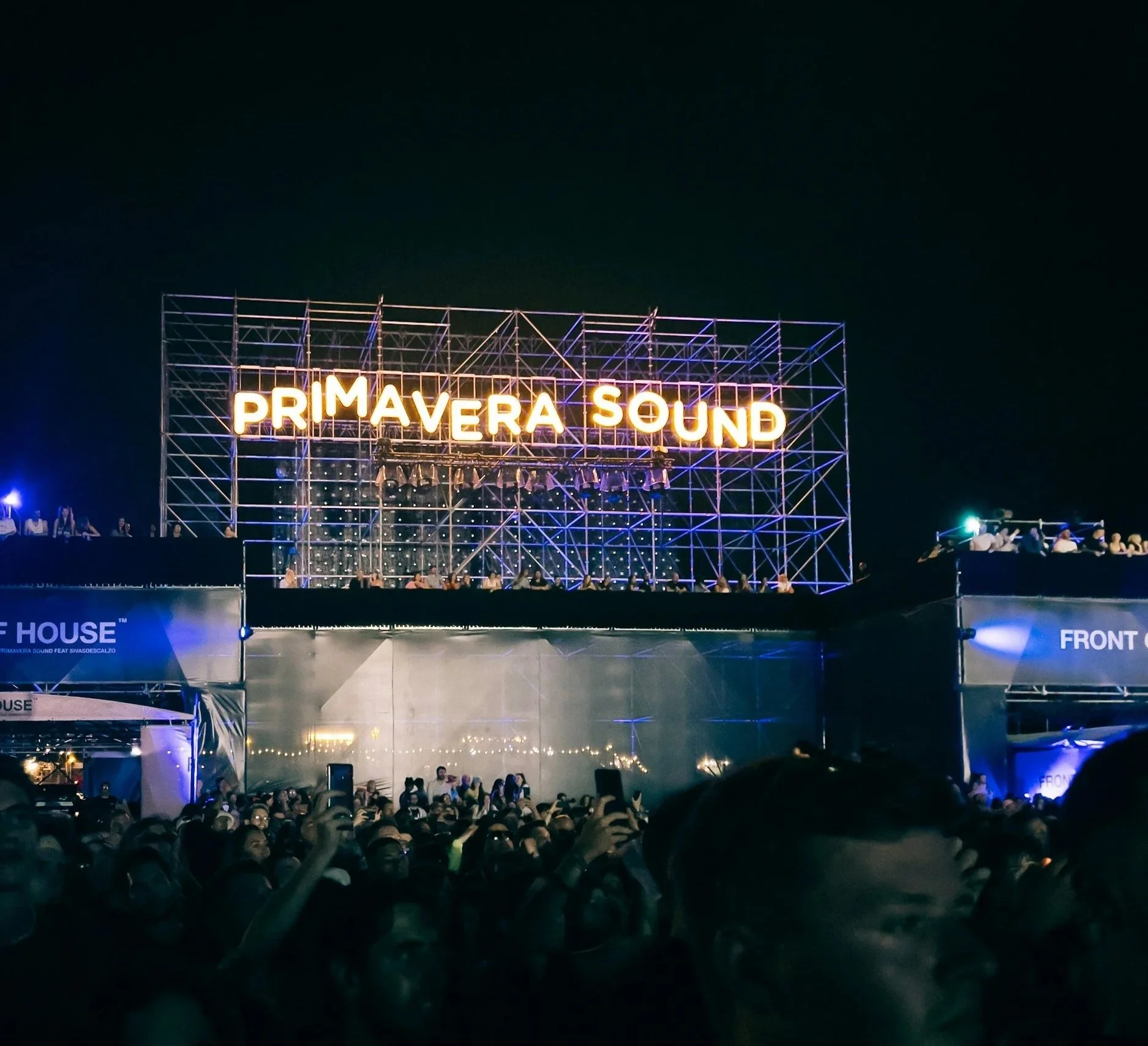
Primavera Sound — Barcelona
When: Early June
Where: Barcelona, Catalonia
Possibly Spain’s most acclaimed music festival, Primavera Sound has grown from a local event into one of Europe's major juggernauts. The multi-day programme brings together well-established international performers and emerging artists across the pop, indie, rock, and electronic music genres. Hosted in Parc del Fòrum, its stages are situated right beside the Mediterranean Sea, giving festival-goers the unique opportunity to spend the afternoon listening to live music before heading into Barcelona for a night swim or dinner near the water. As the festival attracts a huge international audience, accommodation disappears quickly, so book early if you're planning to attend, especially to stay near the city centre.
Sónar — Barcelona
When: Mid-June
Where: Barcelona, Catalonia
Yet another music festival in Barcelona, Sónar takes electronic music in a more experimental direction, mixing DJs and live performances with digital art, technology and innovative installations. The festival is divided between daytime and nighttime programmes, making it possible to spend the day exploring Barcelona before diving into a much more futuristic world after dark. Similarly, Sónar+D is a related conference bringing together artists, designers, and creative professionals for talks and demonstrations. Travellers interested in the intersection of music, art and technology shouldn’t miss out on one of Europe's most distinctive festivals which is guaranteed to help you see Barcelona in a completely different light.
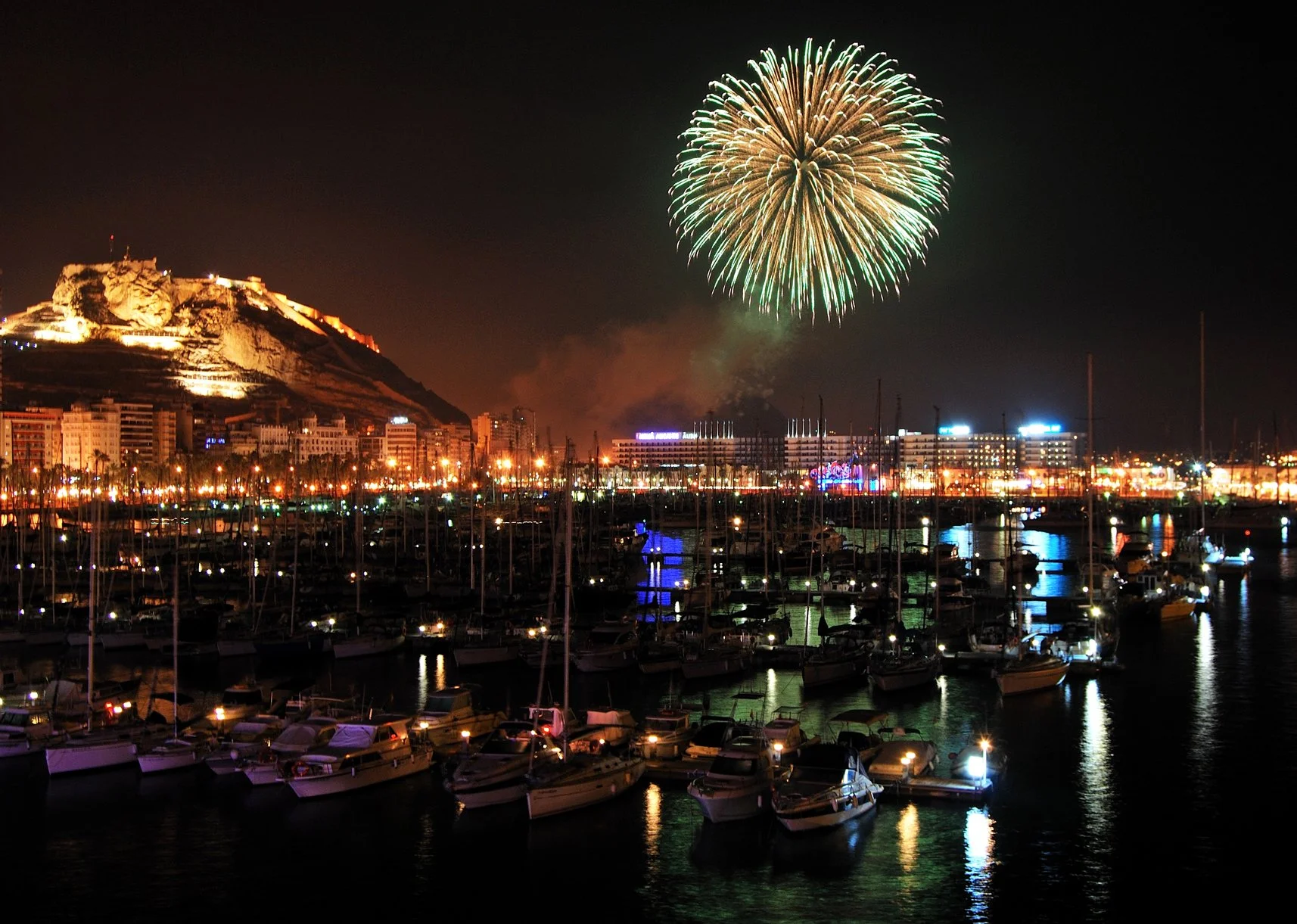
Photo courtesy of Javeaconnect.co.uk
Hogueras de San Juan — Alicante, Málaga & A Coruña
When: June 20-24
Where: Alicante, Valencia; Málaga, Andalucía; A Coruña, Galicia
Similar to Las Fallas in the Valencian capital, many coastal cities welcome summer by setting large satirical sculptures on fire. If you’re in A Coruña or Málaga, you’re in for a treat, but the best place to partake might be Alicante. During the Hogueras de San Juan (colloquially referred to as simply San Juan), giant hogueras are displayed throughout the city centre alongside fireworks, beach parties, street parades and traditional music. The festivities culminate on June 24, when the sculptures are burned during La Cremà to represent the circular cycle of life. The days proceeding the bonfires are jam-packed with cultural events, including the percussive, pyrotechnic mascletàs and flower offerings. Since most of these locations are already major beach destinations, this festival offers the perfect combination of citywide celebrations and seaside relaxation; i.e. everything you want for a Mediterranean holiday.
Corpus Christi — Toledo
When: Mid to late June
Where: Toledo, Castilla-La Mancha
While Corpus Christi is observed in many Spanish regions, such as Tenerife and Ponteareas (Pontevedras), no place matches Toledo’s dedication. Known as the City of Three Cultures, the former Spanish capital undergoes a transformation every summer when its most important festival dominantes the historic centre, turning it into an elaborate stage for Corpus Christi. In the weeks leading up to the main procession, Old Town’s streets are decorated with colourful awnings, fragrant flowers, bright lanterns and centuries-old tapestries. Then, the solemn procession passes through Old Town, accompanied by devoted guilds, local musicians and the sacred golden Monstrance from Toledo Cathedral. Still, the celebrations extend past just religious ceremonies, offering live concerts, performances, sporting events and rare opportunities to visit stunning courtyards normally closed to the public. If you've ever wondered what Toledo's medieval streets would look like dressed for a royal occasion, this is probably the closest you'll get.
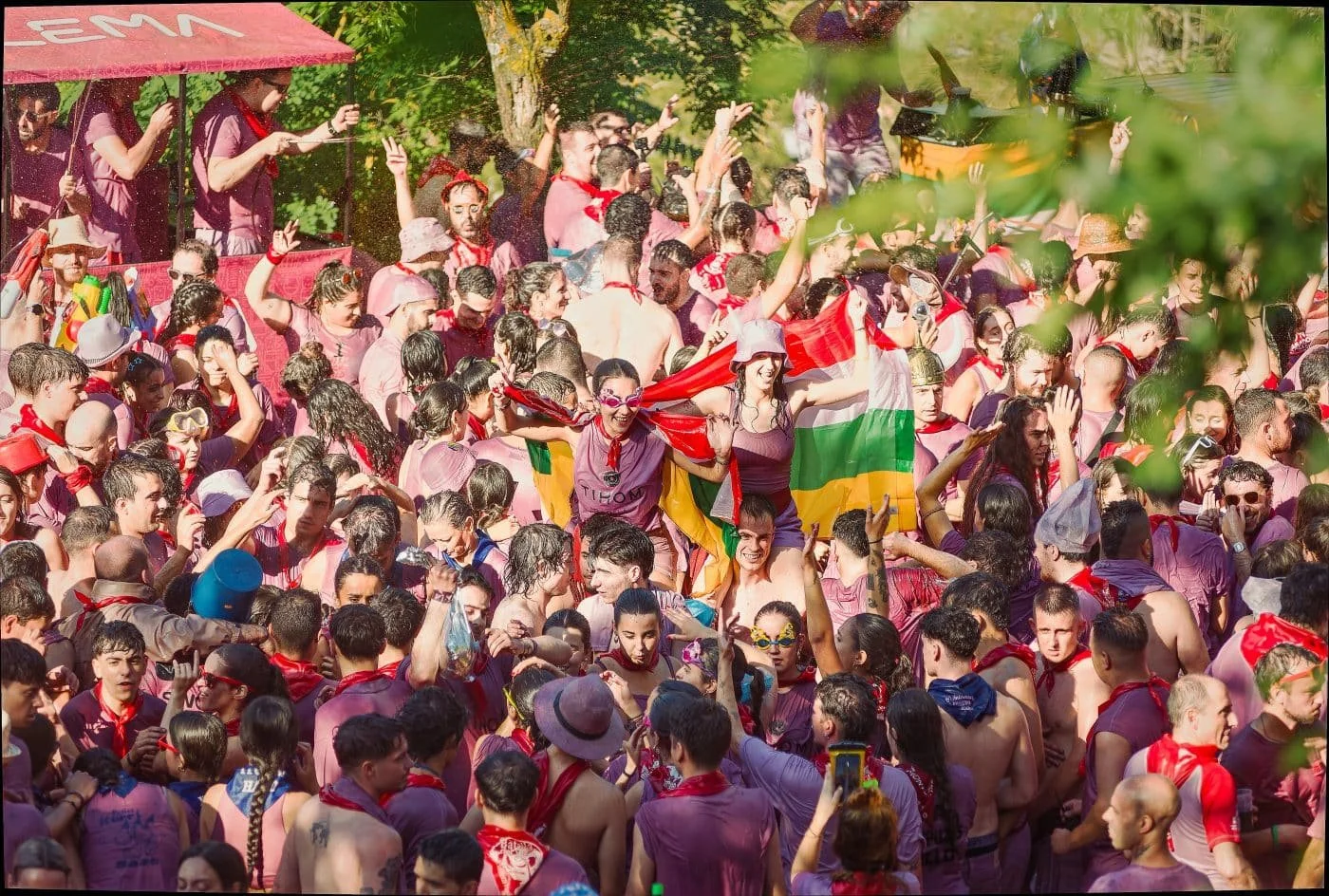
Photo courtesy of Harodigital.com
Batalla del Vino — Haro, La Rioja
When: June 29
Where: Haro, La Rioja
The town of Haro takes its wine seriously. That is, except one day per year when people are encouraged to splash it at each other. Every summer, thousands of white-clad participants head to the Riscos de Bilibio outside town for the Batalla del Vino, a wine-throwing battle. After attending a morning mass, the crowd begins enthusiastically soaking one another with red wine until practically everyone and everything is dripping in hues of purple. The battle only ends around midday, after which the festivities are funnelled back to Haro for food, music, and of course, more wine. As one of Spain’s most one-of-a-kind festivals, Haro is a can’t-miss opportunity to get an authentic taste of Spanish culture all over your body. Make sure to wear white to fit in but bring a change of clothes unless you want to smell like a wine bar for the rest of the day.
JULY
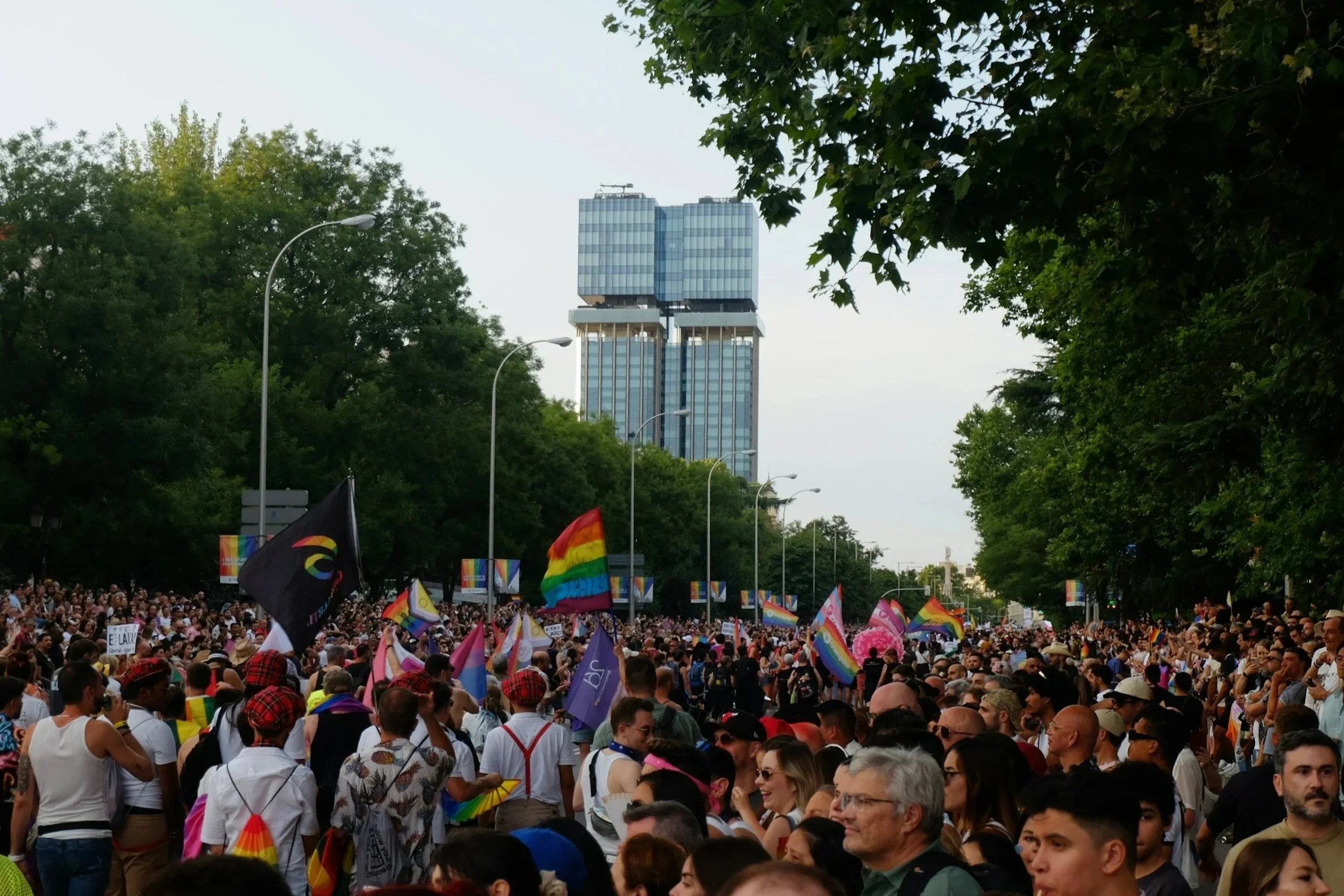
Pride — Madrid
When: Late June to early July
Where: Madrid
As the third country ever to legalise gay marriage in 2005, Spain has acted as a beacon for the LGBTQ+ community since then, and Madrid’s been considered as the safest city for queer people to visit. In fact, the Spanish capital hosted the second-largest World Pride in 2017 with over 3 million attendees, meaning it’s no fluke that Madrid is one of Europe's biggest festival destinations for the non-heteronormative and their allies. The pride parade normally occurs on the first Saturday of July, but events take place across multiple days, complete with live music, cultural activities, and nightlife venues throughout Chueca (the Gay Village) and the city centre. Enjoy brunch with a side of drag show, attend the annual high-heels race or join a dance workshop before voting for your favourite contestants for Mr. Gay España. The atmosphere is particularly energetic around Plaza de Pedro Zerolo, Gran Vía and Puerta del Sol, where you’ll find many outdoor concerts, as well as along Paseo del Prado/Paseo de Recoletos, the parade’s main vein. If you're looking for a festival where the entire city seems to participate, this is it.
European Balloon Festival – Igualada
When: First half of July
Where: Igualada, Catalonia
Forget fireworks, hot air balloons are the latest travel trend, and there’s no better place to watch them take off in Spain than Igualada. Since 1997, the Catalan town has hosted the European Balloon Festival, one of the continent’s most popular hot-air balloon events. More than 50 pilots and thousands of spectators are attracted to the stunning spectacle every year when dozens of colourful hot-air balloons float through the clear sky. Alongside flights and competitions, visitors can enjoy concerts and family-friendly activities throughout the day before experiencing Night Glow, when illuminated balloons create a rather magical display coordinated to music. For the best views, arrive in the early morning since most flights take off just before sunrise, or in late afternoon before sunset, as take-offs depend on favourable weather conditions when the wind is more stable. Whether you’re a morning bird or a night owl, this balloon festival is sure to take your imagination to new heights.
San Fermín — Pamplona
When: Early to mid-July
Where: Pamplona, Navarra
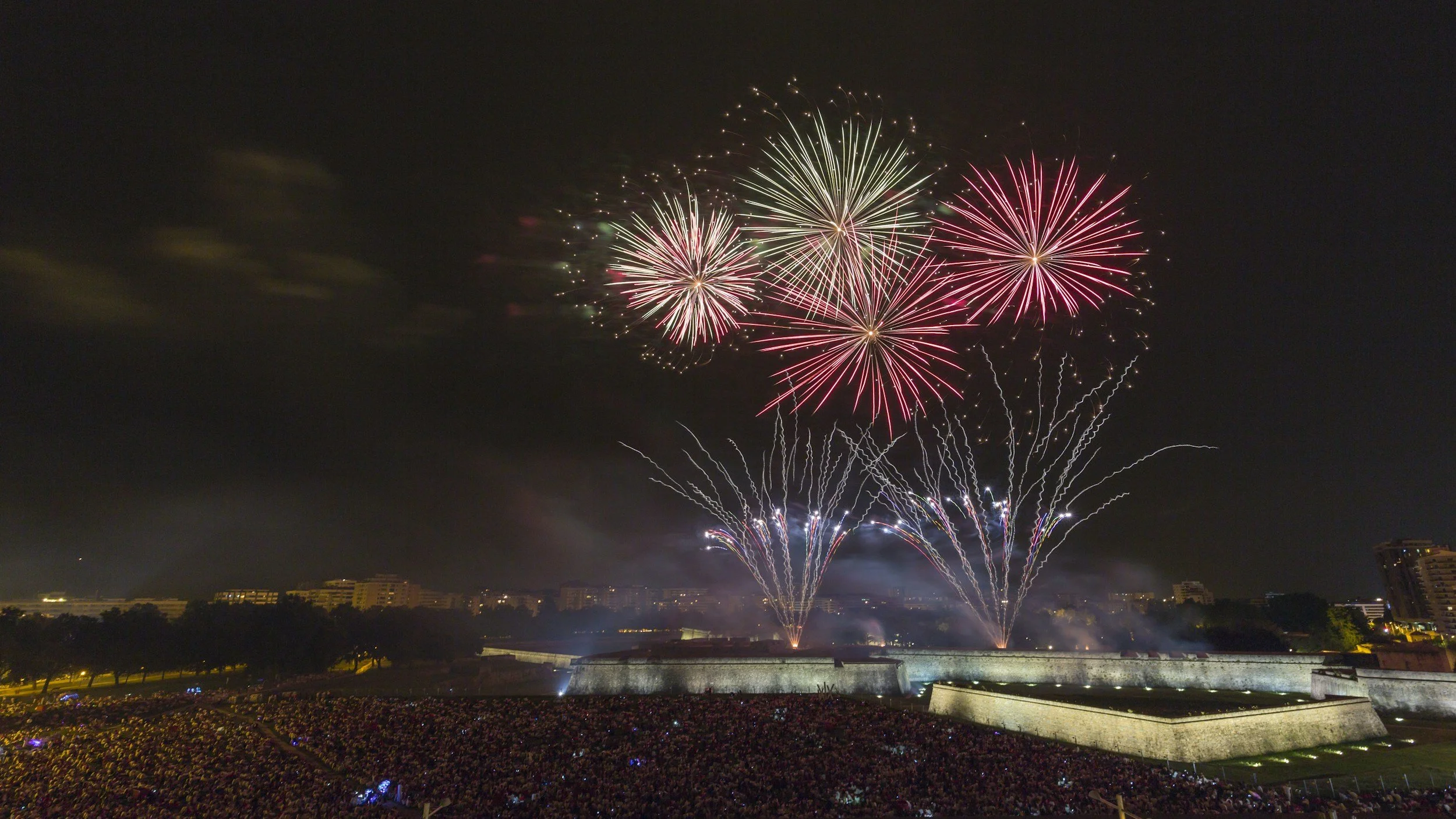
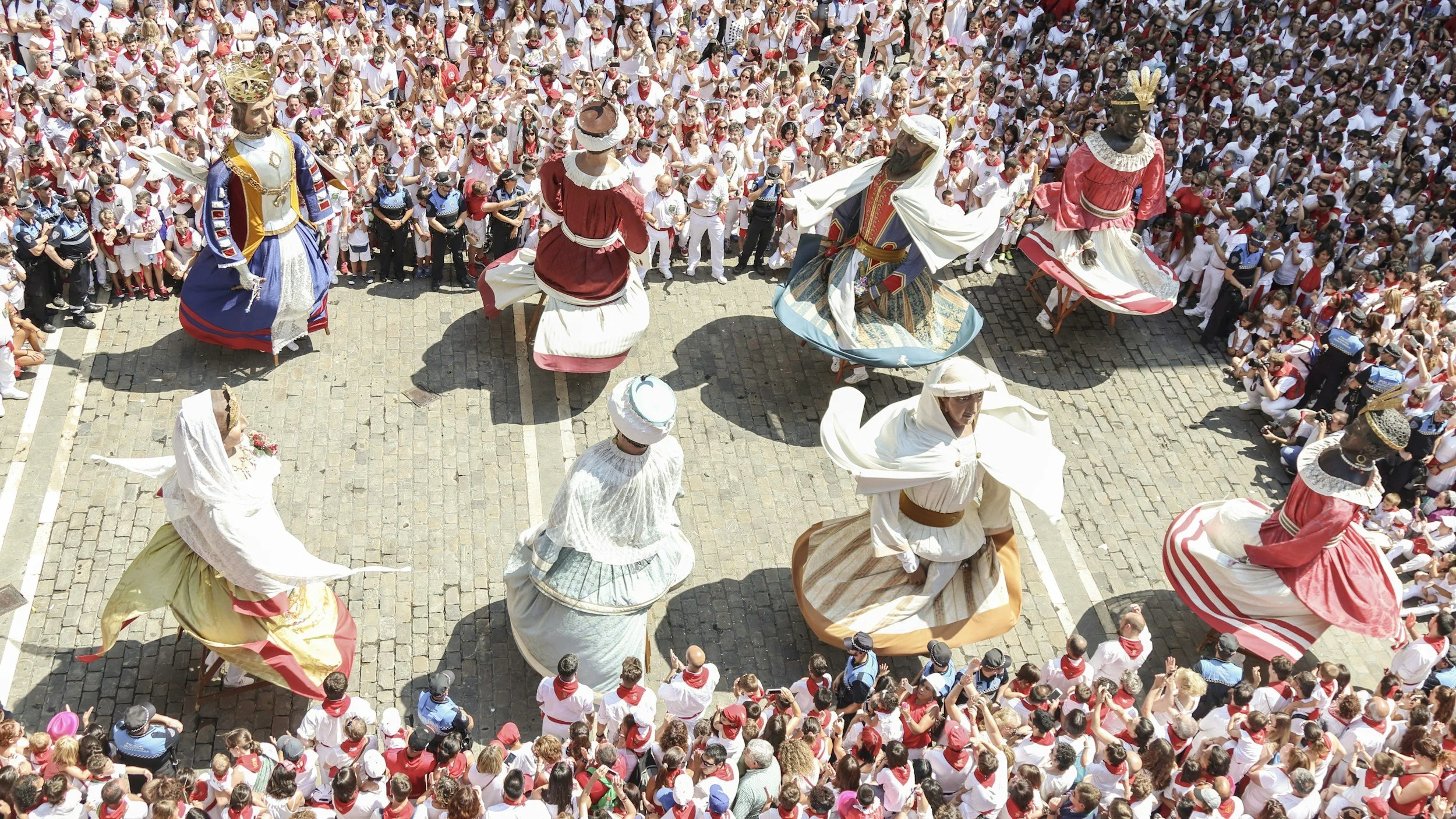
San Fermín may be famous internationally for the Running of the Bulls, but the festival is far more than a week of questionable decisions involving large, horned animals. The celebrations kick off with the chupinazo, the launching of a firework rocket followed by a citywide dance party, and continue with daily bull runs, parades, concerts, and street parties. Pamplona's medieval streets remain lively throughout the festival, with locals dressed in the traditional white-and-red attire. The festivities attract humungous crowds, so plan ahead if you want accommodation within the city centre. Any able-bodied adult is welcome to participate in the bull run, but I’d recommend finding a balcony to watch from a safe distance or reserving a seat in the bullfighting stadium where the run ends. That way, you won’t have to be one of the unfortunate souls trapped in the arena with 600-kg (1300-lb) brutes rightfully ready to gorge you to death. Don’t say you weren’t warned!
Mad Cool Festival – Madrid
When: Early to mid-July
Where: Madrid
Get ready to dance the night away at Mad Cool, one of Madrid’s most prominent annual events, that attracts music lovers to the city every July. Launched in 2016, the music festival has grown into a major fixture on Spain’s summer calendar, drawing some of the international names in pop, rock, hiphop, and alternative music. The multi-day event is held at Iberdrola Music in Villaverde (South Madrid) and combines stage performances with food, art and fashion, creating more of an immersive experience than your average concert. Attracting nearly 50,000 attendees daily, it’s best to arrive early to snag a premium spot among the roaring crowds. Then rock out to your favourite music artists or perhaps discover some new ones. Either way, it’s sure to be mad cool and an easy addition to any summer holiday in Madrid.
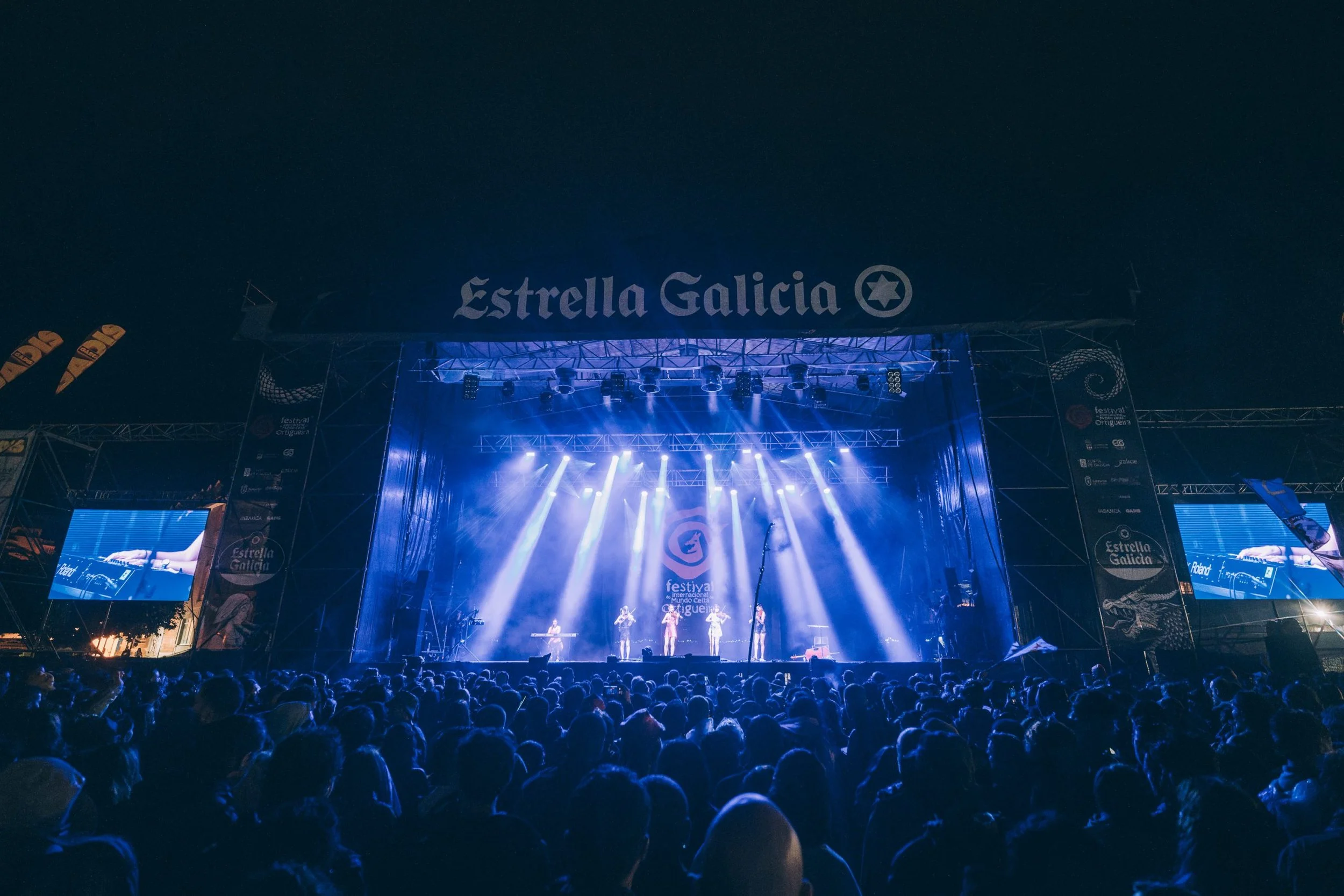
Photo courtesy of Festivaldeortigueira.com
Festival Internacional do Mundo Celta — Ortigueira
When: Mid to late July
Where: Ortigueira, A Coruña (Galicia)
The Celts aren’t exclusive to Ireland and Great Britain since the culture is alive and thriving in Spain’s most northwestern region, Galicia. Renowned for its gastronomy and untamed natural beauty, Galicia is home to part of St. James’ Way as well as the International Festival of the Celtic World, a massive music festival bringing together Celtic and folk musicians (plus their bagpipes) from around the world. Founded in 1978, the free outdoor event has become an important fixture of Europe’s folk music industry and beyond. The four-day festival features everything you’d expect and more, including concerts with craft markets, photography exhibitions, street performances and traditional music. You can even take a dance workshop to learn to jump and jig like a proper Celt. The coastal town of Ortigueira, set on Galicia's rugged northern coast, adds another layer of magic, particularly when the festivities start spilling into its streets and seafront after dark. For travellers seeking dramatic landscapes backed by lively music, succulent seafood and Celtic heritage, Ortigueira makes an excellent summer escape without the heatwaves of southern Spain.
Fiestas del Apóstol Santiago — Santiago de Compostela
When: July 24
Where: Santiago de Compostela, Galicia
If you’re ever heard of the Camino de Santiago (St. James’ Way), the name Santiago de Compostela should ring a few bells. Beloved for its Gothic architecture and delectable food, Santiago is also one of the end points for the holy pilgrimage route, so of course, the locals go all out when celebrating the city’s patron saint. With over a week of live concerts, theatre productions, street performances and cultural events, the festivities reach their climax around the night of July 24, when the historic centre hosts the famous Fuegos del Apóstol (Apostle’s Fires). This incredible showcase incorporates fireworks and projections illuminating the Cathedral, with multiple launch sites around the city to watch the display such as the central Parque de la Alameda, Cidade da Cultura de Galicia (on Mount Gaiás) or Parque Carlomango (in the Fontiñas district). You can also watch the swinging of the cathedral's Botafumeiro (an immense incense urn) as it blesses the city during religious ceremonies before partaking in traditional Galician dancing backed by blaring bagpipes. For pilgrims walking the Camino, this is an unforgettable time to visit Santiago, but you'll want to book accommodation well in advance to make the most of the festivities.
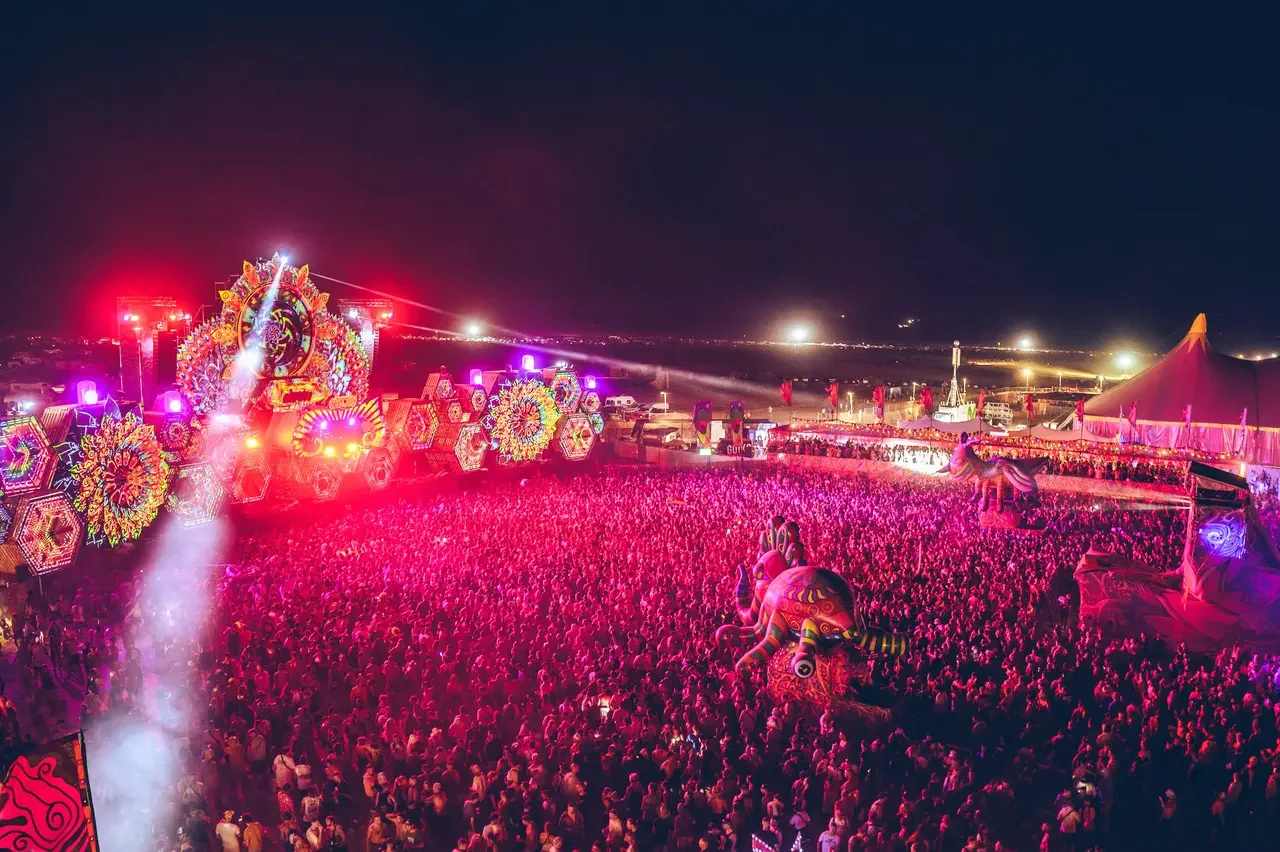
Photo courtesy of Goaragon.es
Monegros Desert Festival
When: Late July
Where: Fraga, Huesca (Aragón)
Burning Man isn’t the only festival isolated to a desert setting, so if you assumed Spain was only flamenco and beaches, think again. Held near the town of Fraga in northern Spain, Monegros Desert Festival is one of Spain’s most distinctive electronic music events, pulling in international and Spanish DJs since the 1990s. Musical acts span across genres ranging from techno to trance, entertaining the thousands of partygoers attracted to Aragón every summer. Descend on the arid landscape of the Monegros Desert for an almost 24-hour dance marathon. Then watch the desert transform into a pop-up city, filled with pulsing music and kaleidoscoping lights while making very questionable decisions about how much sleep you actually need. Just make sure to stay dehydrated!
Moros y Cristianos — Villajoyosa & Orihuela
When: Late July
Where: Villajoyosa and Orihuela, Alicante
Centuries ago, much of Spain was under Moorish rule until the Catholic Kingdoms went to war to reclaim the lost territory, finally gaining victory in the 15th century. Since then, many towns across Spain have celebrated Moros y Cristianos throughout the year, but July brings exceptional editions to Alicante. Villajoyosa is particularly popular for its scenic seaside celebration, featuring extravagant parades, live music and a dramatic re-enactment of a Moorish landing by sea. Orihuela also hosts a major festival honouring the Christian reconquest of the Iberian Peninsula, complete with winding processions and costumed performers. The festivities not only meld medieval history with theatrics, but also makes them much more immersive than simply visiting a historic monument. Check the local festival calendar before deciding which beach day to sacrifice.You won’t regret it, especially if you’ve never experienced a medieval battle!
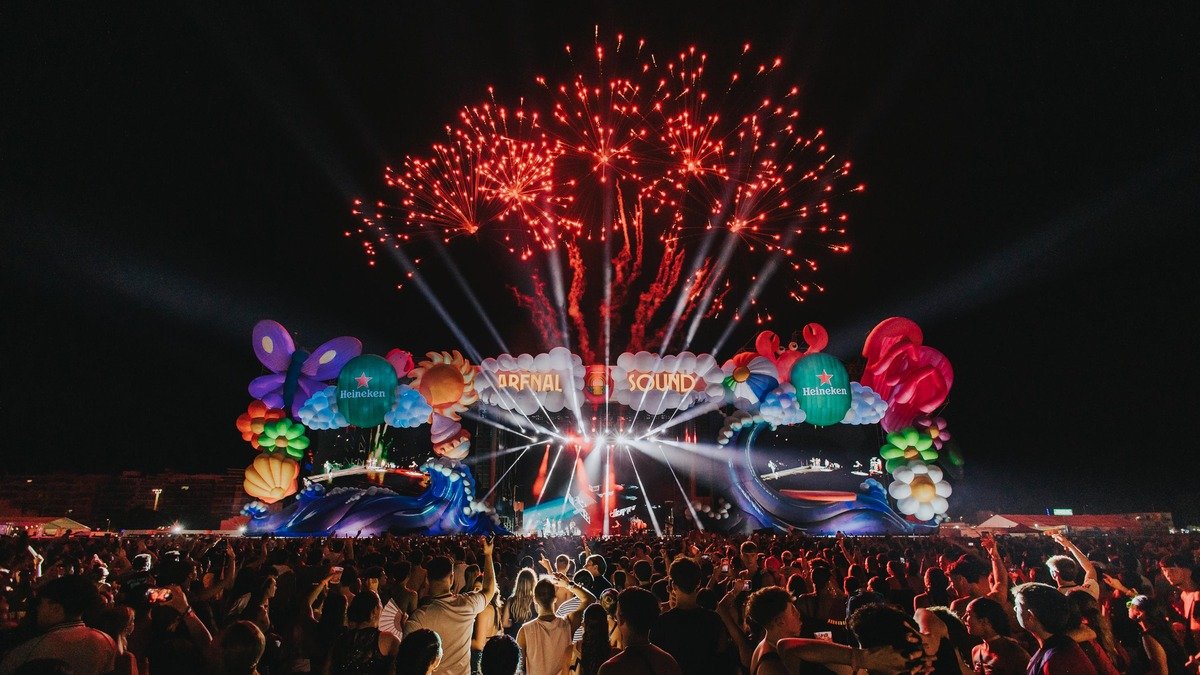
Photo courtesy of Modofestival.es
Arenal Sound — Burriana
When: Late July to early August
Where: Burriana, Castellón (Valencia)
Visiting Costa Blanca in summer? Then Arenal Sound might just be a fun opportunity for you as the festival attracts thousands of music lovers to the Valencian coast every summer. The multi-genre festival welcomes major Spanish and international acts, resulting in multiple days of concerts, live DJs, and beachside partying. Camp near the coastline to make the most of your time, so you'll never have to miss any late-night events showcasing urban, electronic, and indie music acts. Its setting near Burriana allows attendees to spend the afternoon by the sea before heading to the sound stages after sunset. It is particularly popular with younger adults, so expect a lively atmosphere and large crowds. For a summer holiday that involves equal parts music and sunshine but very little sleep, Arenal Sound should probably be on your radar.
AUGUST
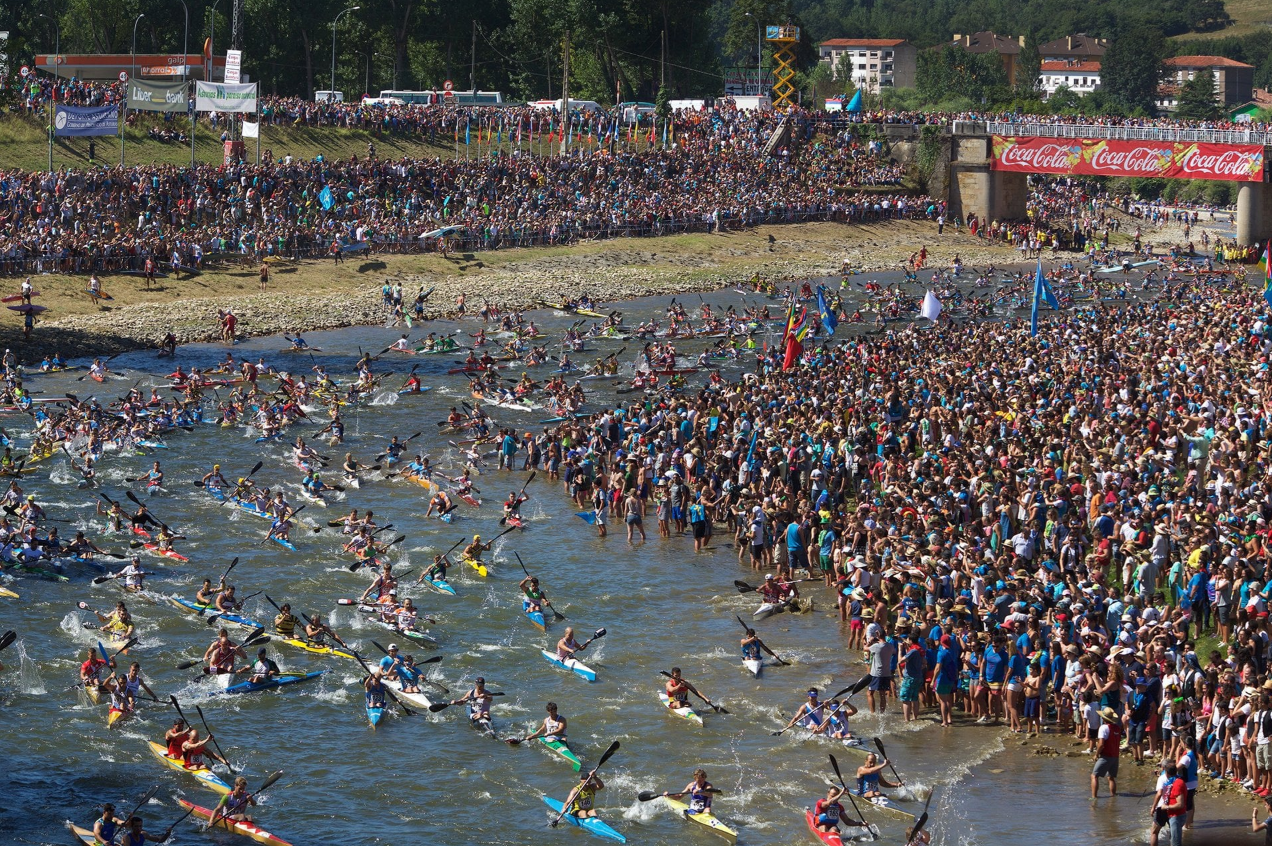
Photo courtesy of Elpais.es
Descenso Internacional del Sella — Asturias
When: First Saturday in August
Where: Parres, Asturias
Skip watching a sporting event from the sidelines since, during the International Sella River Descent, you can compete by paddling your way down the Sella River while thousands of spectators turn the surrounding countryside into one humongous cultural party. The annual 20-km (12-mile) kayaking and canoe race attracts participants from around the world, and accompanying festivities include traditional music, local food, and dancing along the riverbanks. Known colloquially as Les Piragües, the event merges competitive sports with local traditions, culminating in one of northern Spain's biggest summer gatherings. Consider it a brilliant reason to explore Asturias' mountains, cider houses and pristine beaches before or after the race. Row, row, row your boat and let the best competitor win.
Cante de las Minas — La Unión, Murcia
When: Mid-August
Where: La Unión, Murcia
Flamenco takes centre stage in the former mining town of La Unión during the Festival Internacional del Cante de las Minas. Located in southeastern Spain, Murcia was a mining hub for centuries, stretching back to the ancient Phoenicians, but many of these mining sites have sat long abandoned since operations completely ceased in the 1990s. These days, a few of these mines are open to the public, yet there’s no better time to visit than during Cante de Las Minas, a cultural event commemorating the suffering and resilience of local mining communities. Established in 1961, the festival fuses folk singing, Spanish guitar and traditional dances in a setting deeply connected to Murcia's mining heritage. Performances usually take place in historic venues, such as the old Mercado Público, while prestigious competitions attract some of the finest emerging flamenco artists. The general atmosphere is far more intimate than any giant summer music festival, making it ideal for travellers interested in Spain's performing arts without the endless crowds of tourists. Come for the flamenco, but stay long enough to explore the town's fascinating mines and ruins.
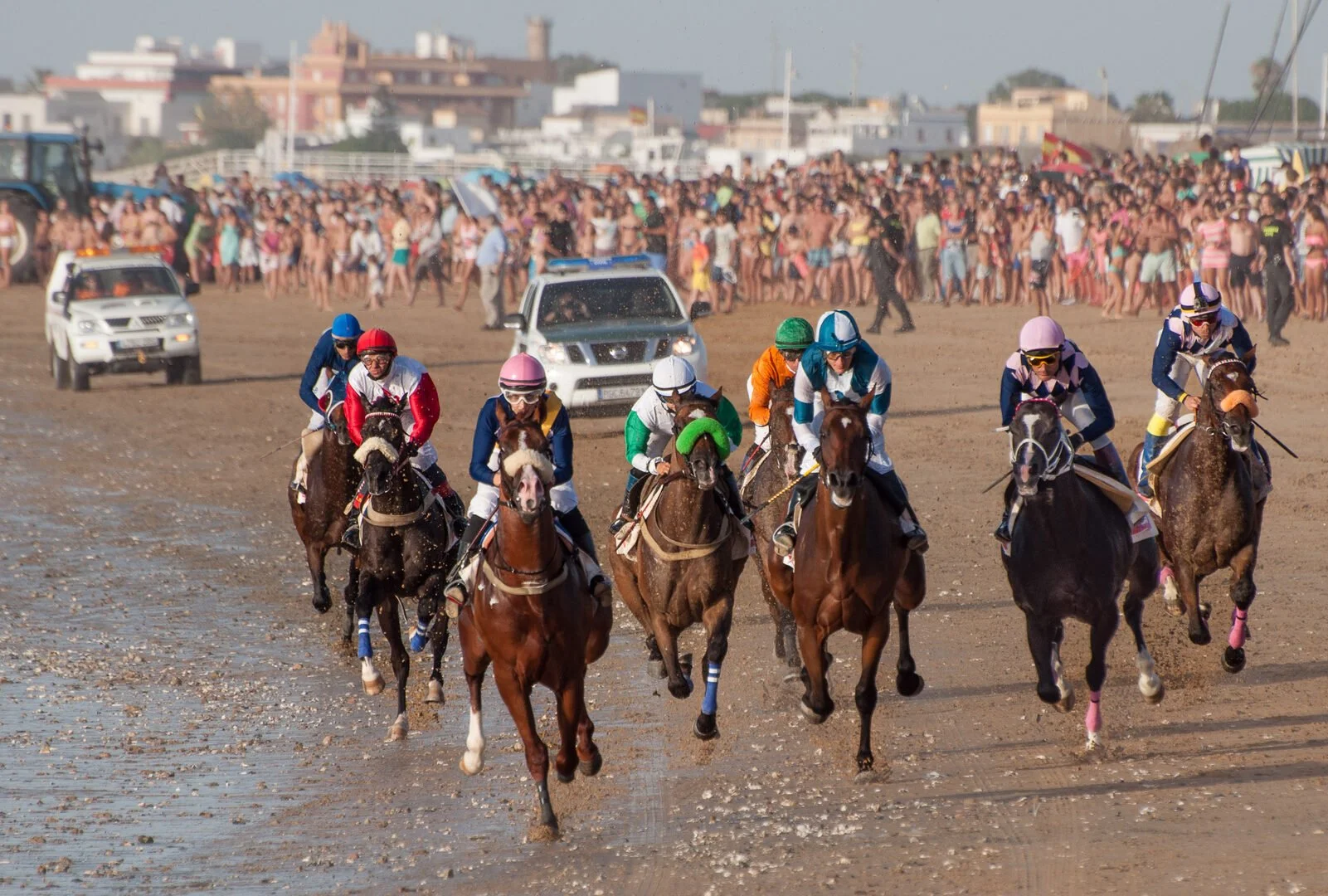
Photo courtesy of Canalsur.es
Carreras de Caballos — Sanlúcar de Barrameda, Cádiz
When: Throughout August
Where: Sanlúcar de Barrameda, Cádiz (Andalucía)
Ever been to a horse race? How about one along the sandy shores of the Mediterranean? Well, now you can during Carreras de Caballos since, twice per summer, Sanlúcar de Barrameda's seaside becomes an overnight racecourse where the track is a beach. Watch dozens of thoroughbreds thunder down Cádiz’s coastline as the sun sets over the Atlantic, creating one of Spain's most incomparable sporting events. Dating back more than 175 years, the races welcome locals and visitors alike, with attendees gathering along the beach and promenades to witness the spectacle. The tradition, which began as informal races between horseriders transporting fish from the old port to inland markets, has now grown into one of Andalucía’s most significant celebrations. Held opposite Doñana National Park, sample Sanlúcar's savoury seafood and famous sherry wine before enjoying views across the Guadalquivir River for a distinctly Andalusian experience you won’t get anywhere else.
Aste Nagusia — Bilbao
When: Mid to late August
Where: Bilbao, Basque Country
For nine days each August, Bilbao throws a colossal citywide party in celebration of Basque heritage in the region’s largest city. Translating to “Big Week, ” Aste Nagusia is the city’s biggest festival, founded in the late-1970s as Spain transitioned into a democracy after a dictatorial regime that oppressed the regional language and customs. Rather than continuing to follow tradition by hosting indoor events (which were usually reserved for the elite), local residents banded together to start a festival open to everyone in the community and more. It begins with the arrival of Marijaia, a giant symbolic figure with outstretched arms whose name literally means “Party Woman” in Euskera, and goes on to feature live concerts, firework shows, street theatre, and Basque food stalls, among some activities.The city centre becomes a massive outdoor venue, with events taking place along the Nervión River and throughout Bilbao's neighbourhoods. One of the best things about Aste Nagusia is its variety: you can watch Basque sports like pelota, take in a free concert under the stars, and then join a street party in the same evening. If you want to experience Bilbao at its peak, this is your time to visit.
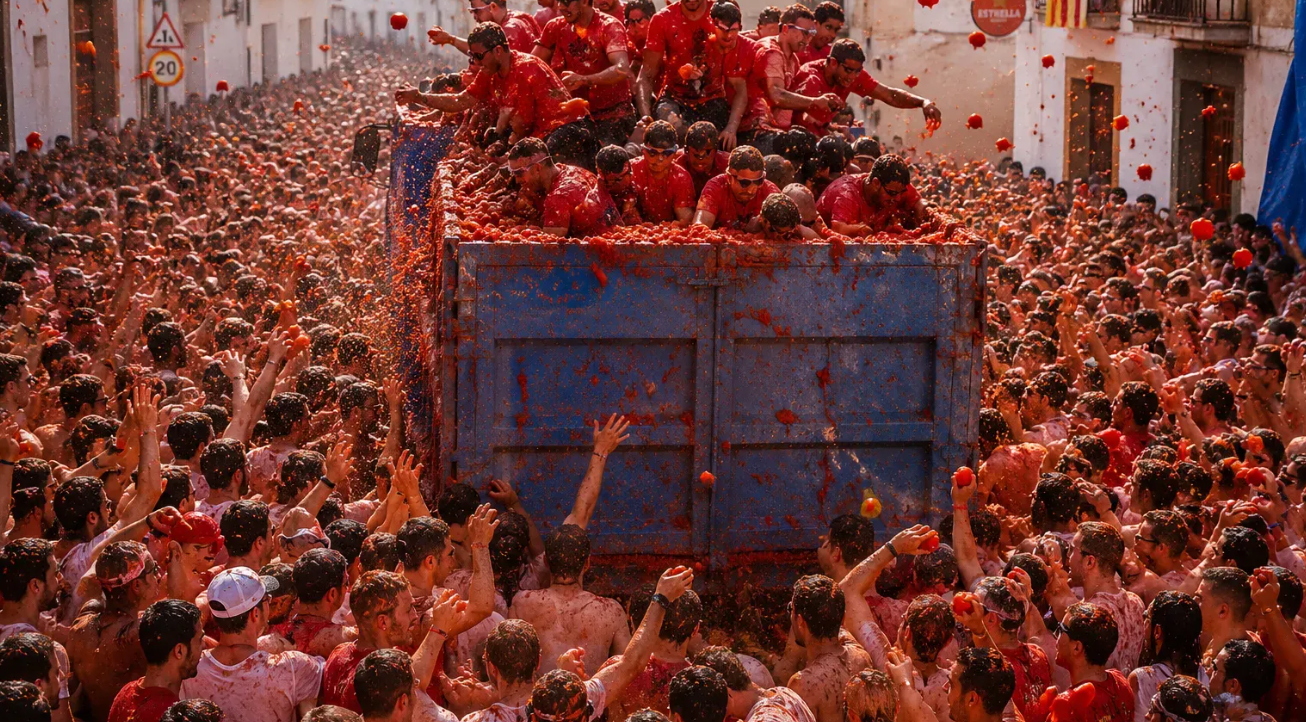
Photo courtesy of Premiumincoming.com
La Tomatina — Buñol, Valencia
When: Last Wednesday of August
Where: Buñol, Valencia
If you’re never been in a food fight, this festival would be the perfect time to try! Just one hour outside Valencia lies the town of Buñol, where thousands of festival-goers gather every summer for what has to be Spain's messiest festival (with Batalla del Vino in Haro being a close second). La Tomatina invites participants to throw endless amounts of ripe tomatoes at one another in a gigantic, gloriously chaotic skirmish. The battle itself lasts only about an hour, but the subsequent celebrations involve live music, food stalls, and of course, street parties. Because participation is limited, you can’t simply turn up expecting to join the tomato apocalypse, thus, make sure to get tickets in advance. Before you attend, only wear clothes you are willing to part with permanently as the acidity of the tomatoes will likely ruin them otherwise. Eye goggles are also strongly recommended for this reason, and I’d suggest protecting your smartphone with a waterproof lanyard – imagine what those acids could do to it otherwise. While this might not be fine dining, it’s sure to be a truly unforgettable experience where you can eat your ammunition. Bite the bullet and book your spot ASAP.
Starlite Occident — Marbella
When: Generally July–August
Where: Marbella, Málaga (Andalucía)
For travellers seeking high-class entertainment alongside Spain’s Costa del Sol, there’s no better time to visit than in mid-summer despite the heatwaves. Famous for its luxury resorts, clear skies and world-renowned institutions, Marbella is also home to Starlite Occident, a well-established festival merging international concerts, comedy shows, and fine dining into an atmospheric open-air venue surrounded by the city’s majestic hills.The programme varies from year to year, but the lineup usually includes popular Spanish and international performers along with exclusive DJ events. Whilst considerably more polished than the other festivals on this list, Starlite Occident shines as an outdoor cultural and entertainment season, making it especially appealing if you love live music yet don’t want to give up Marbella's elegant restaurants and posh nightlife. What better way to stargaze in splendor?
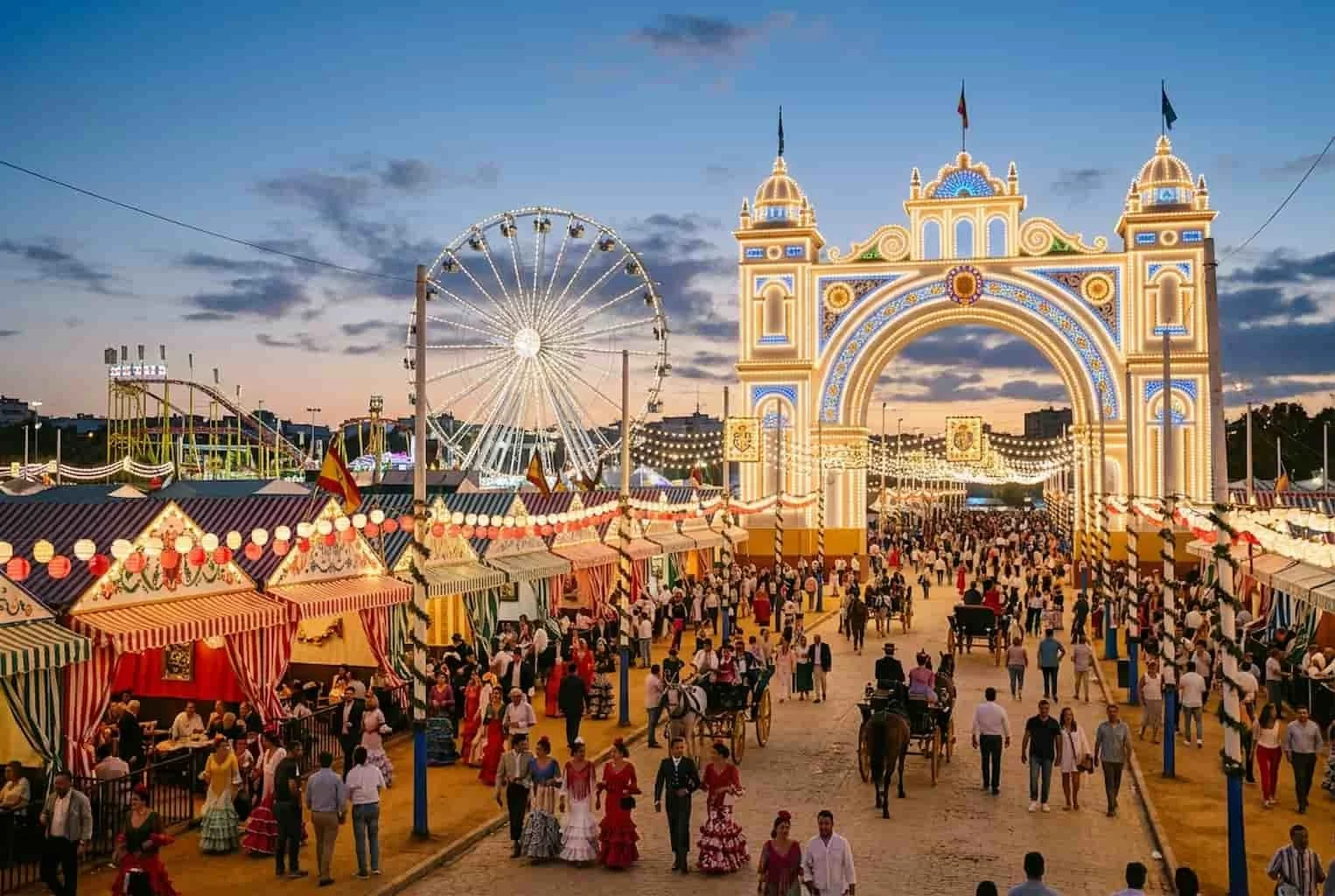
Photo courtesy of Anywaywinebar.com
Feria de Málaga — Málaga
When: Mid to late August
Where: Málaga, Andalucía
Apart from Hogueras de San Juan, Feria de Málaga is certainly the city’s biggest annual festival, intertwining time-honoured Andalusian customs with a modern party vibe. During the week-long fair, the city is inundated with flamenco and sevillanas music, copious concerts, various food stalls, and street performances around every corner. Daytime festivities are usually localised around the historic centre, especially in public squares such as Plaza de la Consititución and Plaza de las Flores, but some other main veins include Calle Larios and Calle Granada. If you’re a fan of fireworks, visit La Malagueta Beach around sunset to snag a good spot to catch the show. Still, the real magic happens after nightfall when the atmosphere definitely picks up. Head to the fairgrounds of Cortijo de Torres near the Málaga Trade Fair and Congress Centre to find the best attractions and pop-up bars to keep you dancing until dawn. Expect to see locals wearing traditional garb while getting on rides or chomping down on some incredible local seafood dishes like tortilla de gambas. Only rivaled by Carnaval and Feria de Abril in grandeur, this is a festival you won’t want to pass up.
SEPTEMBER
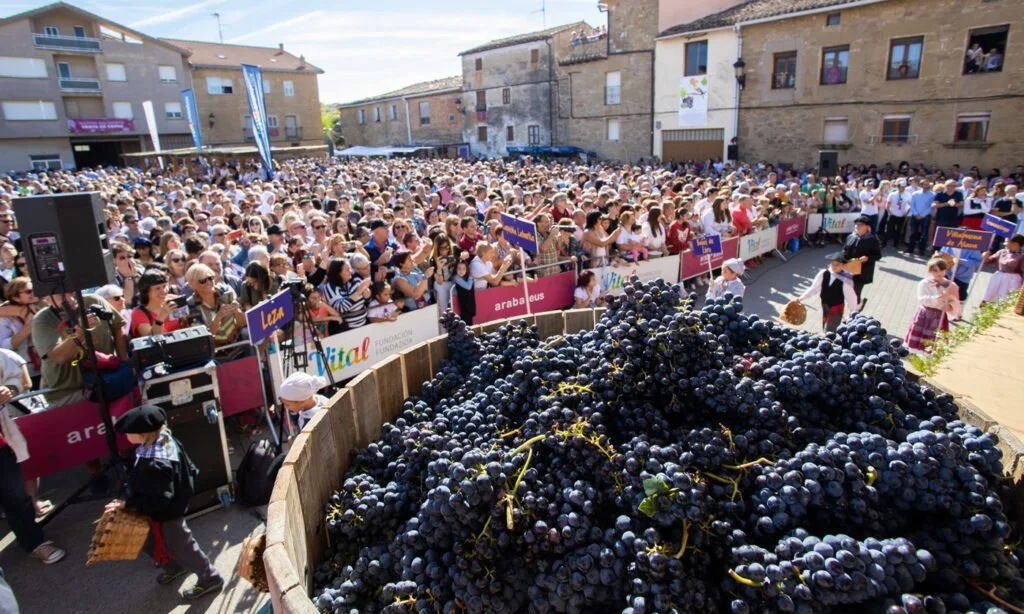
Photo courtesy of Laprensadelrioja.com
Fiesta de la Vendimia — Spain's Wine Regions
When: Early to mid-September
Where: La Rioja, Jerez de la Frontera and Penedès
For wine connoisseurs, there’s no better time to visit Spain than September during the harvest season and your first stop should be La Rioja. The northeastern region is hailed for its vineyards which have been producing some of the country’s most award-winning wines for generations. The Fiesta de la Vendimia (Vintage Fest) is a particularly prominent festival throughout the region as well as in Penedès (Catalonia), although other towns also host their own versions. As harvest celebrations are deeply connected to local identity and winemaking traditions, you can expect grape-stomping, wine tastings, cultural processions, and traditional music flooding the streets. To sample sweeter spirits, head to Jerez de la Frontera (Andalucía), whose sherry strains are sure to delight your palette. Book a visit to a nearby vineyard or attend a gastronomic event to make the most of your time. ¡Salud!
Feria de Albacete — Albacete
When: September
Where: Albacete, Castilla-La Mancha
Albacete is the largest province in Castilla-La Mancha (AKA the setting for Don Quixote), and as such, is also home to Feria de Albacete, an annual fair that turns the city into a boisterous celebration of traditional music, local food, and live entertainment. Dating back centuries, the Feria de Albacete is similar to other popular festivals in Sevilla and Málaga but this event is especially significant due to its connection to Castilla-La Mancha's rural and agricultural heritage. If you're looking for an alternative to Spain's better-known (and often overcrowded) city festivals, Albacete provides a much more authentic experience packed with the thrilling concerts, fairground attractions, and street markets you’d expect anywhere else. Plus, the overall cooler weather in September also makes it the perfect time to explore the surrounding region, which is full of picturesque medieval villages that look straight out of a storybook.
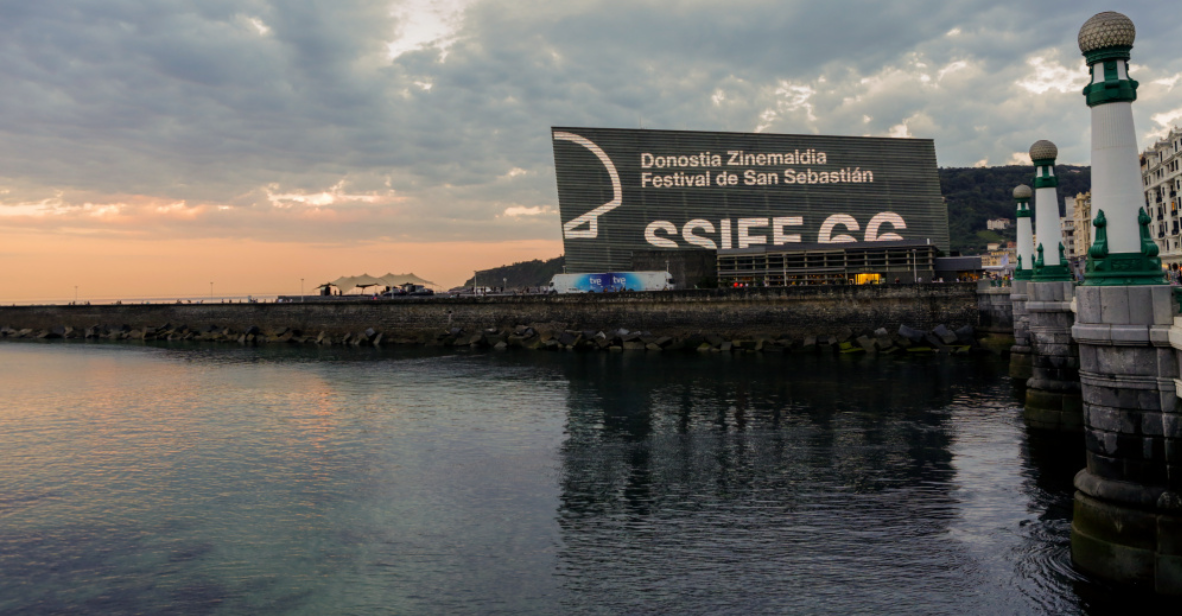
Photo courtesy of Lamismahistoria.es
Festival Internacional de Cine — San Sebastián
When: Mid to late September
Where: San Sebastián, Basque Country
Any film buffs travelling to the Iberian Peninsula? San Sebastián is to Spain as Cannes is to France, where the red carpet rolls every September for one of Europe's most prestigious film festivals. Hosted for over 70 years, the International Film Festival attracts actors, directors and filmmakers from around the globe, with movie premieres and screenings taking place citywide. Even if you don't manage to snag tickets to the leading films, the festival creates a buzz throughout San Sebastián, near the Kursaal and Victoria Eugenia Theatre. Pick your top flick while marvelling at the exceptional gastronomy scene and then stroll down the sandy shores of Playa de la Concha (Shell Beach), nestled right in the city centre. Just don't be surprised if you spot your favourite celebrities between courses on an open-air terrace. The last thing you’ll want is for them to see you choking on a pintxo.
Cartagineses y Romanos — Cartagena
When: Mid to late September
Where: Cartagena, Murcia
Give it up for Cartagena, where history gets downright theatrical every year in late summer. While Murcia is a southeastern region that isn't widely recognised outside of Spain (or within), its historical significance cannot be understated since its origins stretch back to thousands of years to the Carthaginians. Since then, the city has grown into a maritime hub and naval base, and it was once one of the richest areas in the nation thanks to a mining boom in the 19th century. It’s also home to one of the best preserved Roman colosseums in the Iberian Peninsula, only rediscovered in the 1980s. No event exemplifies these cultural influences better than the Carthaginians and Romans Festival, when the city recreates its Punic and Roman past with large-scale military camps, historical parades, staged battles, streets markets – all backed by period-accurate costumes. The highlight is the dramatic re-enactment of the Roman conquest of Qart Hadasht, but the festival's programme also includes live concerts and nighttime festivities. For a unique way to understand the city's ancient past, check out this immersive history lesson, complete with considerably more swords.
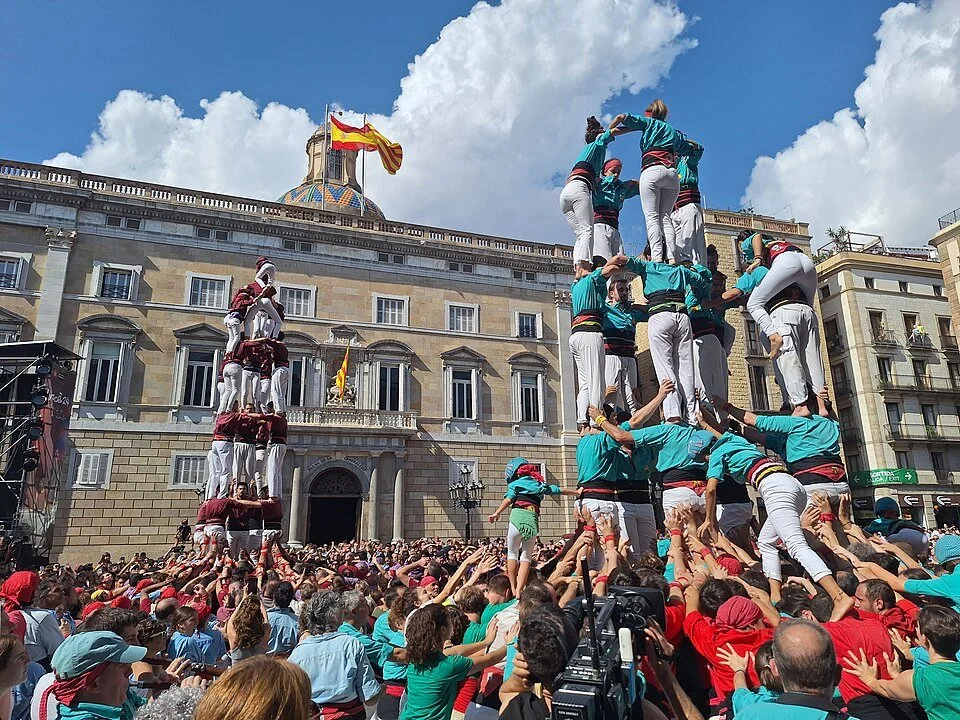
Festes de la Mercè — Barcelona
When: September 24
Where: Barcelona, Catalonia
La Mercè is Barcelona’s patron saint, so it’s safe to assume that Spain’s party capital goes all-out each year for the special occasion. For travellers craving to experience Catalan culture beyond the city’s famous architecture and infamous nightlife, this is the best moment to visit since live events take place around every corner, with many performances free to attend. Enjoy a concert or traditional dance show before witnessing some of Catalonia's most recognisable customs, such as forming castells (giant human pyramids). In my opinion, correfocs are the most impressive since these fire fests are filled with dancing devils where you can shimmy right under their sparklers. From fireworks and street theatre to the most authentic paella you’ve ever eaten, La Mercè is one of the most memorable festivals in Catalonia.
Festival de San Mateo — Logroño
When: Late September
Where: Logroño, La Rioja
Apart from the Fiesta de la Vendimia, San Mateo is another festival taking place right in the heart of Spain’s wine country, but this time in the community’s capital. San Mateo marks the arrival of the grape harvest in Logroño with a week of events centred on red wine, local food and Riojan traditions. Typical celebrations consist of grape-stomping ceremonies, costumed processions and music concerts as well as gastronomic activities since wineries and restaurants regularly join the festivities. Pair each glass of wine with another tasty morsel as you explore Logroño's famous tapas culture while learning more about the region's wine-making heritage. I certainly wouldn’t judge you for ordering another glass – or three.
OCTOBER
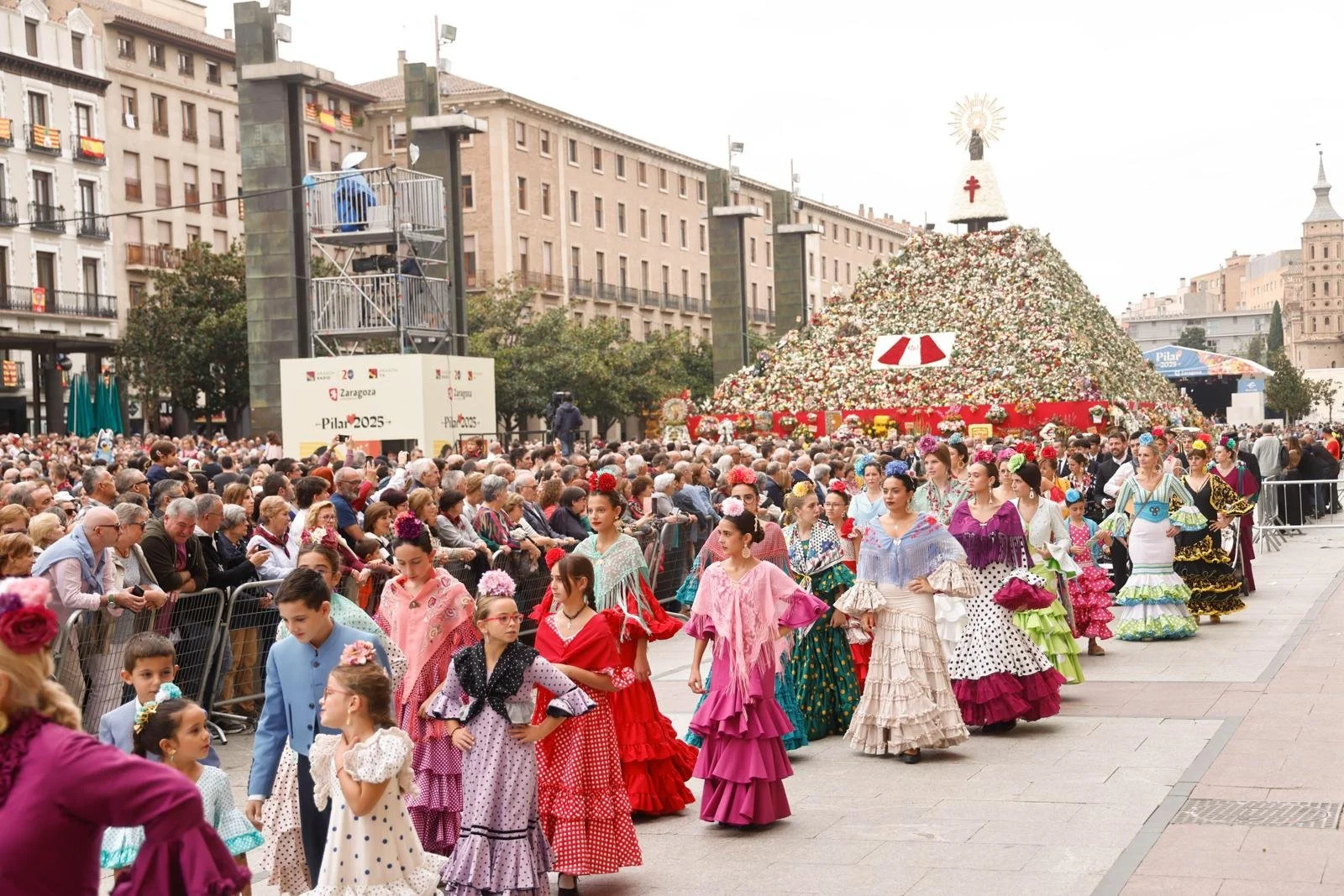
Photo courtesy of Enjoyzaragoza.es
Fiestas del Pilar — Zaragoza
When: Early to mid-October
Where: Zaragoza, Aragón
Zaragoza is the capital of Aragón and the largest city in the northeast community, built on an ancient Roman settlement. At its centre lies the Basilica of Our Lady of the Pillar, a 17th-century Baroque behemoth dedicated to its patron saint whose annual festival is one of the liveliest in the region. Featuring more than a week of live music, theatre plays, food stalls, and nightly fireworks, the main attraction is the extraordinary Ofrenda de Flores, when thousands of people dressed in traditional Aragonese clothing bring flowers to the Virgin of the Pillar in Plaza del Pilar. Another similar ceremony is the Ofrenda de Frutos, where food is carried to the basilica and later donated to people in need. Blend in by getting your hands on a red, checkered bandana and then take in as many folk performances and concerts as you can since the festival’s scale is massive, providing you plenty to explore. When you need a pick-me-up, try some sweet frutas de Aragón for a quick refuel before partying the night away.
Semana Cervantina — Alcalá de Henares
When: Early to mid-October
Where: Alcalá de Henares, Madrid
Who hasn’t heard of Don Quixote, the brave (if at times delusional) knight from Castilla-La Mancha and his trusty sidekick, Sancho? Written by Miguel de Cervantes in the early 1600s, this inspiring tale of valour in the face of insurmountable odds has transcended generations as one of Spain’s most beloved works of fiction. It’s no wonder then that Alcalá de Henares celebrates its most famous son with a week-long fair dedicated to literature, theatre and the nation’s Golden Age. The historic centre takes on a distinctly medieval atmosphere, backdropped by theatrical performances, literary events, and the expansive Cervantes Market, chock full of craft goods and traditional food stalls. Explore the birthplace of Cervantes while honouring his larger-than-life protagonist during Semana Cervantina, which was declared a Fiesta of International Tourist Interest in September 2026, further recognising its importance as a cultural event. The university town is located just 30 km away from Madrid, making it perfect for a day trip since it’s connected via railway.
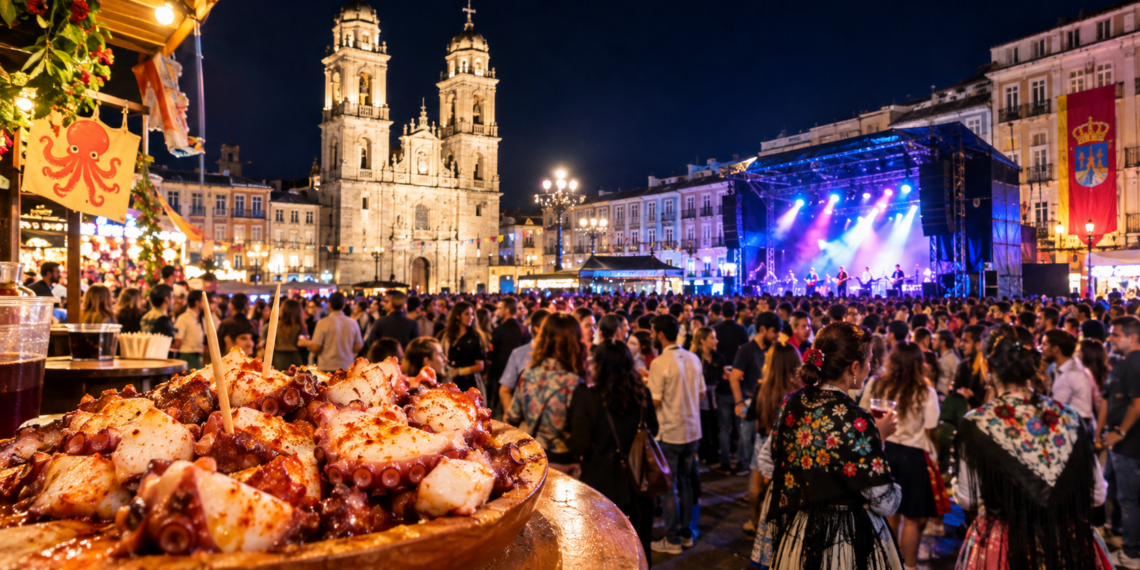
Photo courtesy of Radiolider.com
Fiestas de San Froilán — Lugo
When: Early to mid-October
Where: Lugo, Galicia
San Froilán is undoubtedly Galicia's biggest autumn celebration, when Lugo fills with panoramic parades, live concerts featuring folk bands, and street markets in reverence to its patron saint. Lasting about a week, the festivities generally kick off on the saint’s day, October 5th, starting with a solemn mass in the Cathedral before devolving into a citywide celebration. Expect costumed jugglers, folklore recitals, and processions of natives from all over the region adorned in traditional attire as cultural performances steeped in centuries-old customs sweep through the Lugo’s ancient Roman walls. One of the main highlights is O Domingo das Mozas (Sunday of the Young Women), a holiday created as the perfect excuse to shop and socialise. The festival concludes with a medieval banquet, but make sure to stay long enough to witness the closing fireworks show that will leave you saying, “Amen!”
Fiesta de la Rosa del Azafrán — Consuegra
When: Late October
Where: Consuegra, Toledo (Castilla-La Mancha)
If you’ve ever enjoyed a seafood paella, you should give your thanks to Castilla-La Mancha, the largest producer of saffron in the country. One town that exemplifies this agricultural heritage is Consuegra, situated about an hour and a half south of Toledo. For centuries, saffron has been a lucrative cash crop , earning it the nickname “Red Gold” from being the most valuable spice on Earth. During the annual Saffron Rose Festival, you can watch demonstrations of harvesting and processing methods refined over generations, along with folk music concerts and traditional dancing. Browse the markets to peruse their craft stalls and sample regional food, with the festivities all framed by windmill-studded ridge overlooking the surrounding plains. If you wish to enjoy one of the most recognisable landscapes in central Spain and learn how the world's most expensive spice goes from a flower to your kitchen cupboard, this is a truly fascinating place to start.
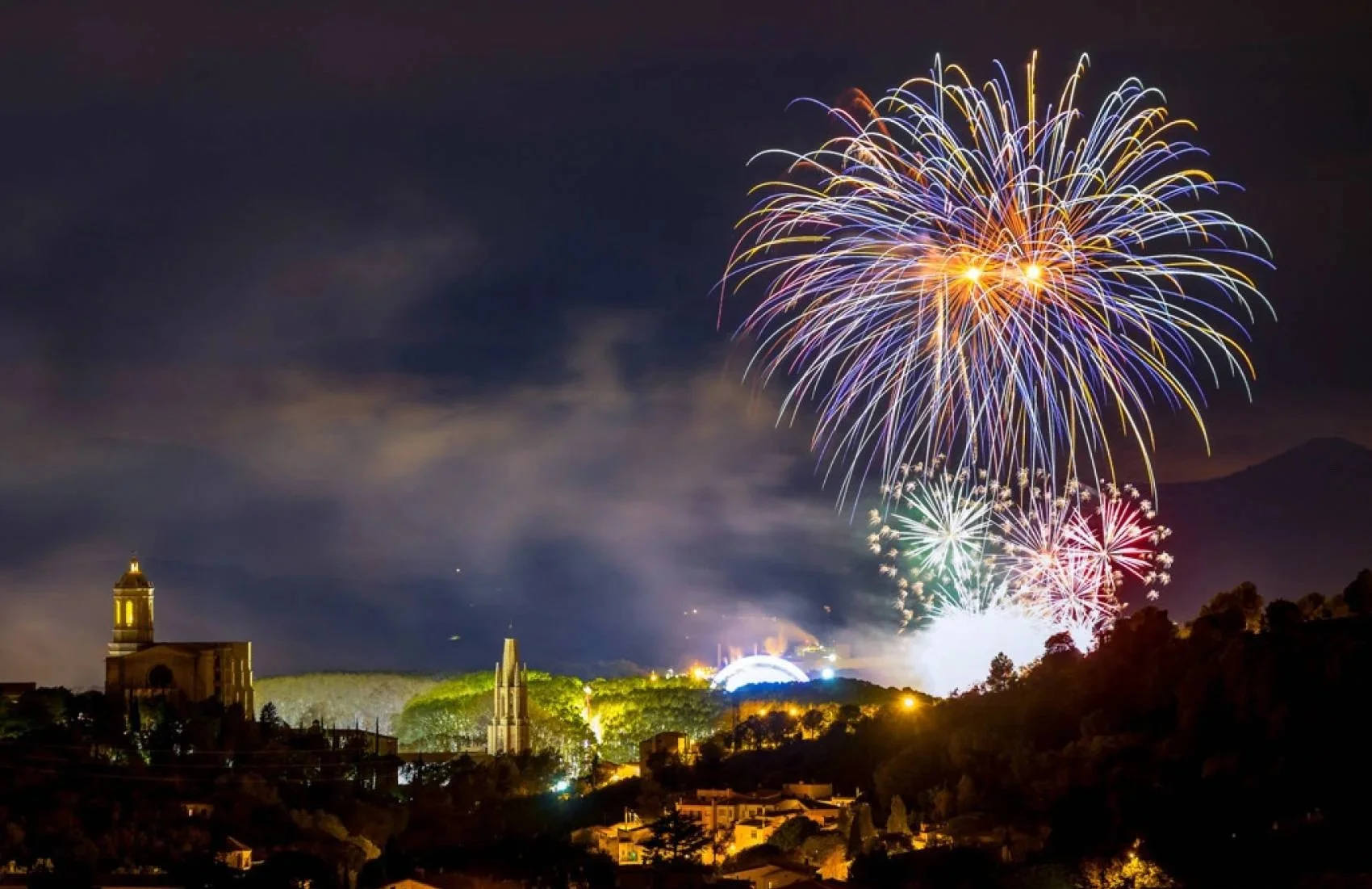
Photo courtesy of Naturaki.com
Fires de Sant Narcís – Girona
When: Late October to early November
Where: Girona, Catalonia
There’s so much more to Catalonia than Barcelona, and Girona certainly proves that every year when it celebrates its patron saint during Fires de Sant Narcis. While mostly known for the multicoloured buildings lining its riverside, rest assured that they’ll hold considerably more than a simple church service once the city’s main festival sweeps through the medieval Old Town, adorning the surroundings with fairgrounds, street markets and live concerts for roughly a week. Similar to Festes de la Mercé, expect loads of locals dressed in traditional clothing, plus human pyramids (castellers) and fire-breathing devils (correfocs). With festivities centred around Devesa Park and its adjacent streets, the combination of long-held Catalan traditions and party vibe are one opportunity you won’t want to pass up.
NOVEMBER
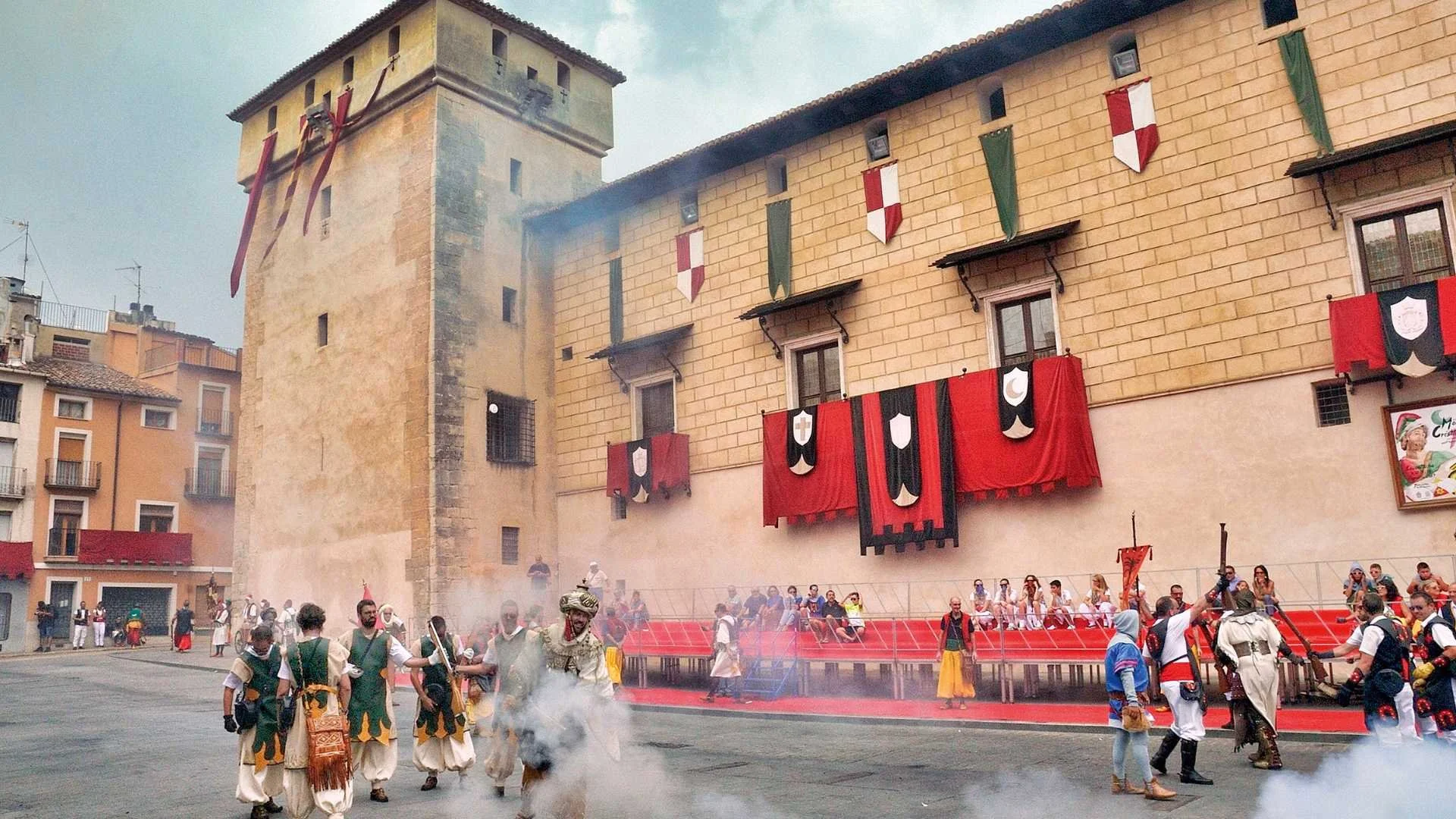
Photo courtesy of Comunitatvalencia.com
Feria de Todos los Santos — Cocentaina
When: Late October to early November
Where: Cocentaina, Alicante (Valencia)
Sanctioned by Pedro IV of Aragón in 1346, Fira de Tots Sants in Cocentaina is Spain's second-oldest traditional fair. Every year beginning around Hallow’s Eve (AKA Halloween) until All Souls’ Day (November 2), the Old Town transforms into a massive medieval market to celebrate All Saint’s Day (November 1), complete with hawkers selling everything from livestock to handicrafts. Although it has grown to be one of the largest festivals in the country, it still retains its connection to promoting rural commerce and local customs and is now a Festival of International Tourist Interest. The main attractions are divided across multiple areas, including agricultural and construction machinery and an Arabic souk. Stroll down Passeig del Comtat to catch the most entertaining horse shows or buy the best wholesale goods. For travellers looking for adventure apart from Alicante's beaches, this Valencian holiday shouldn’t be missed.
Fiesta de San Martín — Moreda de Aller
When: November 11
Where: Moreda de Aller, Asturias
Asturias knows how to welcome autumn, especially when it’s time to celebrate a religious holiday. Situated in northwest Spain along the Cantabrian Sea, this coastal community throws one of the tastiest food festivals in the country in honour of San Martin, the patron saint of Moreda de Aller, the poor, soldiers, tailors, horses, as well as winemakers. The event typically starts with a bang, initiated by a morning parade through the streets featuring firecrackers and rockets, bands blasting bagpipes and dazzling dancers dressed in traditional attire. Best yet, the region is known for its gastronomy, rich with hearty, often-pork-based dishes, so definitely chow down as you take in Asturian folklore and observe their rural customs. By afternoon, the festivities spread throughout the historic centre as locals spill into bars to socialise over fabada (white bean stew) and cider (usually made by the tavern’s brewery). Have some panchón for dessert before heading back outside to watch the final performances and firework shows. Visit for the food, stay because you ate too much to move again. Your palette will at least thank you!
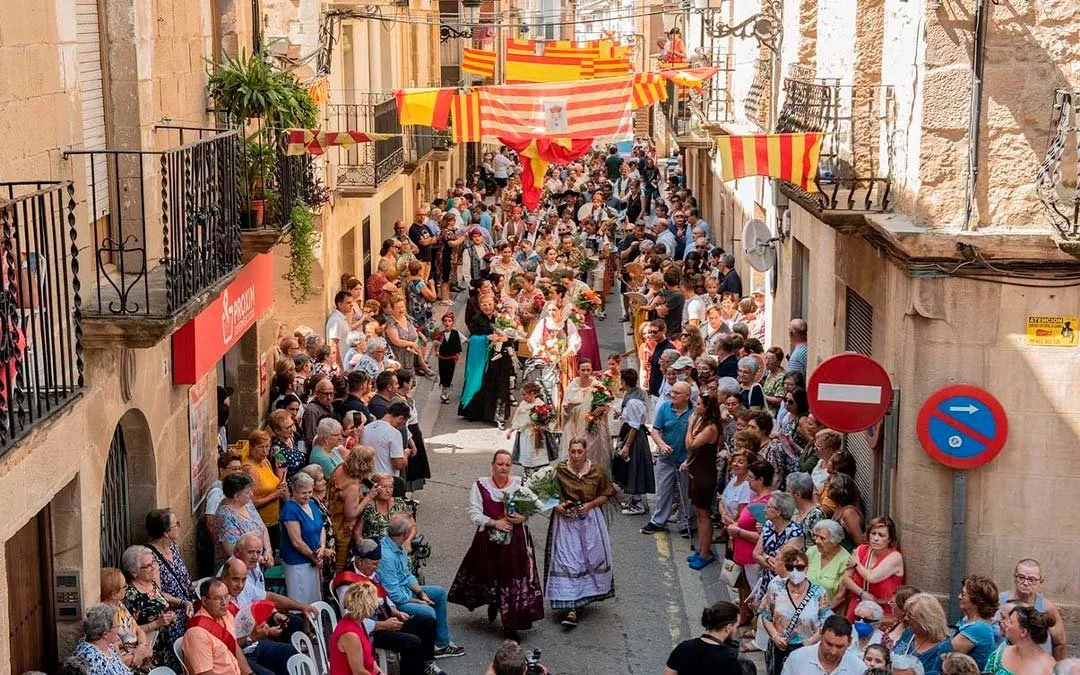
Photo courtesy of Lacomarca.net
Fiesta del Orujo — Potes
When: Second weekend of November
Where: Potes, Cantabria
If you couldn’t tell by now, the Spanish need no excuse to party until dawn regardless of the time of year. Still, a lot of festivities wouldn’t be as popular without some social libations not limited to the country’s favourite drinks: wine and beer. In Potes, perched on Spain’s northern shores, the spirit of choice is orujo, a pomace brandy derived from harvested grapes beloved enough to warrant a weekend celebration full of folklore and live music. Catch a glimpse into Cantabria’s rural past as you watch a public distillation showcasing traditional processing from start to finish before sampling the final product. You can even attend a professional tasting at a local distillery to learn more about the subtle differences between vintage strains. Since you might crave food to pair with all that alcohol, try some local specialities, such as cocido lebaniego and borono con manzana, to ensure you’re not seeing double by the end of the night.
DECEMBER
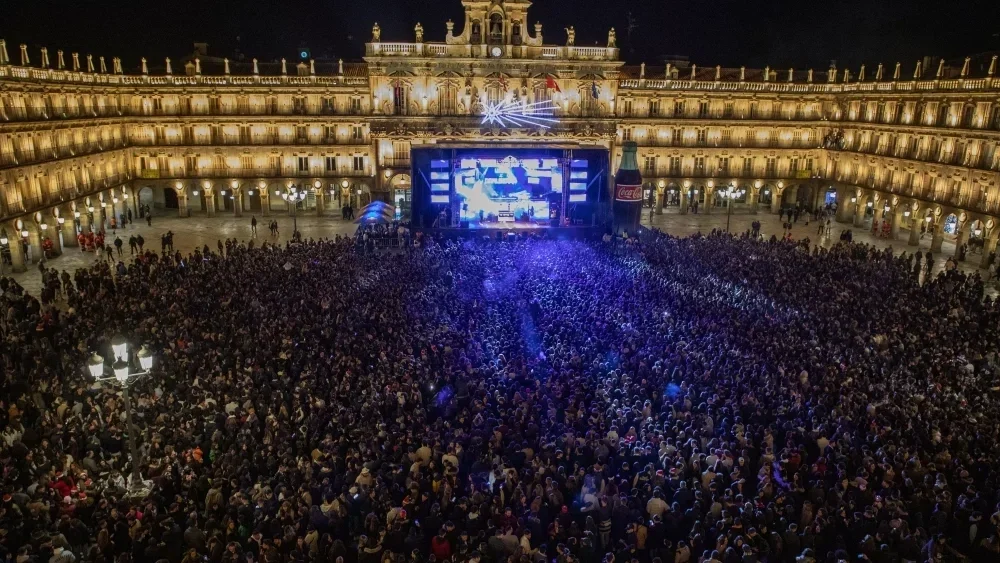
Photo courtesy of Infobierzo.com
Nochevieja Universitaria
When: Mid-December
Where: Salamanca, Castilla y León
Who says you have to wait until December 31st to ring in the New Year? In Salamanca, home to one of the oldest universities in the world, the student body has been getting a head start since the late 1990s. The custom began as a way to bring classmates together for an early countdown celebration before everyone headed home for the Christmas holidays, but these days, the events attract learners and visitors from all over Spain and abroad. With the main event taking place in the magnificent Plaza Mayor, rather than eating twelve grapes – as is Spanish tradition on NYE – revellers enjoy twelve grape-like sweets at the stroke of midnight instead. Then, the night devolves into a scene of spirited street parties, late-night concerts and all-night dance clubs, so night owls and party hounds should rejoice. Nochevieja Universitaria typically takes place on one of the final Thursdays before the local university closes for Christmas Break, meaning you’ll have the whole weekend to recover from this night of debauchery.
Carnavalcázar — Alcázar de San Juan
When: Mid to late December
Where: Alcázar de San Juan, Ciudad Real (Castilla-La Mancha)
Carnival in December? Yes please! While Venice, Rio de Janeiro and even Cádiz might have larger celebrations, Alcázar de San Juan is home to one of Spain's most unique festivals: a carnival celebrated over Christmas rather than before Lent like most of the world. It all began when the locals held a pagan dance on Christmas Eve, and over two centuries later, the custom has become the city’s most lauded events. Watch the endless parades of performers and revellers in eccentrically colourful costumes, including the Grande Parade of Troupes, the bicycle parade and the children’s parade. Carnavalcázar offers visitors live music, street parties and fun competitions alongside its traditional customs, creating a wonderfully surreal contrast to the Christmas festivities elsewhere in the country. If you don’t have definitive Christmas plans and crave something completely unexpected, this is the best place to embrace the quirkier side of the holiday season while dancing the night away amongst masked strangers. The experience might just be your best Christmas gift yet.
Nochevieja — Madrid
When: December 31
Where: Madrid, with celebrations nationwide
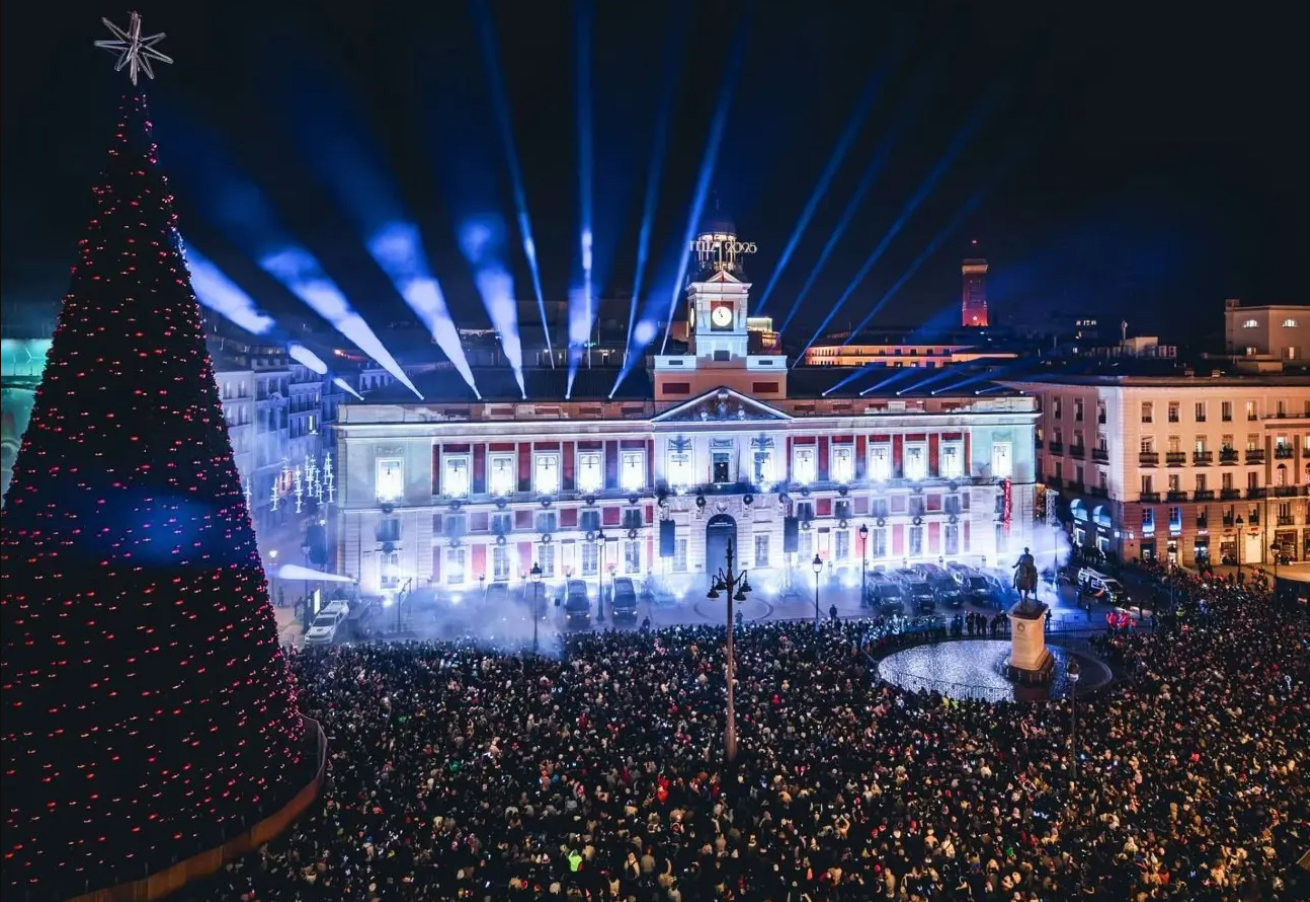
Although not technically a festival, New Year’s Eve is arguably Madrid’s biggest night. Housing near 6 million inhabitants, the Spanish capital becomes a hive of boundless bustling bodies, traffic-packed streets and entrance queues as long as the Nile River. At the centre of this madness lies Puerta del Sol, the country's most popular place to celebrate the occasion, where massive crowds gather beneath the clock tower to welcome the new year (very reminiscent of the ball drop in Times Square) as the event is broadcast nationwide. In Spain, the tradition for NYE is simple in theory: eat 12 grapes at midnight, one with each chime of the clock. Around the country, families and friends follow the same custom at home or in restaurants before heading out for a night on the town that often lasts until sunup. If you want the full Madrid experience, arrive at least a couple of hours early since Puerta del Sol becomes extremely crowded and is subject to capacity limits due to safety concerns. Most importantly, remember: twelve grapes, twelve wishes, twelve seconds. In practice, it is considerably harder than it sounds, so just make sure to chew well!
Final Thoughts
There’s never really a bad time to visit Spain, with its festive calendar offering a variety of events year-round. Whereas winter brings age-old masquerades, Christmas markets and Carnaval, spring delivers fragrant flowers, medieval spectacles and Feria de Abril. Summer, meanwhile, turns almost every corner of the country into one enormous outdoor celebration, with several similar festivities continuing to late autumn.
Carnaval in Cádiz
In my opinion, March through September is the best time to visit since most musical festivals take place in spring while heritage-rich festivities typically occur later in summer. Many towns and villages have annual fairs revering their patron saints throughout August, but autumn is the perfect time to visit for wine-lovers, culture enthusiasts and foodies, especially those seeking to avoid Spain’s intense summer heat. Winter travellers will also find a lot to do, especially in coastal communities not subject to the cold weather of more mountainous regions.
Of course, this list barely scratches the surface as there are many more festivals dedicated to specific interests, such as art, gastronomy and dance. Lovers of the latter should check out dance socials such as Bachata in Love in Seville and Love Dance Festival in Lloret de Mar. For art enthusiasts, events like ARCOmadrid and Madrid Design Festival should definitely be highlighted on your calendar. Theatre geeks equally into both tragedies and comedies ought to head to Madrid's Festival Internacional de Teatro Clásico de Almagro or Barcelona's Grec Festival. A gastronomic affair worth investigating is San Sebastián Gastronomika, a huge regional food festival celebrating everything from local cheese to fresh seafood.
The best part? Many of these celebrations provide a unique insight into the Spanish identity, more than you’ll ever get from simply hitting the beach. One of the most endearing and hilarious holidays is Dia de los Santos Inocentes, Spain's answer to April Fools' Day, when people traditionally play pranks on friends and family, while national media outlets publish increasingly ridiculous fake stories (so that outrageous story your hotel receptionist just told you might not be entirely true!). Beit springtime or the dead of winter, you can rest easy knowing there will always be festivals coinciding with your travel dates, especially ones rooted in the country’s storied history.
Write me when you get there,
M