
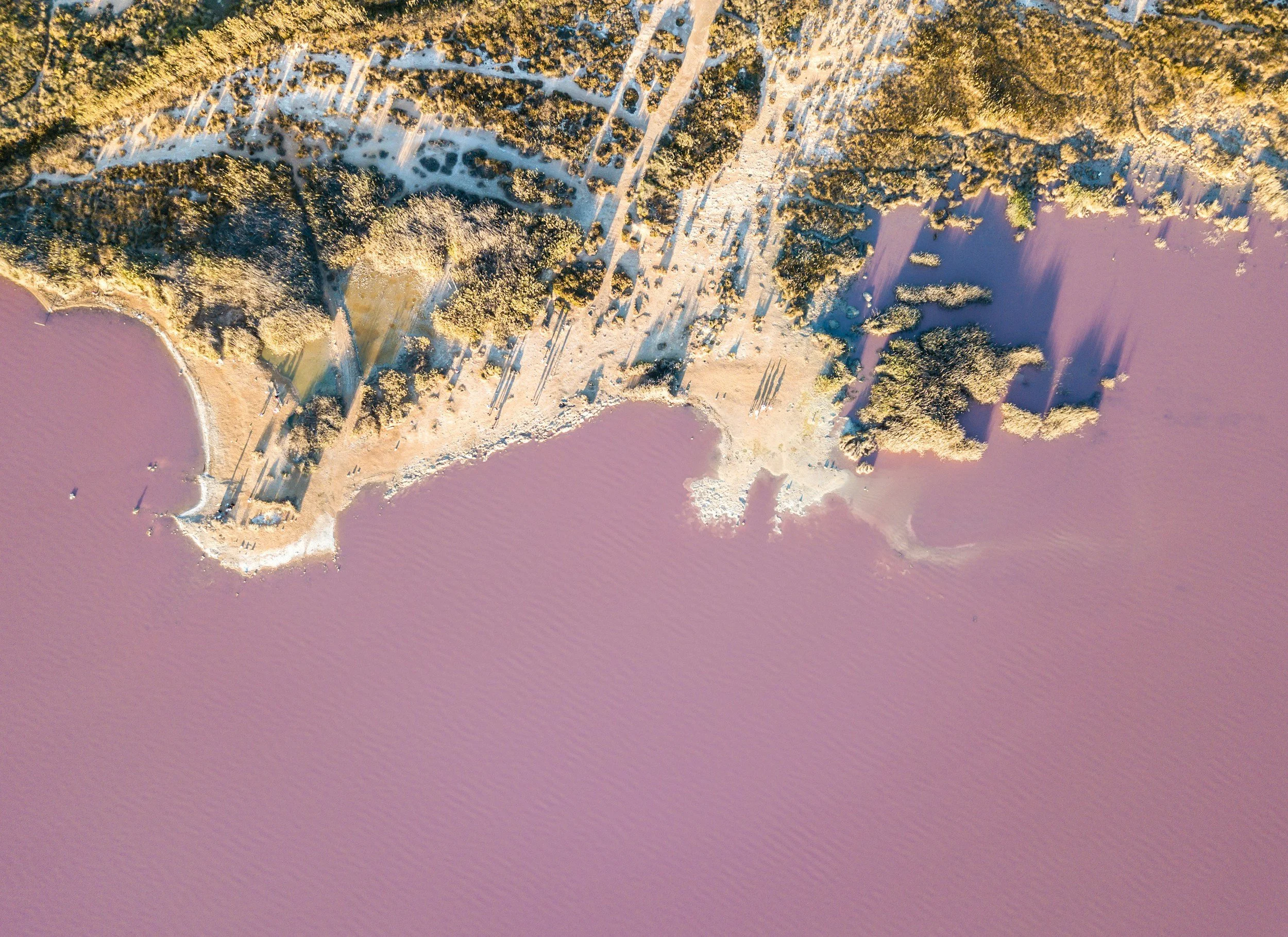
Sunny cerulean skies and turquoise-tinted tides are likely what come to mind when envisioning Spain, but what if you could wade in coral-coloured water? While a pink lake sounds straight out of a sci-fi fantasy, along Costa Blanca is a rosy wonderland famous for its fuschia-feathered flamingoes and stunning scenery. Almost like magic, the waves transform into shades of pink so vibrant you’d have to blush to match.
Arguably the most unique landscape in the Mediterranean country, this gem shouldn’t be overlooked, so if you're planning to visit Spain's Pink Lake, here's everything you need to know about touring Torrevieja. Known locally as the Laguna Rosa (Pink Lagoon), this striking body of water is part of a protected natural park encompassing two very different salt lagoons: the pink Laguna de Torrevieja and the greener Laguna de La Mata (for double the photo opps).

Still, there’s much more to this landscape than a pretty backdrop. For centuries, these lagoons have been linked to salt production, an industry still acting as an important part of Torrevieja's identity to this day. Spanning around 3,700 hectares, the natural park has a lot to offer, from beaches and walking trails to salt flats and mud baths, meaning you won’t need rose-tinted glasses to have a great time!
***This article contains affliate links which help to support the website at no extra cost to readers.***
The History
Technically consisting of enormous lagoons rather than lakes, the importance of Parque Natural de las Lagunas de La Mata y Torrevieja has gone hand in hand with the towns’ growth. However, before we get into why the water is pink, we have to talk about salt since the story of Torre La Mata and Torrevieja's lagoons is largely about the relationship between nature and industry. Since the 13th century, “white gold” has been extracted from their waters, whose salt concentration rivals the Dead Sea, with levels often reaching over 350 grams per litre (10x more than seawater). These days, the two lagoons are still part of an active salt-production system in a simple process that is surprisingly clever.
While the larger Laguna de Torrevieja (stretching 1400 hectares) is where the salt crystallises to be later extracted, Laguna de La Mata (covering 700 hectares) functions as a concentration area, with the sun and wind naturally evaporating the water, and thus, increasing the percentage of salt within. From the 20th century onward, brine from Pinoso, a nearby village, has also been channeled to Torrevieja via a pipeline, accumulating in nearly a million tonnes of salt being extracted annually, much of which is then exported.

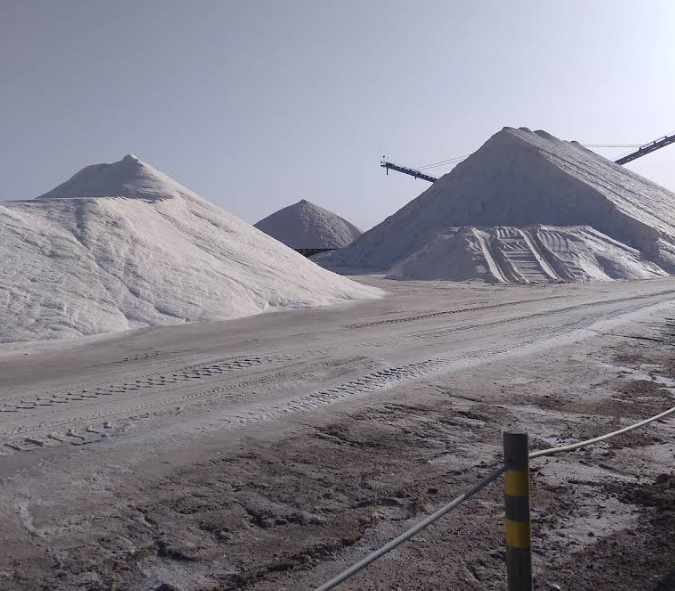
As you wander through the park, don’t be surprised to spot white mountains around the lagoons, but these aren’t made of snow. They're garberas, piles of harvested salt that have become one of the defining features of Torrevieja’s topography, which was declared a protected natural park in 1996.
Then there’s the colour. The Pink Lagoon gets its distinctive tinge from robust microorganisms capable of surviving in such briny water that would kill any other living being (there’s a reason the Dead Sea got its name). Thanks to algae and bacteria that produce the pink pigments as by-products, the result is a landscape that feels almost otherworldly. Depending on the season, weather and conditions, the water can range from a subtle rosy colour to an almost fluorescent pink.
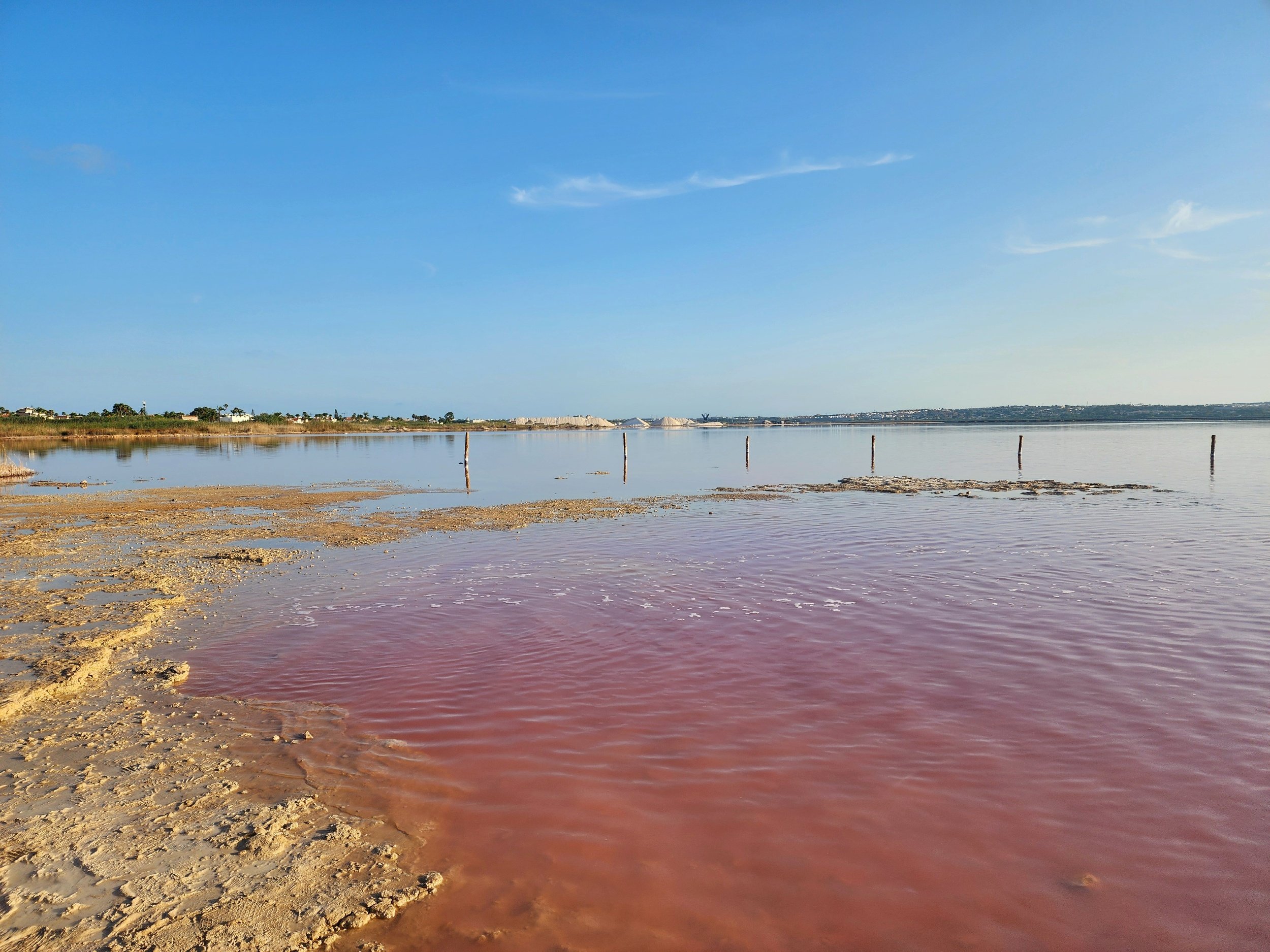
But (and this is a big BUT) you unfortunately shouldn't jump in for a salty spa day. Whereas you might spot some locals going for a late evening dip, full-body swimming in the lagoon is prohibited, both to protect the fragile ecosystem and because the salt flats remain an active industrial site. Visitors are also asked to stay on designated routes, avoid collecting salt or plants, and keep their distance from wildlife, including several avian species. During the spring breeding season, up to 2,000 greater flamingoes also come home to roost as the migrating birds await the hatching of the next generation.
Along with its neighbouring natural parks, Santa Pola Salt Flats and El Hondo, Las Lagunas de La Mata y Torrevieja make up a series of marshes and wetlands that are critical for the life cycles of many animals nesting within them (so be a good Samaritan and don’t litter). Whether you stop to visit all the natural parks or only one, you’re sure to find unique wonders sprinkled all around.
How to Get There
Even though the peaceful waterfront of La Mata is also worth visiting, heading right to Torrevieja will prove more convenient since Laguna Rosa is closer to the larger city. Both are located in the province of Alicante, Valencia, making a visit relatively easy to incorporate into a Costa Blanca holiday. Spanish motorways are usually well-maintained for road trips and public transport within the region is generally reliable, running until late most days.
Albeit once you're in Torrevieja, you'll need to pay a little attention to which part of the lagoons you want to visit since the natural park is massive. On the one hand, Laguna de La Mata is the easier option for exploring independently as its surroundings have marked walking routes, viewpoints and birdwatching areas, making it a good choice if you'd like to explore at your own pace. Laguna Rosa itself is more restricted because of its protected status and the ongoing salt-production activities, but many less-interconnected sections are still accessible.
No matter how you get to Torrevieja, don't forget to bring along water and sun protection because there isn't a great deal of shade when you're surrounded by salt flats (reminder: salt kills most plants). Most importantly, wear sensible footwear, especially hardy aqua-shoes if tempted to dip a toe in that rosy water, since you don’t want to cut your feet accidently on rugged salt shards. Trust me, you don’t want to add any salt to those wounds!
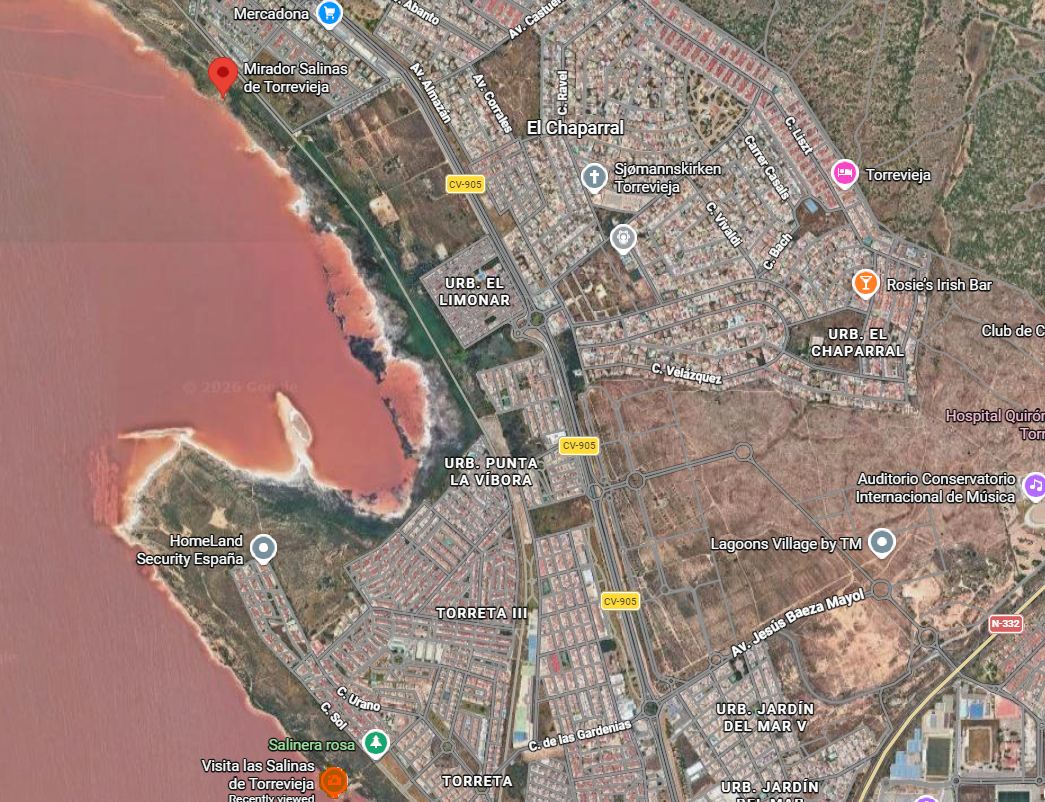
Park on the streets parallel to either Mirador Salinas (red) or Visita Las Salinas (orange) and walk from there.
By Car
If you're travelling Spain by car, Torrevieja is well connected to the surrounding area, with both Alicante and Murcia roughly an hour away, depending on traffic. The N-332 runs through them all, hugging along the coast and bisecting the Pink Lagoon’s natural park.
Turn off near the town of Torrelamata by taking the exit for Torrevieja. From here, you can either stop at La Mata Natural Park Interpretation Center in La Mata, or continue on to Visita Las Salinas in Torrevieja and park there. Either information centres are the ideal way to learn more about the natural park or saltworks, respectively.
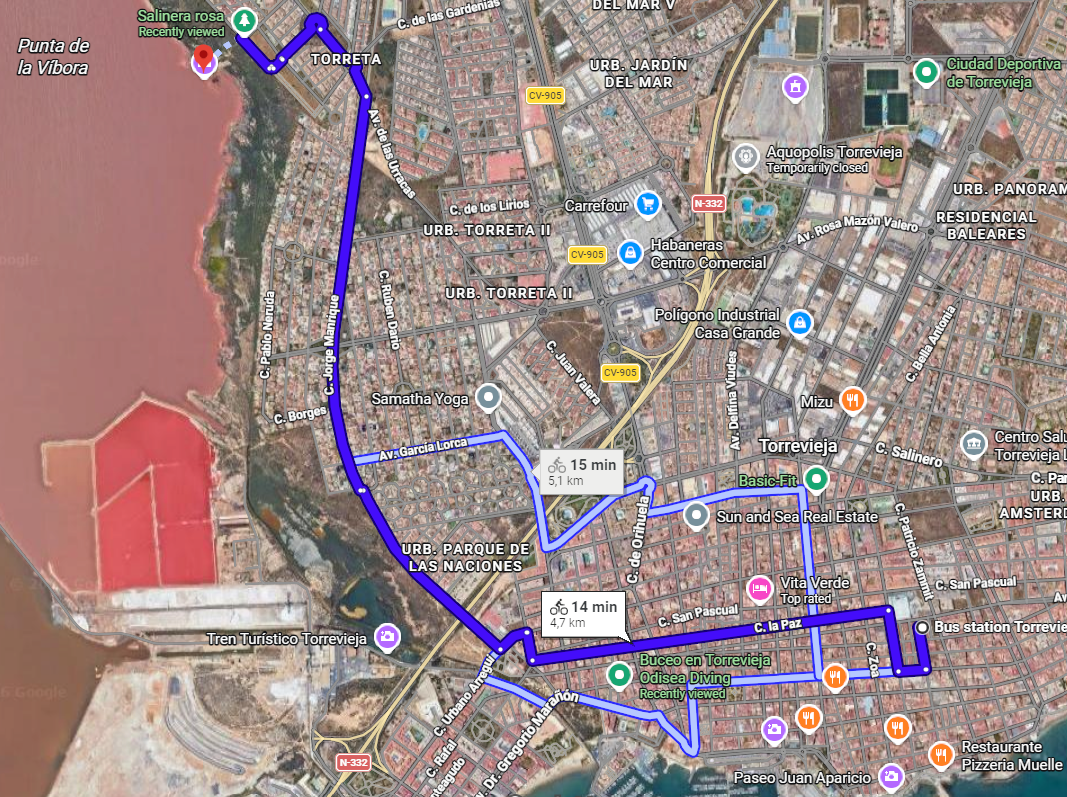
Walk or cycle to the lagoon’s closest entrance to the bus station.
By Bus
Several long-distance bus operators in the region offer services to Torrevieja’s main bus station. If travelling from Alicante, Costa Azul is your surest bet, with rides taking around 75 minutes, with the same operator also running a shuttle to Alicante Airport. For travellers coming from Madrid, Alsa also has a direct line between the two cities, though the voyage is around 4-5 hours. Like most public transport in Spain, the buses are typically clean and comfortable, with air-conditioning, onboard toilets, and sockets for charging electronics.
Once in Torrevieja, the journey to the natural park is a tad more complicated. Located 3 kilometres outside of the city centre, the fastest way would be to take a taxi but that might leave you stranded for the return leg. Your next option is to walk 40-60 minutes or bike 15 minutes to the salt flats, a route that is safe and well-paved throughout.
However, from Torrevieja Bus Station, Costa Azul has two bus services, Line B (blue) and Line G (green) which will drop you off at least a kilometre closer for the same price as an espresso. If taking the former, disembark at C.C. Habaneras and walk 2 km from the commercial centre to the main entrance of the natural park (30 minutes). For the latter, the journey is nearly the same, but you’ll get off at Calle Rossini and walk 2 km to Torrevieja Salt Flats Viewpoint (Mirador Salinas de Torrevieja). Both routes will take you to an exquisite view of the salt flats but carefully plan your trip since timetables can vary (check them here).
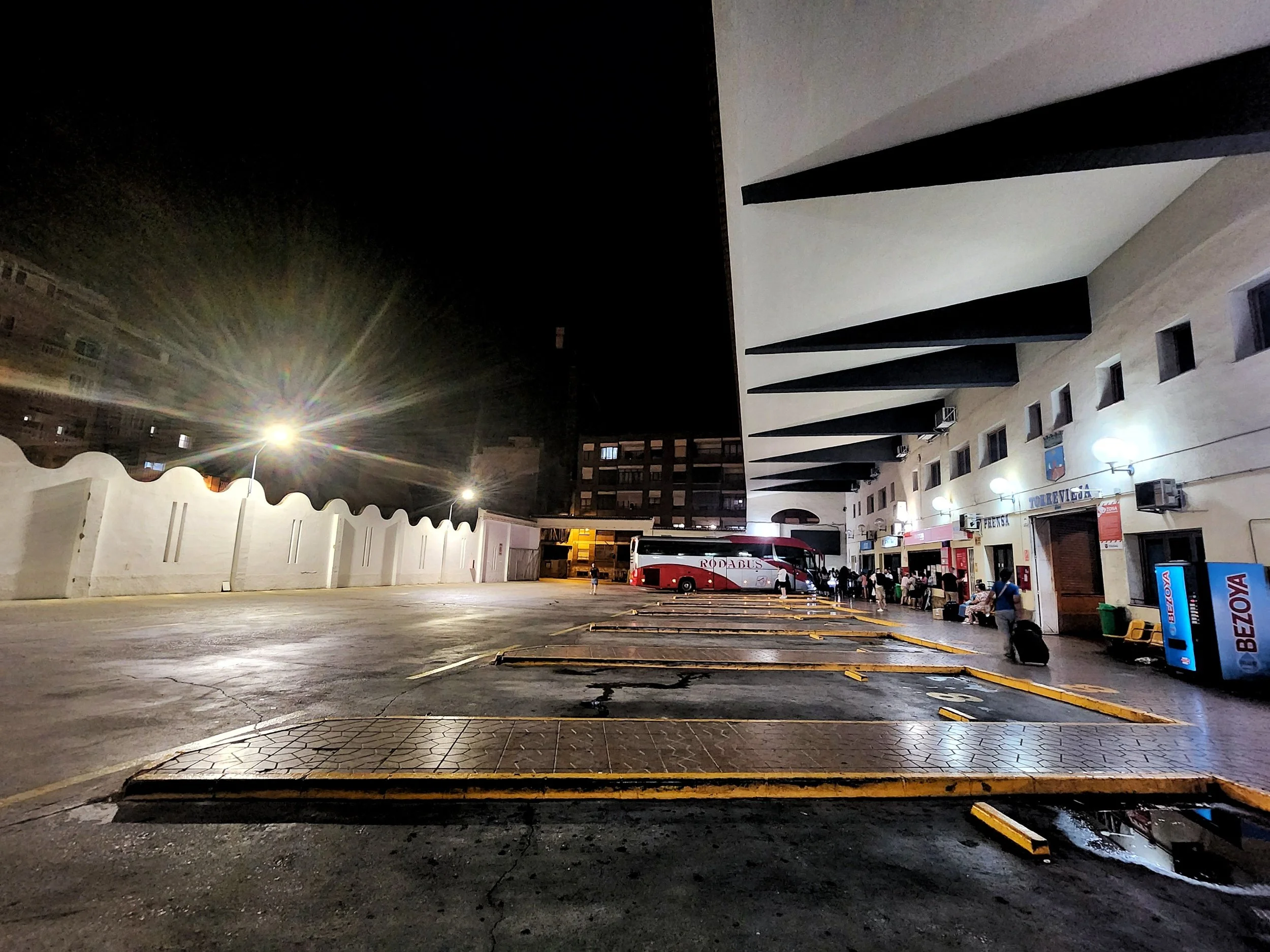
If arriving at Torrevieja Bus Station, you’ll have to walk, bike or take a taxi to the Pink Lagoon.
By Rail
Since neither Torrevieja or La Mata has an active railway station, you’d be better off taking the train to Alicante or Orihuela and then heading to either bus station. Then, switch to an intercity bus to Torrevieja, operated by Costa Azul. When you arrive at Torrevieja Bus Station, you can follow the directions mentioned in the previous section.
Activities in the Area
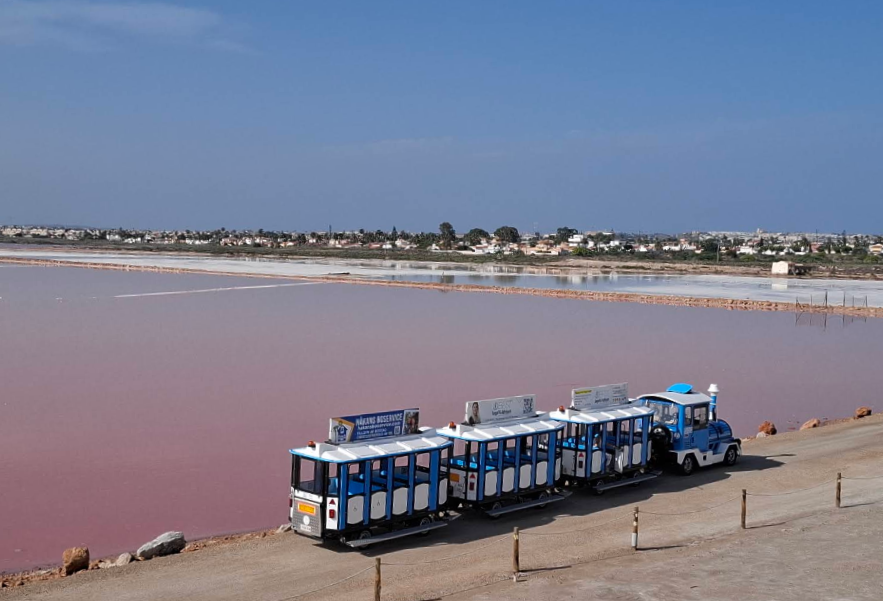
Apart from the salt flats, Torrevieja also has a few other attractions that you should visit if you have the time. The natural park is definitely a highlight, however, and worth an in-depth look, especially to learn more about its role as a salt mine. One of the easiest ways to enjoy this experience is via Visita las Salinas de Torrevieja, which offers visits into the saltworks by tourist train as well as guided walking and cycling experiences.
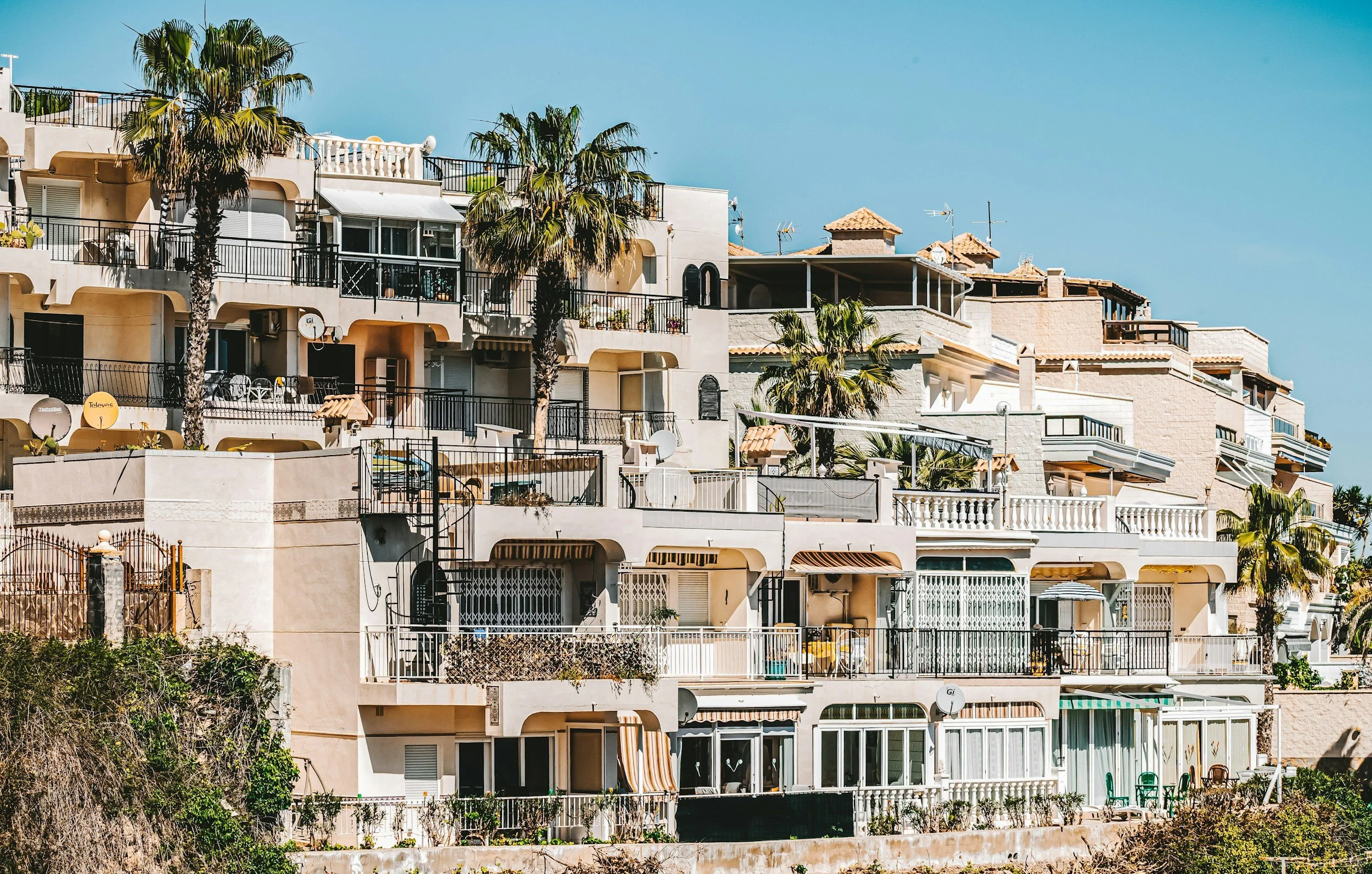
Tour the Sights in Torrevieja
Torrevieja is a vibrant coastal city renowned for its beautiful beaches and nightlife, yet there’s plenty more to see in the day as well. Visitors interested in discovering more about Torrevieja’s salt-mining past/present should pay a visit to Museo del Mar y de la Sal (Sea and Salt Museum), an ethnological centre filled with crystallised miniature ships (find it at Calle Patricio Perez, 10). For boating enthusiasts, head to the port to submerge yourself at Submarine S-61 Floating Museums, a series of decommissioned Spanish military submarines currently open to the public. While nearby, you can spot Torrevieja Lighthouse at the end of the pier.
If you prefer live entertainment, venues such as the Cultural Society Casino of Torrevieja, Virgin del Carmen Cultural Centre, and Vista Alegre Exhibition Hall host concerts and other local exhibits. After a show, you can stop by La Plasa Central Market for a taste of authentic Spanish cuisine or dine waterside at Paseo del Mar Leisure Centre.
While most of the city is made up of modern buildings, architecture lovers might want to head over to Parroquia Arciprestal de la Inmaculada Concepción, a neoclassical church built in the late-18th century. Although built more recently, the towering Parroquia del Sagrado Corazón de Jesús is equally majestic for its grand contemporary exterior, yet its true beauty lies in its interior, constructed to resemble a ship’s keel. To the north of the city, venture to the 16th-century Torre del Moro, which survived countless attacks from invading forces, and its adjacent park.
Travellers visiting with kids or teens might be glad to know that, along with two salt flats, Torrevieja also boasts two water parks, Aquapark Flamingo and Aquopolis Torrevieja, providing double the fun. However, these parks are only open during warmer seasons, so snowbirds heading south for winter will have to miss out.
Still, close to the latter, you’ll also find Parc Antonio Soria, typically reserved for funfairs, and Mercadillo de Torrevieja, an open-air flea market selling snacks, seafood, and souvenirs, where there’s something for the whole family.
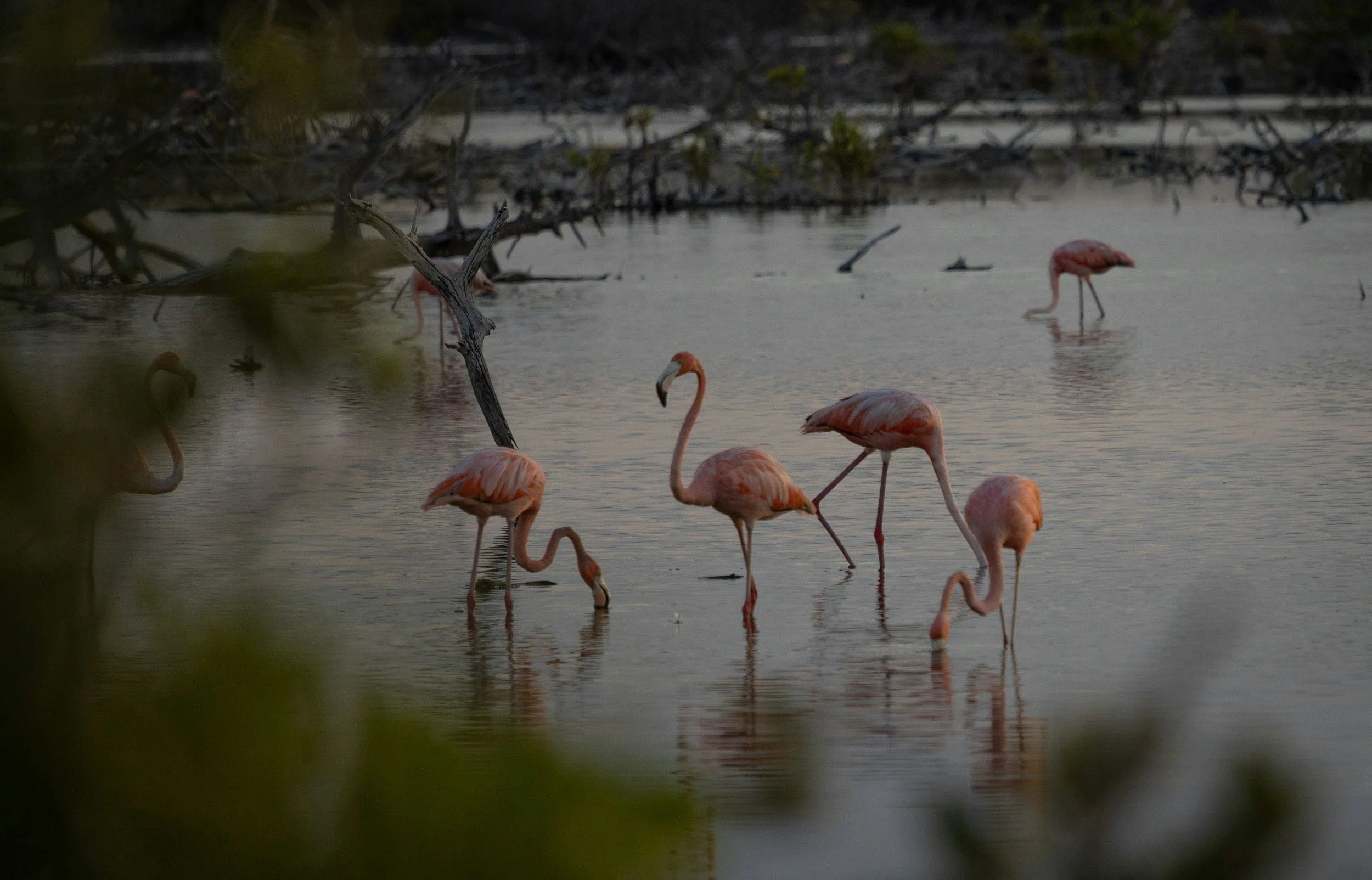
Explore the Natural Park
Obviously, the main attraction in the area is the Pink Lagoon, yet it's crucial to plan your visit for the right time of year and weather conditions to have the best lighting. The colour is at its most dramatic in late spring to late autumn when the sunlight hits the water more intensely and the algae is in full bloom. It should then come as no surprise that the lagoon might look slightly different from the possibly-edited photographs you've seen online.
Sadly, nature doesn't always follow a travel itinerary, but here's a reminder that there are actually two lagoons to discover. Though less famous, the green Laguna de La Mata definitely merits a visit as an important habitat for birds, including flamingos, avocets, and black-winged stilts.
Complete with walking trails and viewpoints, it's a great place to do some birdwatching within designated areas. The combination of shallow, salty waters and protected wetlands attracts a variety of species, with flamingos being one of the most recognisable residents. Bring binoculars if you have them, so you can observe the wildlife without disturbing it, plus your patience. The birds, unlike the tourist train, aren't particularly interested in sticking to a timetable.
You can also visit Centro de Interpretación Parque Natural La Mata to learn more about the park and its ecosystems. For other eco-friendly tours, keep an eye out for offers, which can include walks focused on the lagoons, cyclng through the surroundings’ most scenic spots or hiking to a nearby waterfall.
Ride the Tourist Train
For a more immersive experience that’s easier on the knees, take the tourist train with Trainvision. It's one of the best ways to make the most of the trip, particularly if visiting for the first time. Rather than simply admiring the lagoon from a distance, the journey takes you right into the heart of the saltworks, where you can see salt-white mountains and different stages of the salt-production process.
The experience will provide you a better understanding of how the salt industry works and why this strange-looking landscape is so important to Torrevieja. Just make sure to check the timetable and booking arrangements before visiting, as access and tours can vary. You’ll leave tickled pink regardless of which tour you choose.
Cycle/Walk the Vía Verde
Torrevieja also has a Vía Verde (Greenway), composed of over 6 kilometres of paved and dirt lanes built on the former Albatera-Torrevieja line. The abandoned railway line has since been transformed into a path for pedestrians and cyclists, with the Torrevieja Greenway now encircling the Pink Lagoon. For an uninterrupted view of both salt flats, the best route starts at the intersection of Avenidas de la Estación and Urbano Arreguí, to the left of the Salt Industry Interpretation Centre.
As you walk/cycle, spot the Acequion, a river-like waterway that supplies seawater to the salt flats where it evaporates into brine. The channel is spanned by an ancient stone bridge, which previously transported wagons bearing salt to Eras de la Sal, a former warehouse and pier currently functioning as an open-air venue for cultural events. In the 18th century, the dock was used to load salt onto ships that sailed as far away as Cuba.
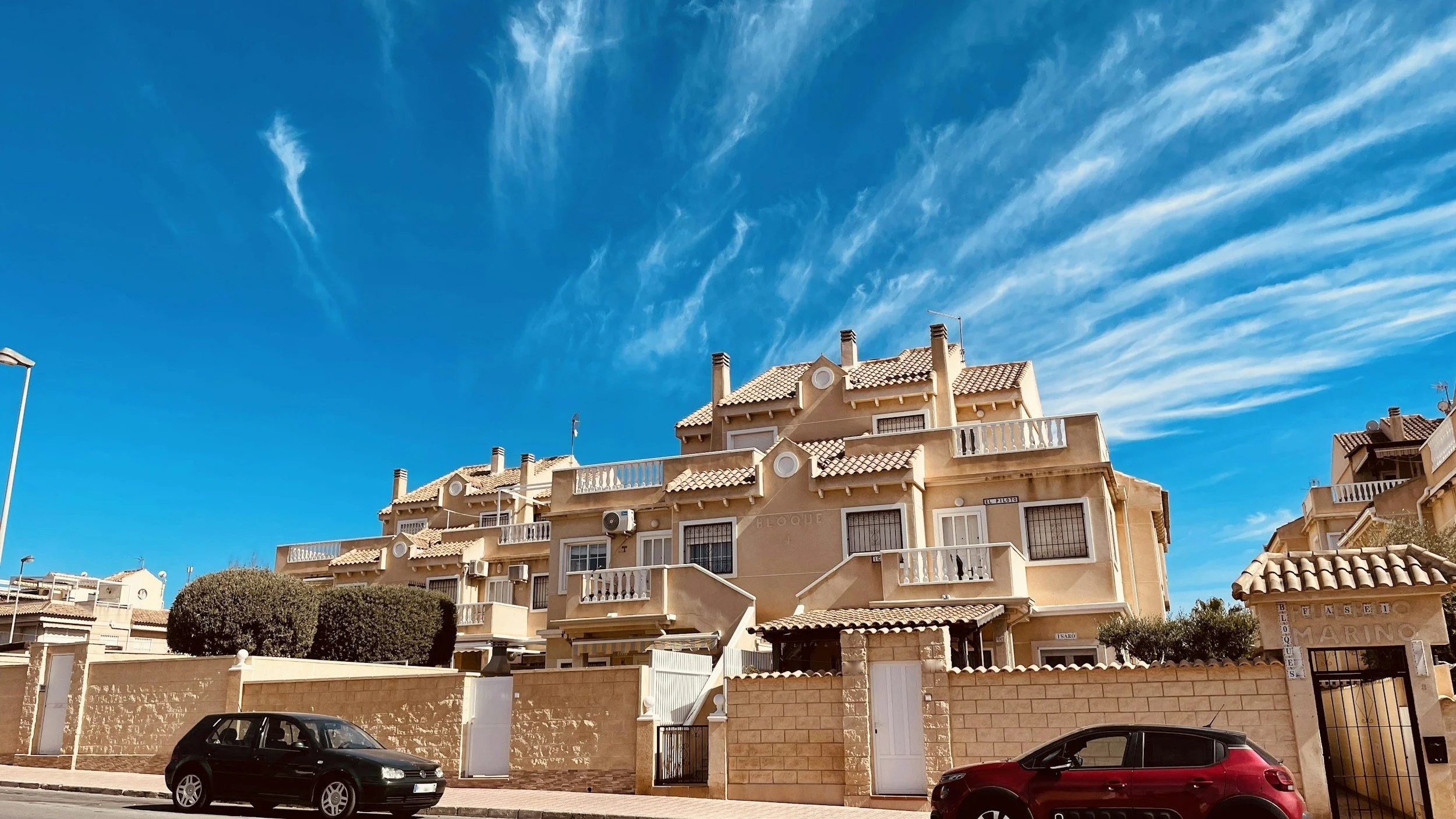
This section runs through an urban area, passing by a former railway complex whose locomotive depots have been renovated into healthcare centres. Continue parallel to Avenida de la Estación to stumble upon snow-white salt mountains dominating the scenery, along with other facilities related to salt production. The next stretch is a straight shot framed by semi-detached resort homes, but has many level crossings for trains, so trek carefully. Don’t be surprised if you see other walkers/cyclists loaded down with parasols and lounge chairs since part of the Greenway also leads to Acequión Beach.
By KM 3.4, you’ll come across the sixth level crossing, which is the last yet most treacherous since the route curves, narrowing into the two lanes for walkers and bikers into a single path. From here on, however, you’ll be in full nature, indicated by the emerging reedbed whose tall grasses might intermittently block your view of the Pink Lagoon. Nevertheless, the importance of this ecological barrier can’t be understated, serving as a sanctuary for a variety of avian species from terns to stilts. Due to the hypersalinity of the bordering water, only the hardiest of plants, such as shrubs, can thrive in the wetlands.
When you’ve reached the end of this reedbed, you’ll find a rest area which allows a fantastic look at the rosy-hued lagoon. Once you leave the rest area, the Greenway continues following the edge of the Pink Lagoon, much of which is fenced off but still viewable. Around KM 5.5, you’ll find another rest area before the route begins branching away towards El Chaparral anticline, the arid stretch of land separating Laguna Rosa and Laguna de la Mata.
Eventually, the Greenway gives way to a road heading to the town of Los Montesinos, with the path providing stunning views of Laguna de la Mata. About 200 metres to your right, you’ll also come upon a cycling path heading back towards Torrevieja that runs parallel to the CV-90 motorway, culminating in a circular route largely free of vehicles.
Alternatively, you can also push forward and upward to observation posts to get an even better vantage point of Laguna de la Mata, so take advantage of this unique experience to visit two salt flats at once. Who says you have to pass the salt (flat) when you can choose two?
Make a Splash at the Coast
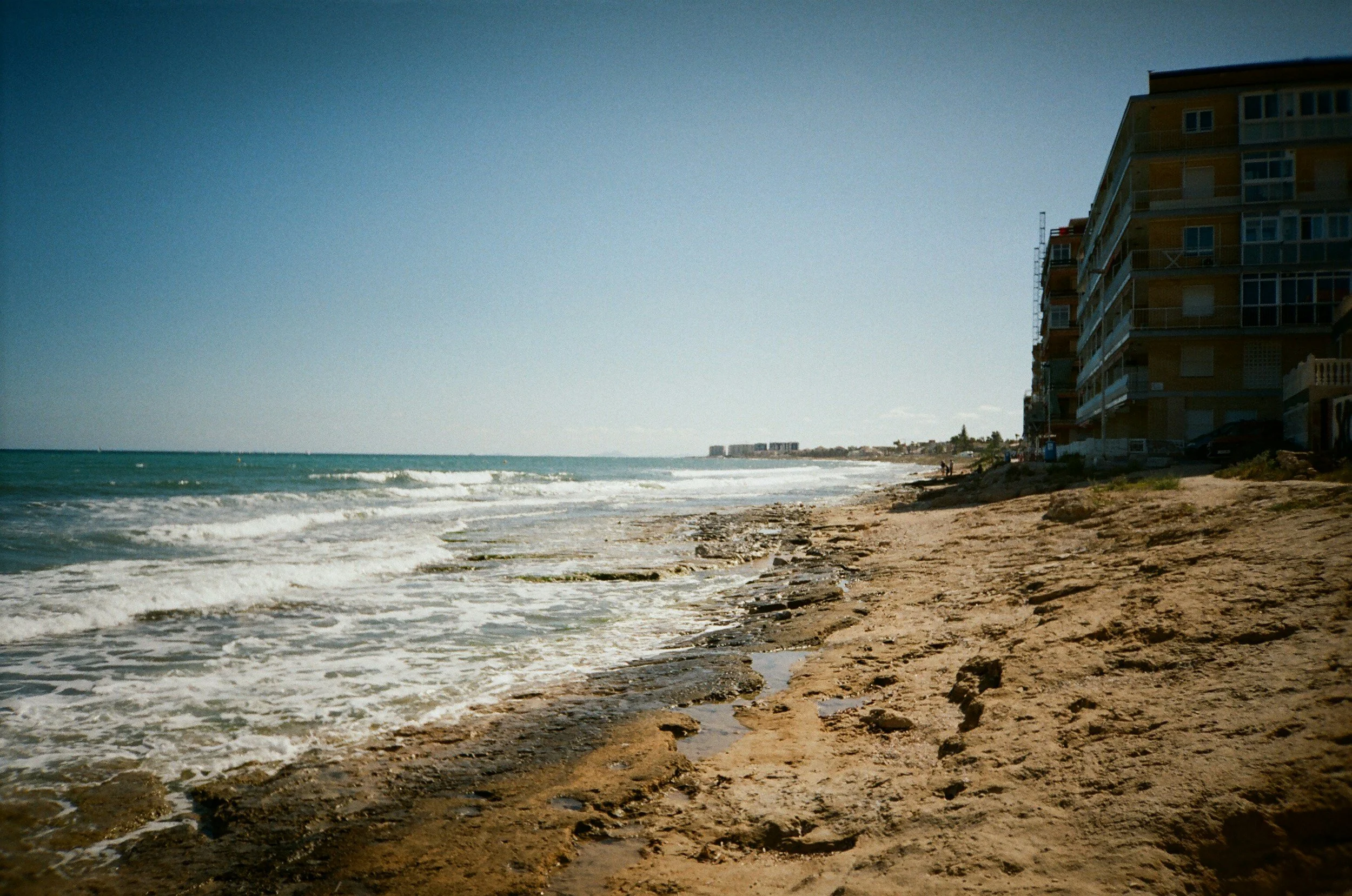
Since you’re near the Mediterranean Sea, you might as well make time for a beach day, and in Torrevieja, you’ll be spoilt for choice. There are plenty of beaches within walking distance or a short drive, such as Los Locos, the closest beach to the city centre popular for its calm waves and chill vibes.
Whether you head north or south along the coast, you'll uncover more urban beaches including Playa del Cura, beloved for its proximity to restaurants, and Playa del Acequion, a hotel-lined waterfront. Just across the pier, you'll find Playa de los Náufragos, complete with a boardwalk and playground, while even further south is Playa Torrevieja.
Still, if you don't mind the commute, my top pick would be Playa La Maya, an interrupted stretch of sandy coastline that'll make you understand how Costa Blanca got its name. Spanning 2.3 kilometres, it's the largest beach in the municipality and features La Mata Tower (a defensive post originating from the 14th century and rebuilt in the 16th), as well as dune ecosystems.
Albeit if you abhor sand but fancy a stroll by the seashore, Paseo Juan Aparicio is another scenic boardwalk leading from Torrevieja Port to Playa del Cura.
Catch Some Waves, Fish or Air
If you're a fan of watersports, Torrevieja has more than got you covered. As a beach town, there are a plethora of excursions on or under the sea for all levels and ages.
Travellers seeking a thrill can try wakeboarding with La Bocana, which also offers a more extreme version known as cable-skiing. To catch even more air, go windsurfing with either Real Club Náutico or Club Náutico Marina Internacional, both of which will happily take you sailing afterwards to teach you the ropes. For visitors accompanied by minors, you have more family-oriented activities such as parasailing, so the kiddos can get sky-high, too!
Prefer surfing? Take lessons with Torrevieja Surf or try your hand at paddle-surfing. They also provide fishing tours with gear included. Rather rent a private boat? Hire your favourite watercraft from Ociomar or Adelmar Rental Boats, who'll even throw in your own personal licensed pilot. If you'd like to become licensed yourself, Marina Bliss offers many courses for a range of boats. Have a need for speed? Try to reach the max in a Formula 1-style racer boat where the water becomes your road, or get pulled around by a speedboat on a crazy sofa ride as you bounce along the coastline.
For a more budget-friendly option, book the Torrevieja Tourist Boat, a group tour with around-the-clock departures. Scuba divers shouldn't feel left out since you can explore the deep blue sea with underwater tour guides with Odisea Diving or Club Buzeo Torrevieja. What better way to explore the Mediterranean?
Final Thoughts
It’s easy to enjoy La Vie en Rose at Laguna Rosa, but there’s much more to this seaside city than this colourful body of water. While pink lakes aren’t uncommon around the globe, they’re still a rarity in Europe, making this lesser-known gem a must-see when visiting Alicante. The Pink Lagoon’s beauty has outlasted the empires that first exploited its resources to mine “white gold” and its legacy will endure for centuries more as Spain’s largest salt-processing site. Look around for some mud pits to slather yourself in the substance before rinsing off to leave your skin feeling baby-smooth (it’s as good as any clay mask!).

Still, you should discover what lies beyond the Pink Lagoon and explore everything else Torrevieja and its surroundings have to offer. From waterfront restaurants serving the freshest catch-of-the-day to white-sand beaches where watersports are a part of daily life, you’ll have lots to do around the clock. For an adrenaline rush, go buggying through the countryside as you take in the natural splendor all around you.
Even though the colour is only the beginning of the Pink Lagoon’s story, walking the Greenway is the best way to experience it up close and personal. Come for the surreal photographs, yet stay for the salt mountains, flamingos, and history behind the landscape. This might be the only pink eye you won’t mind catching.
Write me when you get there!
M